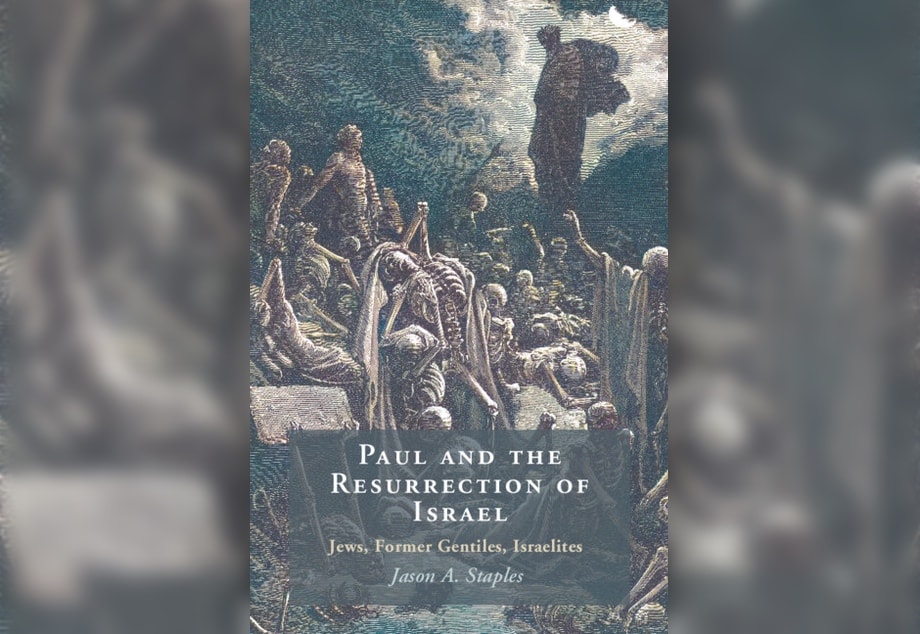
This is a rather technical examination of Jason Staples’ argument in Paul and the Resurrection of Israel: Jews, Former Gentiles, Israelites that when Paul speaks of Israel as “vessels of wrath,” he does not mean that the people are are the objects of God’s wrath; rather they are the instruments of God’s redemptive purposes. My view has been that Paul is saying that part of Israel really has become liable to destruction—much as Jesus foresaw destruction coming upon Jerusalem and the temple. But perhaps I’ve got it wrong.
In an article on the Gospel Coalition website, adapted from a book about evangelism, Matt Smethurst attempts to explain the gospel. ( | 11 comments)
Stephen Fowl thinks that it’s impossible to get from history to theology—to start with historical-criticism and arrive at an account of the being and intentions of the Triune God and of the various beliefs and practices that derive from that core Christian doctrine.
So we have to start at the… ()
This is a brief re-examination of Thomas’ famous declaration “My Lord and my God” in John 20:28. I looked at this some years ago, noting the common argument that the wording of the confession reflects the “custom,” recorded in Suetonius and Dio Cassius, of addressing the emperor Domitian (AD 81-96… ( | 17 comments)
Probably, for most people interested in biblical studies, “historicism” is a bad word, associated either with a positivist historical-critical methodology that hammers the theological life out of a text or with a certain mode of nineteenth century German historical idealism that culminated in the… ( | 4 comments)
I did a couple of podcast episodes recently with David Capes for The Stone Chapel Podcasts, talking about my book In the Form of a God: The Pre-existence of the Exalted Christ in Paul. ()
It is easy to visualise the traditional interpretation of Philippians 2:6-11 as a downward parabola or u-bend: Christ existed in heaven from eternity “in the form of God”; he descended into the world, becoming man and dying on the cross; then he is raised from the dead and restored to his position… ( | 13 comments)
This is a dull, and frankly unnecessary, technical note on the genitive construction with a preposition en morphēi theou (ἐν μορφῇ θεοῦ) in Philippians 2:6. I’ve had to look at this a bit more closely following a rather disjointed conversation with someone on Twitter who had different… ( | 12 comments)
Recent comments