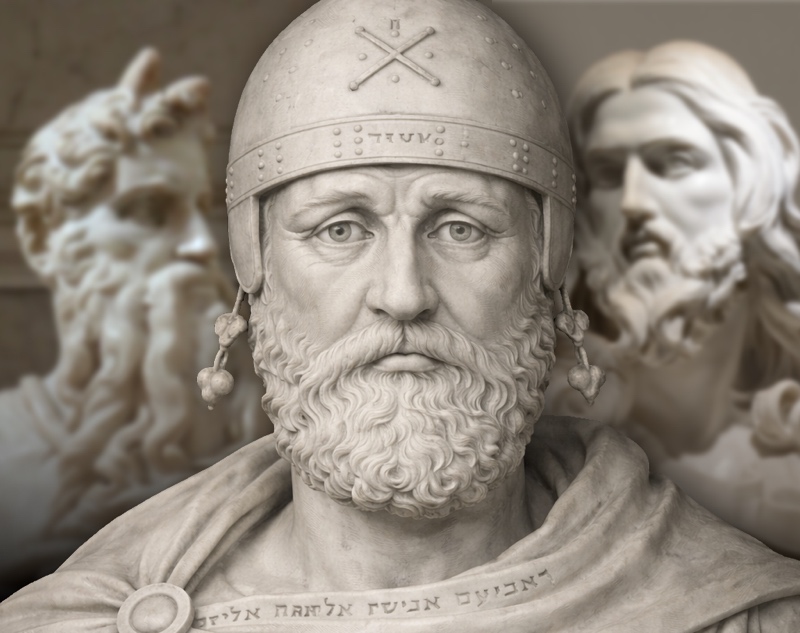
It looks like the next phase in the study of Paul, after the New Perspective on Paul and Paul within Judaism, will be Paul (within Judaism) within paganism. See, for example, Paul Within Paganism: Restoring the Mediterranean Context to the Apostle, edited by Chantziantoniou, Fredriksen, and Young (2025), which presents “a florilegium of essays tracing the various ways in which Paul’s Jewish religious program is native to the ancient Mediterranean” (xi). The British New Testament Society conference this year will have a session on the book and related themes, to which I will be contributing.
The death and resurrection of Jesus, locked together in a brief three-day period, constitute the defining moment of Christian belief. It is here that the light of God’s love for humanity burns most brightly through the dingy fabric of history. But the light of the Easter event can be so… ( | 6 comments)
The documents of the New Testament provided a specific eschatological framework for the formation of the early communities of Christ followers. They taught them, first, how to see themselves as a people of God reconstituted beyond the geographical, historical and theological boundaries of… ()
Mark Driscoll, who is beginning to inhabit the darker regions of my consciousness like some baleful theological bogeyman, recently announced by Tweet that Charles Haddon Spurgeon is his favourite mentor outside of scripture. ()
ReJesus: A Wild Messiah for a Missional Church, by Michael Frost and Alan Hirsch, is a call to a renewal of spirituality and discipleship centred on Jesus; it describes what that renewed spirituality and discipleship might look like; it tells some powerful stories about spirituality and… ()
One important point of biblical interpretation that came up during the course of a recent TREK gathering with the Christian Associates team in Gothenburg had to do with the meaning of Jesus’ story of the sheep and the goats in Matthew 25:31-46. It is remarkable how this passage is widely and… ( | 1 comment)
Reading Ed Stetzer’s reflections on the ‘meanings of missional’ from a year or so back provoked a familiar sense of bewilderment. How is it that five lengthy posts on the meaning of such terms as ‘missional’ and missio dei, plus a large number of appended comments from leading… ( | 4 comments)
I recently came across - I guess my ears were burning - a brief discussion initiated by Stephen Murray about the difference between a ‘narrative-historical’ or ‘narrative-realist’ approach to biblical interpretation and classic Preterism. The question is pertinent, so I will attempt here to outline… ()
Recent comments