The article argues that Jesus’ resurrection is not the climax of the gospel but a means to a larger eschatological goal. Paul’s message in 1 Corinthians 15 focuses narrowly on Jesus’ death and resurrection to address doubts about bodily resurrection, not to define the full gospel. The author claims this event primarily concerns Israel, not all humanity: Jesus died for the sins of Jews within a specific historical crisis. His resurrection signals future hope—the vindication of believers and eventual recognition of Christ by the nations. Thus, the true emphasis is on the coming fulfillment of God’s purposes, not the resurrection alone.
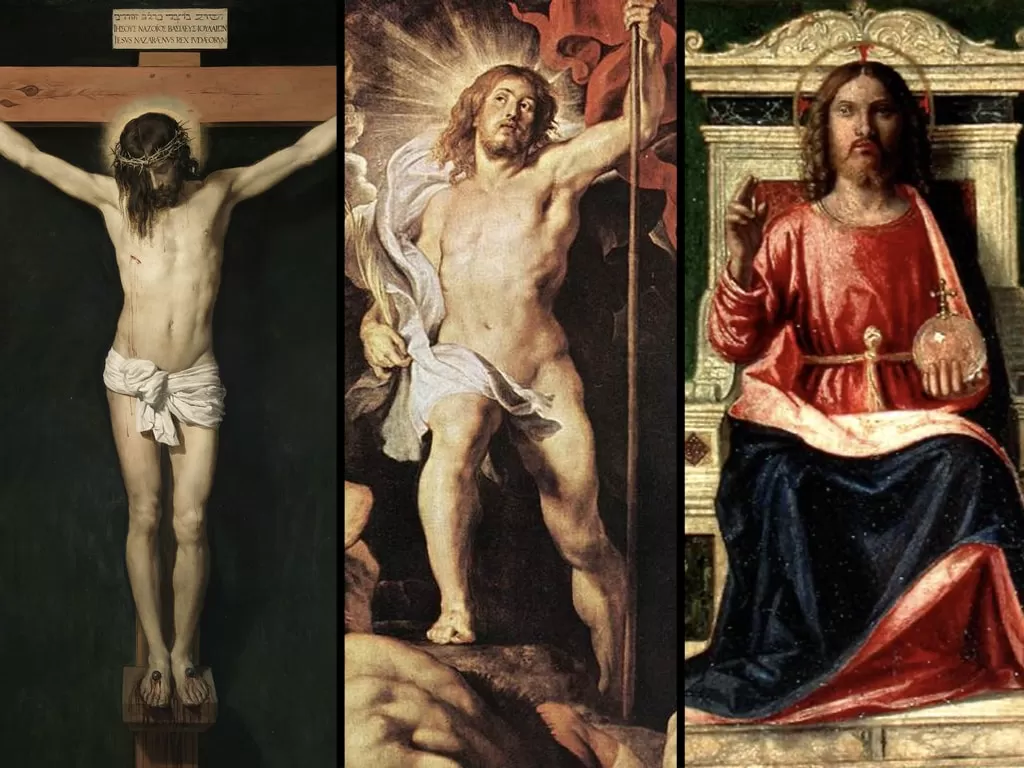
If we think that the resurrection of Jesus is the climactic event in the testimony of the early church, constituting the triumph of life over death for all humanity, we are missing the point.
At the beginning of an extensive discussion of resurrection, Paul recapitulates the “gospel” which he had proclaimed in Corinth:
Now I would remind you, brothers, of the gospel I preached to you, which you received, in which you stand, and by which you are being saved, if you hold fast to the word I preached to you—unless you believed in vain. For I delivered to you as of first importance what I also received: that Christ died for our sins in accordance with the Scriptures, that he was buried, that he was raised on the third day in accordance with the Scriptures…. (1 Cor. 15:1-4)
There are two principal ways in which the later Easter tradition has got this wrong, I think.
First, the resurrection is not the end of the story or of the gospel proclamation. It is not even the most important part of it. It is the means to another end.
Secondly, the significance of the death and resurrection of Jesus is—for Paul here and for the New Testament generally—confined to Israel and to a period of eschatological transition, culminating in the vindication of the whole Jesus movement at the parousia—at the moment when Christ would be embraced as Lord by the nations of the Greek-Roman world.
A truncated gospel
The matter under discussion in 1 Corinthians 15 is not the gospel, it is the fact and implications of the resurrection of Jesus. Paul reminds his readers of the content of the tradition which he had “delivered” to them because some people in Corinth have been saying that “there is no resurrection of the dead” (15:12).
So the good news proclaimed to them is limited to the immediate circumstances of his death and resurrection—“that Christ died for our sins in accordance with the Scriptures, that he was buried, that he was raised on the third day in accordance with the Scriptures” (1 Cor. 15:3-4).
This falls short of the gospel with which Paul opens his letter to the Romans, which is that the Son from the seed of David has been “appointed Son of God in power according to the Spirit of holiness from resurrection of the dead, Jesus Christ our Lord” (Rom. 1:4*). Here the resurrection of Jesus is the means by which he has become the Son of God—the messianic king—who will in due course rule over the nations (15:12; cf. Phil. 2:10-11).
In fact, we eventually get somewhere near this eschatological hope towards the end of 1 Corinthians 15: Christ must reign until all his enemies have been put under his feet. This evokes the strongly political expectation of Psalm 110:1: “The LORD says to my Lord: “Sit at my right hand, until I make your enemies your footstool.” But Paul’s thought is still basically anthropological: it is the defeat of the last enemy, death, and the participation of the martyrs in Jesus’ resurrection life towards which the argument bends.
What matters is that those who have died in Christ will not go unrewarded for their patient witness. As Paul says in 1 Thessalonians 4:15-16, when the Lord descends from heaven to bring the transitional period to an end, “the dead in Christ will rise first”—in a “first resurrection,” to reign with Christ throughout the rest of human history (Rev. 20:4-6).
The eschatological scope of the argument is also evident in the idea that salvation is a process. The Corinthian believers in Jesus are being saved (sōzesthe), they need to hold fast to the word preached to them, it may turn out that they believed in vain (15:2). They are waiting for the revelation (apokalypsin) of the Lord Jesus Christ to the nations of the ancient world and need to be sustained until that consummation of their faith.
Resurrection and the story of Israel
Paul says that “Christ died for our sin.” Whose sins exactly? To whom does “our” refer? The answer may seem obvious. Humankind. People. He died for the sins of the world, surely.
I suggest that there is often an underlying distinction in Paul’s writings between we Jewish apostles, emissaries one way or another from Jerusalem, and you in the churches across the Greek and Roman world, who may well be mostly gentile. So when he says that Christ died for our sins, he means the sins of the wicked and adulterous generation of Jews in the land whom Jesus condemned and who retaliated by having him put to death. Paul implicitly identifies with this historically delimited, sinful Israel when he says that he “persecuted the church of God” (15:9).
I disagree, therefore, with Gordon Fee, who says that the rudimentary creed in 1 Corinthians 15:3-4 “presupposes alienation between God and humans because of human rebellion and sinfulness, for which the just penalty is death.”[fn]Gordon D. Fee, The First Epistle to the Corinthians (1987), 724.[fn]
There is no atoning death for the sins of gentiles in the Old Testament, as far as I am aware. In Jewish thought generally, a righteous Jew suffers only for the sins of his people.
Isaiah’s suffering servant was, in my view, the exilic community or Babylon or the descendants of the original deportees. In any case, he suffers only for the sins of Isaiah’s people:
By oppression and judgment he was taken away; and as for his generation, who considered that he was cut off out of the land of the living, stricken for the transgression of my people? (Is. 53:8)
The devout Maccabean martyrs were a “ransom (antipsychon) for the sin of the nation”; their deaths were the “propitiation” (hilasteriou) by which Israel was preserved (4 Macc. 17:21-22).
We should assume that the same narrow historical framework is in place when Jesus says that the Son of Man came to give his life as a ransom or redemption payment (lytron) for many (Mk. 10:45), or when he says that his “blood of the covenant… is poured out for many” (14:24), or when Paul says that God put forward Jesus as a “propitiation by his blood” (Rom. 3:25). He died for the sins of the Jews.
The argument is also evident in Galatians. When the fulness of time came, Jesus was sent to Israel to “redeem those under the Law” (4:4*). He was not sent to redeem gentiles. So when Paul earlier says that he “gave himself for our sins to deliver us from the present evil age” (1:4), he means the sins of us Jews. The “present evil age,” of course, is not the whole of human history; it is the critical period under Hellenistic and Roman domination which would culminate in the destruction of Jerusalem and its temple.
Finally, that Christ was “raised on the third day in accordance with the Scriptures” must allude somehow to Hosea 6:1-2:
Come, let us return to the LORD; for he has torn us, that he may heal us; he has struck us down, and he will bind us up. After two days he will revive us; on the third day he will raise us up, that we may live before him.
This keeps specifically the crisis of Israel’s faithlessness in view: Ephraim has played the whore, Israel is defied, the Lord has withdrawn from them, he will pour out his wrath on them like water (5:3-10).
The thought of a corporate resurrection of repentant Israel anticipates Paul’s argument about those who have fallen asleep being “made alive” in Christ at his coming (1 Cor. 15:22-23).
The tradition has been formulated in such a way that the story of Jesus’ death and resurrection plots the experience of the Jews whose representative is Paul.
So what is Paul’s Easter message?
What Paul is saying is this. The gospel message that he had originally proclaimed to the Corinthians was that Jesus had died for the sins of Israel and that his resurrection constituted the ground for the apostles’ hope for the future of God’s people. It is this future hope that really counts, though. It would mean, on the one hand, the eventual acceptance of Jesus Christ as supreme Lord by the nations, to the glory of the one true God; and on the other, the vindication or justification of the faith of the suffering churches, over whom death had no final power.
I appreciate you sharing this article—it’s clearly trying to take Paul seriously within his historical and Jewish context, and that’s something I value deeply. Too often we read the New Testament as if it dropped out of the sky rather than emerging from a real story, rooted in Israel and moving outward into the world.
At the same time, I find myself wrestling with some of its conclusions.
It seems to me that in trying to correct a common misunderstanding of the resurrection—reducing it to “going to heaven when we die”—the article moves too far in the opposite direction. In doing so, it risks diminishing something that Paul treats as absolutely central: the decisive, world-altering victory of God over death itself.
When Paul speaks of the resurrection in 1 Corinthians 15, he does not present it as a secondary step toward something more important. Rather, it is the turning point on which everything stands or falls. If Christ is not raised, faith collapses, sin remains, and death still reigns. That’s not a supporting role—that’s the foundation.
I do think the article is right to remind us that the resurrection is not merely about individual destiny. It is not simply about where we go when we die. It is about something far larger: the public vindication of Jesus as Lord, the inauguration of his reign, and the beginning of God’s new creation.
But I would want to say that this “something more” does not replace the defeat of death—it includes and depends on it. The resurrection is both: the victory over death, and the enthronement of Jesus as Lord
These are not competing ideas in Paul—they are inseparably joined.
I also struggle with the article’s narrowing of the gospel to Israel alone. While Paul certainly speaks as a Jew and understands Jesus within Israel’s story, he consistently unfolds that story outward. The good news does not remain confined there—it reaches the nations. As he makes clear in Romans, God is not the God of the Jews only, but of the Gentiles also. The saving work of Christ, including both his death and resurrection, is ultimately for all.
What I find most compelling in Paul is precisely this widening horizon: what begins in Israel breaks open through the resurrection and extends to the renewal of all things
So I think the article is helpful in one sense—it pushes us beyond a reduced, overly individualistic view of Easter. But in doing so, it risks flattening the full scope of what Paul is proclaiming.
The resurrection is not less than we have often thought—it is far more. It is not simply about life after death. It is about the end of death’s dominion. It is the beginning of a new creation under the lordship of the risen Christ.
And that is where, I think, Paul would want us to stand, with both feet firmly planted in the power of the resurrection, holding together its personal, historical, and cosmic significance.
@David :
David,
When you say that Paul states that the resurrection is “the turning point on which everything stands or falls,” I would say he makes it of great import, but Paul is addressing the question of whether there is a resurrection or not. He isn’t simply waxing eloquent on the resurrection. So, in addressing that issue, he is going to underline its essential importance. But, even if you don’t take Andrew’s full argument here, we have to still acknowledge that the resurrection was part of a story for the enthronement of Israel’s Messiah and to become ruler of the nations.
As to narrowing the story of the gospel to Israel, Paul begins to invite others (Greeks-Gentiles) to be a part of this story. He realized they, too, can follow the Messiah and participate as the community of God’s people. But the Greek-Gentile good news story would more greatly unfold after the Jews were collectively judged.
@David :
Thanks for your nicely argued push back. I’ve responded here.
Recent comments