The author examines N. T. Wright and Michael Bird’s view that the New Testament’s “kingdom of God” reflects a historical clash between Christianity and the Roman Empire, highlighting Jesus’ kingship as both political and theological. He affirms their strength in situating Scripture within real history but critiques their conflation of “kingdom” and “new creation.” The author argues the kingdom concerns historical events—like Rome’s rise and fall—while new creation is a separate, ultimate divine renewal. He challenges their global framing, insisting the New Testament focuses on regional outcomes, and concludes that later history exposes the limits and contingency of early Christian expectations.
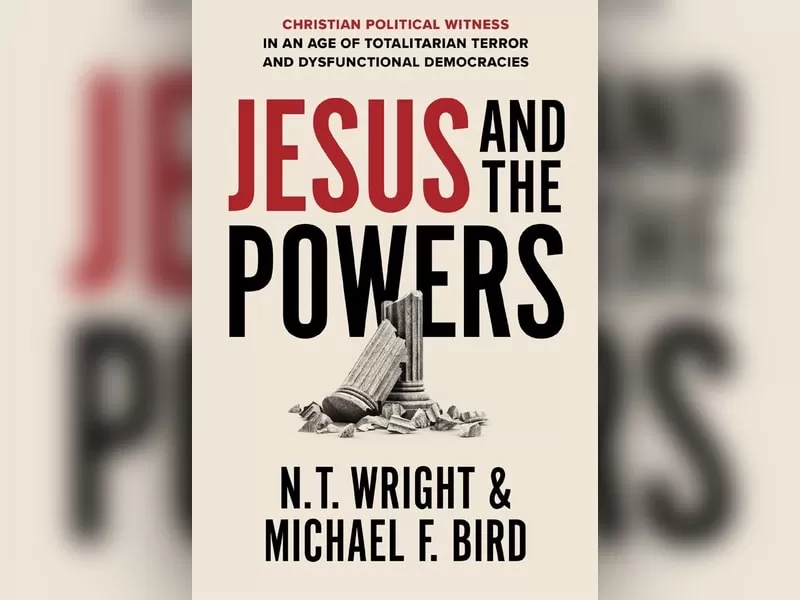
I think that N. T. Wright and Michael Bird may slowly be coming round to seeing things my way, even if they’re not aware of the fact. In the first chapter of their co-authored book, Jesus and the Powers: Christian Political Witness in an Age of Totalitarian Terror and Dysfunctional Democracies, they make a case for understanding the kingdom of God theme in the New Testament as a function of the contest between Christianity and pagan Rome. Let’s begin with a quick summary of their argument about the kingdom of Jesus in the shadow of empire and then consider some of its strengths and weaknesses.
The kingdom of Jesus in the shadow of empire
So to begin with, God is ultimately sovereign over the “clash of civilisations” that constitutes history. History is the arena in which God acts, and “all history will culminate in a dramatic moment when God puts the world to rights through Jesus.”
The church’s answer to the global polycrisis of the early third millennium is the kingdom of God. God has appointed Jesus as King of kings and Lord of lords, and the vocation of the church is “to build for the kingdom”—not to build the kingdom ourselves but to build for the kingdom, to prepare for the marriage of heaven and earth when it finally comes.
The kingdom of God is “God’s rescue and restoration of the entire creation as worked out in the context of Israel’s covenantal history and God’s action in the person and work of Jesus.”
The new creation begins with the resurrection and the outpouring of the Spirit, and the followers of Jesus declare that in these events the “rebellious powers” have been defeated.
The kingdom of God was to be worldly rather than heavenly or merely spiritual, but it was not another “earthly empire”; rather it was a “vision and vocation for faithful action that works to bring God’s kingship over every facet of human life.”
Wright and Bird quote the Hong Kong theologian Kwok Pui-Lan: “Christianity cannot be understood apart from empire.” They briefly review the long history of conflict between Israel and the empires of the ancient world, and conclude that the day was drawing near when “the kingdom of the world has passed to our Lord and his Messiah… and he will reign forever and ever (Rev. 11:15).
Jesus appeared on the scene when Rome dominated Israel’s world, and this provides the interpretive context for his announcement about the coming kingdom of God. “The day was coming, and was now already here, when the empires of this age would be eclipsed and judged by the kingly power of Israel’s God.”
Paul then configures this programme as a two part schema: first, God’s “royal rescuing power”—the death of Jesus for our sins; secondly, a future reckoning, the “end,” when the last enemy has been destroyed (cf. 1 Cor. 15:24-26).
The Romans were aware of Jewish messianic hopes of world rule: “many were convinced that it was contained in the ancient writings of the priests that at that very time the East would grow strong, and that men coming from Judea would gain control of things” (Tacitus, Histories 5.13*; cf. Suetonius, Vespasian 4.4).
Paul urged respect for Roman authorities (Rom. 13:1-7), but his gospel about the Lord Jesus had “sociopolitical implications.” He believed that the “son of Augustus” would be replaced by the “Son of David”—“the one who rises up to rule the nations; the nations shall hope in him” (Rom. 15:12).
So in classic Wright-speak:
it means that Paul was not a travelling evangelist offering people a new religious experience, but an ambassador for a king-in-waiting, establishing cells of people loyal to this new king, and ordering their lives according to his story, his symbols and his praxis, and their minds according to his truth. (21)
The book of Revelation should be understood along the same lines, as a “socio-religious critique of Roman power and propaganda,” which would soon be judged. “Rome would fall, as would all empires that set themselves up against the lord God and his Messiah.”
The early church expected Jesus to return to “judge the world with true justice. One day, empires as the world has known them will be no more.”
But—now this surprised me!—Wright and Bird acknowledge that a moment in history was approaching when Roman soldiers would emblazon the sign of the cross on their shields.
An act that marked the end of the cross as a symbol of Roman tyranny over Christians and marked instead the beginning of a new era when Rome would see herself as a faithful servant of the Lord Jesus Christ. (23)
In the words of the American historian of western civilisation, Will Durant, “Caesar and Christ had met in the arena, and Christ had won”—bringing to an end an age-old pagan religious system.
But the end of one story, inevitably, is the beginning of another one: the church had to reorient itself dramatically—“from resisting empire to residing within the empire as a privileged guest.”
So there we have the chief strength of the account: the New Testament is placed back in history, not only reaching backwards into the story of Israel but also looking forwards through an apocalyptic lens to real political-religious outcomes.
Nevertheless….
History strikes back, theologians beware!
The chapter opens with a section entitled “History strikes back.” Essentially, Francis Fukuyama cautiously declared (“we may be witnessing”) the victory of liberal democracy over all other ideologies and, therefore, the “end of history as such.” But he was wrong, as its turned out. History has refused to die: “empires are still on the march, and liberal democracy is not the bastion of benevolence that we like to pretend it is” (5).
Therefore, we need to start talking seriously again about the God of history. Correct.
But a similar complacency has hobbled biblical interpretation, certainly in the modern era, perhaps since the early centuries of western Christendom. It has been assumed that the biblical narrative of the troubled existence of the historical community of God’s people came to an end, to all intents and purposes, with the giving of the Spirit to the church at Pentecost. The eternal Son had been sent to die for the sins of the world, had been raised to life, and now the church was equipped to proclaim that truth and bring people to salvation throughout the coming ages. End of story.
So before we ask about how the church should now respond to historical events, what Christian political witness should look like in a “world of rising empires, endless calamities, pandemics, terrorism, democratic disarray and culture wars,” etc., we need to get to grips with the hermeneutics: what is historical interpretation teaching us about how the Bible speaks and what it says.
The church substituted for history an immutable, theologically determined worldview, which needed only to be expounded and defended. But in the modern era, historical interpretation has fought back with ferocity, and it is only quite recently that the church has learned to tame the critical tools and put them to good use. N. T. Wright and Michael Bird are prominent examples of that development.
But it is a work in progress, and I think we see signs of incompleteness and inconsistency in this chapter.
Kingdom and new creation are very different things
I make this point frequently—see, for example, my recent and unfinished review of a series of posts by Joel Green on the kingdom of God.
Wright and Bird’s chapter illustrates the widespread tendency to confuse kingdom and new creation. It ends with a political-religious event, the conversion of Rome to the worship of the God and Father of the Lord Jesus Christ. But all the way through the authors have been straining to interpret kingdom in much larger creational terms. They want to have it both ways.
We can probably agree that the resurrection of Jesus was the beginning of new creation in some sense—a new bodily existence beyond death, anticipating a new heaven and earth in which there is no more death.
The outpouring of the Spirit, however, is at most a new covenant event—an aspect of the renewal of the covenant between God and his people as part of the ongoing management of its life and work over long periods of time.
The defeat of the rebellious powers through the cross is also a political, kingdom-oriented event, the defeat of opposition to the witness of the church to the coming reign of Christ and to the fulfilment of that reign. Not new creation.
Not putting the world to rights through Jesus
There is the expectation in the New Testament that God would put Israel to rights through Jesus in history and that he would put the Greek-Roman world or oikoumenē to rights through Jesus in history. The outlook is quite properly local or regional. The biblical story all the way through, as Wright and Bird themselves make clear, is about nations and empires, peoples and civilisations.
There is no putting the whole of creation to rights through Jesus.
He is proclaimed as future judge and ruler of the nations within the limited historical purview of the early Jewish apostolic movement. So he features prominently as the warrior Word of God, “King of kings and Lord of lords,” who will rule the nations with a rod of iron in Revelation 19:11-16, at the time of the overthrow of Babylon the great, which is Rome.
But after the thousand year rule over the nations, when there is a final judgment of all the dead and a new heaven and earth appear, he plays no active role. At this stage, no enemies—not even death—threaten the security of God’s people. So the authority to rule has been handed back to God (1 Cor. 15:24-26), and the new creation, quite properly, is solely the work of the Creator (Rev. 21:5).
Kingdom and new creation are two quite different things. First the dynamic management of God’s people in history, then the final renewal of all things.
Paul’s two part schema
That Rome dominated Israel’s world in the first century is a matter of great importance, but I don’t think we can say that the judgment of the empires of this age is the interpretive context for Jesus’ declaration on his return to Galilee that the kingdom of God was at hand (Mk. 1:14-15).
In Jesus’ view of the future, it is Israel that is liable to the wrath of God, and Rome is the agent of that judgment. There is no subsequent judgment of the nations—that is at best an unspoken implication of his use of Daniel’s vision of “one like a son of man” coming with the clouds of heaven to receive the kingship taken from the fourth beast.
That means, too, that we must reframe Paul’s two part schema.
The first horizon is wrath against the Jew. The second horizon is not the final defeat of death but wrath against the Greek. In the course of this tumultuous “eschatological” programme a community is saved: Jesus’ death is an atonement for the sins of his people, believing gentiles find themselves grafted into this movement of renewal through the Spirit. But the determinative kingdom events are the destruction of Jerusalem and the temple by Rome and the eventual conversion of the Greek-Roman world to the worship of one God. Jesus and his followers are the means to that end.
The defeat of death and the remaking of heaven and earth belongs, I suggest, to a more distant third horizon, beyond the travails of historical existence.
All roads lead to the overthrow of Rome
It seems to me unhistorical to say that the New Testament treats the overthrow of pagan Rome as an instance of the fate of all empires. If anything, the overthrow of Babylon the great, the confinement of Satan in the abyss, and the rule of the crucified Son of David, with the martyrs, over the peoples of the Greek-Roman world is presented as climactic and final.
There is no speculation about how that rule would play out, how long it would last, whether it would spread beyond the region, whether it would be threatened by other powers—not until the short-lived eruption of Satanically inspired hostility at the end of the symbolic thousand year period, in John’s apocalyptic vision (Rev. 20:7-10).
This is where history really strikes back
This creates a historical problem for us. If western Christendom was the fulfilment of the hope that a root of Jesse would rule over the nations (Rom. 15:12), what are we to make of the collapse of Christendom under the crushing weight of modernity? Here’s where history hits back pretty hard.
The prophets and apostles could not see beyond the horizon of Christ’s triumph over Caesar—the loss of the political consensus, the rise of a scientific liberal humanism, the withdrawal of the western church into a private faith space.
So here’s the great irony.
Historical enquiry has uncovered for us the powerful cables of meaning that anchor the conversion of the Greek-Roman world in the apostolic mission. But historical experience has also exposed the fundamental contingency and ephemerality of the triumph of Christ over Caesar. Fifteen hundred years later, the West has suffered another regime change, with epochal consequences.
Recent comments