The author agrees David grasps the historical framing of Jesus’ resurrection but rejects its universalized interpretation. He argues the New Testament presents resurrection more narrowly: primarily as vindication of martyrs within specific historical crises, not a general victory over death for all humanity. Jesus’ resurrection anticipates this “first resurrection,” tied to suffering and martyrdom, not final judgment. Paul emphasizes resurrection as necessary for perseverance and mission, not as an ultimate end. The author distinguishes kingdom (political rule) from new creation, criticizing modern theology for conflating them. Overall, resurrection serves the historical vindication and future rule of Christ and his people, not a fully universal, individual salvation.
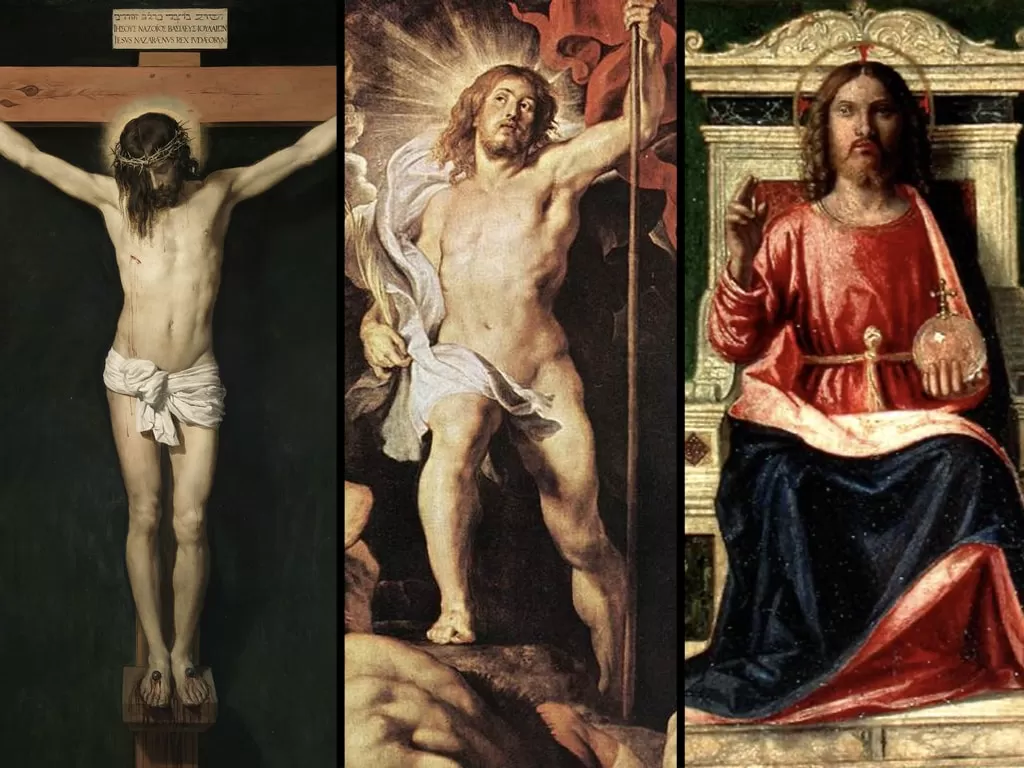
David has provided a very nice commentary on my previous post about the resurrection of Jesus on the third day. He has made it clear that he gets the main contention about the historical framing: “Too often we read the New Testament as if it dropped out of the sky rather than emerging from a real story, rooted in Israel and moving outward into the world.” But he pushes back at a number of points. He insists that the resurrection of Jesus in the New Testament is treated not merely as a moment in Jewish history but as an event of universal human significance. I have highlighted his main concerns and responded.
[The article] risks diminishing something that Paul treats as absolutely central: the decisive, world-altering victory of God over death itself.
It’s not a risk, it’s intentional. I think that the church has overstated the reach of this victory over death. There is, to be sure, a final defeat of death at the end of Revelation: there will be no suffering, evil, death in the new heavens and new earth: “Death and Hades were thrown into the lake of fire… death shall be no more” (Rev. 20:14; 21:4). But it seems to me that pretty much everything else that is said about the defeat of death and resurrection in both the Old and New Testaments has a more limited purview: essentially a resurrection of members of the covenant community who died in the course of a historical crisis—the clash with Antiochus Epiphanes, the end of the age of second temple Judaism, the protracted contest with classical paganism.
John the apocalypticist differentiates between a first and a second resurrection (Rev. 20:4-6): first a resurrection of the martyrs at the time of the overthrow of pagan Rome, then a resurrection of all the dead after the symbolic thousand year period, for a final judgment according to works.
Jesus’ resurrection anticipates John’s first resurrection, not the second: resurrection following martyrdom, not merely resurrection following death.
This is the critical point: Jesus did not die a natural death.
When Paul speaks of the resurrection in 1 Corinthians 15, he does not present it as a secondary step toward something more important.
I don’t think that’s true. At the beginning of the letter, he says that they are waiting “for the revealing of our Lord Jesus Christ, who will sustain you to the end, guiltless in the day of our Lord Jesus Christ” (1 Cor. 1:7-8). And even in chapter 15 a decisive future is in view, an “end.” Christ must reign until his enemies have been subjugated and even the last enemy has been destroyed, death (15:24-26).
If there has been no resurrection of Christ (15:13), there will be no future day of the Lord Jesus Christ. So their faith in this new future is in vain—indeed, the whole gospel is in vain (15:14). This is what is at stake—not the resurrection only but the future rule of Christ over the nations.
As Scott has pointed out, Paul’s immediate concern in this passage is with the question of “whether there is a resurrection or not.”
There is certainly a personal dimension to this, for Paul and for the believers to whom he writes. The apostle appears to have been profoundly and painfully conscious of his own participation in the sufferings, death, and resurrection of Christ. I suspect that his quite extended reflection on the eschatological process and on the nature of the resurrection body is motivated by his desire to know Christ and “the power of his resurrection, and may share his sufferings, becoming like him in his death, that by any means possible I may attain the resurrection from the dead” (Phil. 3:10-11).
But he holds out the same hope to the churches, which in all likelihood will face a day of fire and will need to be built on the foundation of Jesus Christ if they are to survive (1 Cor. 3:10-15).
As I said, resurrection is not the end, it is the means to the end of the vindication and glorification of the whole church at the parousia.
It is not simply about where we go when we die. It is about something far larger: the public vindication of Jesus as Lord, the inauguration of his reign, and the beginning of God’s new creation.
I think it is important to differentiate between the inauguration of kingdom and the beginning of new creation. Kingdom and creation are different things. Creation is the larger category; kingdom has to do with the government of nations—especially the government of Israel in relation to more powerful and often hostile nations. Sometimes the renewal of the life of the people of God is described as new creation, but this is strictly metaphorical.
But if the coming of the kingdom is not the renewal of creation, it must happen in his history before the final event. It is very much to the point that in John’s visions the coming of the “King of kings and Lord of lords’ to judge the nations follows on from the overthrow of Babylon the great, which is pagan Rome (Rev. 19:15-16).
There is no coming of Christ as king and judge, no mention of kingdom, a thousand years later when the final judgment and remaking of heaven and earth take place. It is precisely at this point, if we may venture to align the two apocalyptic schedules, when the last enemy has been destroyed, that Christ hands back to God the authority to rule over his people in the midst of the nations and is himself subjected, so that the creator “may be all in all” (1 Cor. 15:27-28).
The resurrection is both: the victory over death, and the enthronement of Jesus as Lord.
Yes, there is no enthronement of Jesus as Lord without the victory over death—just as the martyrs would not reign with Christ in the thousand year period unless they participated in the first resurrection. Resurrection is the necessary condition for Jesus becoming Son of God in power, according to the Spirit (Rom. 1:3-4). But in view is resurrection only insofar as it meets the requirement of the vindication of Jesus and those who would be conformed to his image through suffering and resurrection.
In the terms of the development of biblical thought, the resurrection of all humanity for a final judgment comes late and is anomalous. The major theme is the resurrection of Israel metaphorically (Is. 26:19; Ezek. 37:1-14; Hos. 6:1-2) or of those Jews, righteous and unrighteous, who died in the conflict perhaps literally (Dan. 12:2-3).
What we see in the New Testament is an extension of this outlook. If the “resurrection” of penitent Israel “on the third day” in Hosea 6:1-2 is interpretive for Paul’s “gospel” (1 Cor. 15:4), which I think must be the case, then we have very clearly—explicitly—the assimilation of Jesus’ resurrection to a national-historical narrative.
As he makes clear in Romans, God is not the God of the Jews only, but of the Gentiles also. The saving work of Christ, including both his death and resurrection, is ultimately for all.
My response here would be that in Romans Paul is still thinking primarily in corporate terms. If “ultimately for all” means “for every human person,” I think that betrays a later—arguably modern—perspective on the New Testament.
So, on the one hand, if gentiles are becoming witnesses to the future rule of Christ, they do so having been grafted into an olive tree that has its roots in the promises made to the patriarchs (Rom. 11:16-24). Gentiles have been included in the covenant community as a sign that the God of Israel will in due course be worshipped by formerly pagan nations.
On the other hand, the future is still conceived in political rather than personal terms—not the universalised, individualised soteriology of modern Christianity but the rule of Christ over nations, analogous to the rule of Caesar over nations, in which new world the churches would serve as a “royal priesthood” in place of the old pagan priesthoods.
But, of course, we now unavoidably have a modern perspective on the New Testament. In modern theologies, “kingdom” has lost its political and historical orientation and has become more or less synonymous with “new creation.” So naturally, for us, the resurrection of Jesus stands for a final victory over death, not merely for the renewal of Israel on the third day or for the vindication of the martyrs in the conflict with Rome.
That’s probably how the story must continue—but not, I would urge, at the cost of misrepresenting what is going on in the earlier biblical chapters.
Recent comments