The author argues that Babylon the great in Revelation refers to Rome, not Jerusalem, countering Jason Staples’ view that the woman symbolizes Jerusalem. Staples believes Jerusalem birthed the Messiah but later aligned with imperial Rome, becoming corrupted and ultimately destroyed by it. The author disputes this by showing that Revelation depicts Babylon as the dominant, corrupting power over nations—characteristics better suited to Rome. He critiques Staples’ symbolic links and biblical parallels, arguing they are speculative or misapplied. Ultimately, the author sees Rome as the centre of worldly corruption, contrasted with the new Jerusalem, the holy city to come.
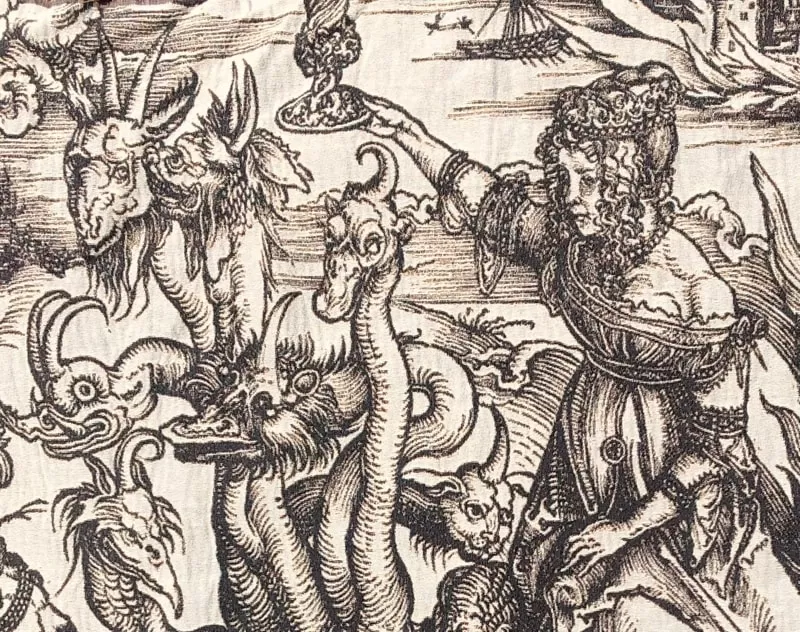
I have long held the view that Babylon the great in Revelation 17-18 is the city of Rome as the capital of a decadent imperial power. Jason Staples used to think the same, but in a recent Substack post he explains why he has adopted the minority position that the lurid and dissolute woman depicted in this vision is Jerusalem. He starts out by recognising the force of the leading arguments in favour of the identification with Rome, then he gives the reasons for changing his mind, summarised in bold text here. I’ve gone about this in a bit of rush, but it has thrown up some interesting issues.
The beast introduced in Revelation 13 is Rome, so how can the woman also be Rome?
I don’t think this is difficult to resolve. The beast is the extended imperial and military power ravaging and subjugating the nations. The woman is the corrupted and corrupting city of Rome at the heart of the empire. Daniel’s beasts are not cities but forces which lay waste to the earth. But the devil is in the details….
The woman who is Babylon the great is the woman who gave birth to a son, who would rule the nations with a rod of iron, and “led into the wilderness, where she has a place prepared by God, in which she is to be nourished for 1,260 days” (12:6).
The argument here is that, having failed to destroy the woman in the wilderness, the dragon summoned the beast and the false prophet “to accomplish what he could not.” When John is carried away into the wilderness in the Spirit (17:3), he sees:
a woman sitting on a scarlet beast that was full of blasphemous names, and it had seven heads and ten horns. The woman was arrayed in purple and scarlet, and adorned with gold and jewels and pearls, holding in her hand a golden cup full of abominations and the impurities of her sexual immorality. And on her forehead was written a name of mystery: “Babylon the great, mother of prostitutes and of earth’s abominations. (17:3-5)
Staples argues that this is the same woman but she has been ensnared by the beast which is Rome. “This woman is identified with the heavenly woman on the one hand, but on the other hand, she ultimately sells out as a prostitute.” So the woman who is Babylon the great is Jerusalem, who gave birth to the messiah, but then was corrupted by Rome.
Tragically, in the end, the beast “turns on the woman, consumes her, and burns her with fire” (17:16).
I think there are several problems with this line of thought.
- John is carried away by an angel “in the Spirit into a wilderness.” This wilderness is a place of visionary experience. In Revelation 21:10 he is carried away by an angel “in the Spirit to a great high mountain” to see the new Jerusalem coming down from heaven. The wilderness of vision is not the same symbolic wilderness as that of the allegory of Revelation 12.
- It is hard to think that Jesus would have been regarded as a child of Jerusalem—rather than as a child of righteous Israel, of the community of Jesus’ followers. There is first persecution against the Jewish-Christian community in Judea, then against the rest of her children in the diaspora (12:17). At the heart of Jesus’ prophetic mission was his denunciation of a generation that was already wicked and corrupt and of a city that was doomed to destruction.
- The woman is not merely a prostitute in the way that faithless Israel was sometimes portrayed as a prostitute: “How the faithful city has become a whore” (Is. 1:21). She is “the mother of the prostitutes and of the abominations of the earth” (17:5). This is the greatest prostitute-city, “with whom the kings of the earth have committed sexual immorality, and with the wine of whose sexual immorality the dwellers on earth have become drunk” (17:2). That sort of claim is never made for Jerusalem.
Babylon the great is the earthly Jerusalem in contrast to the bride of the Lamb, who is the heavenly Jerusalem.
My view is that the contrast is between Rome as the centre of the nations and a new and re-imagined Jerusalem as the centre of the nations. The “holy city Jerusalem” that descends in the second vision (21:9-14) lands in the midst of there nations, and by its light “will the nations walk, and the kings of the earth will bring their glory into it” (21:24).
The woman is explicitly interpreted to be “the great city that has dominion over the kings of the earth” (17:18), which is the “great city that symbolically is called Sodom and Egypt, where their Lord was crucified” (11:8).
There is no problem with having two great cities. Nineveh was a “great city,” liable to judgment (Jon. 1:2; 3:2; 4:11). Jerusalem was a “great city,” liable to divine judgment (Jer. 22:8). I argue in The Coming of the Son of Man that both Jerusalem and Rome are subject to judgment in Revelation.
The description of Babylon the great as “drunk with the blood of the saints, the blood of the martyrs of Jesus” (17:6) more likely refers to Jewish persecution of followers of Jesus (cf. Matt. 23:36-37; 1 Thess. 2:14-16).
Inasmuch as Revelation is a prophetic text, it was a realistic expectation that Rome would persecute the churches.
In a passage that echoes the account of the fall of Babylon the great in Revelation 17-18 at a number of points, Jeremiah says that “Babylon must fall for the slain of Israel, just as for Babylon have fallen the slain of all the earth” (Jer. 51:49).
“The fact that the prostitute is judged double for her sins—a judgment that is never applied to the nations/gentiles or empires in any early Jewish literature of which I’m aware—is a telltale sign that she is guilty of this double sin and should therefore be identified with those from inside the covenant, not the nations.”
Staples argues that only Jerusalem is repaid double for her sins in the Old Testament:
…her sin has been done away with, because she has received from the Lord’s hand double that of her sins. (Is. 40:2 LXX)
And I will doubly repay their injustices and their sins with which they have polluted my land with the carcasses of their abominations and with their lawless acts, by which they erred against my inheritance. (Jer. 16:18 LXX)
The double repayment of the exile, however, has reference to the two deportations to Babylon: first, fishermen will come and catch them, then hunters will track them down in the mountains (Jer. 16:16).
Jeremiah says concerning Babylon that “God is repaying (antapodidōsin) them, the Lord repays (antapodidōsin) to her the repayment (antapodosin) (Jer. 28:56 LXX = 51:56). That is, Babylon will receive a repayment equal to the two-stage punishment that she meted out to Israel.
John carries this idea over to the judgment of Babylon the great, perhaps even doubling the repayment: “Pay back to her as also she paid back, and double the double things according to her works, in the cup in which she mixed mix for her double…” (Rev. 18:6*). The “double things according to her works” corresponds to the double deportation of Jeremiah 16:16.
That the 144,000 are sealed before the destruction of the woman in Rev 17 is a strong point of connection to the prior judgment of Jerusalem in the time of the first temple.
There are two visions of 144,000 (7:1-8; 14:1-5). The first group are Jewish believers sealed before judgment against Jerusalem; the second group are those redeemed from the earth, who have resisted the corrupting power of Rome, and who have overcome death and are now with the Lamb in heaven. The two groups belong to different chapters in the unfolding narrative.
The woman has taken the name of the beast rather than the name of YHWH.
As Staples says, this is a little speculative—a little too speculative, I think. Only faithful and probably martyred believers take the name of God in Revelation: “Never shall he go out of it, and I will write on him the name of my God, and the name of the city of my God, the new Jerusalem, which comes down from my God out of heaven, and my own new name” (3:12; cf. 14:1).
The appeal to “come out of her, my people”… alludes not only to Isa 52:11 and Jer 51:6 but also to Jesus’ warnings about the abomination of desolation and instructions to flee from Jerusalem and Judaea before its destruction at the hands of the Roman invaders.
John hears a voice from heaven: “Come out of her, my people, lest you take part in her sins, lest you share in her plagues; for her sins are heaped high as heaven, and God has remembered her iniquities” (Rev. 18:4-5).
I’m surprised that Staples so easily dismisses Jeremiah 28:6-7 LXX = 51:6-7:
Flee from the midst of Babylon, and save your souls, each of you! And do not be cast aside in her injustice, because it is a time of vengeance on her from the Lord; he is repaying repayment to her. Babylon was a golden cup in the Lord’s hand, making all the earth drunken; nations drank of her wine; therefore they were shaken.
Not only do we have the call to flee from the oppressive pagan city, but we have the themes of “repaying repayment” (antapodoma… antapodidōsin) and of the cup of divine judgment which is passed back to Babylon (cf. Rev. 18:6).
The beast destroys the woman, Rome destroys Jerusalem.
And the ten horns that you saw, they and the beast will hate the prostitute. They will make her desolate and naked, and devour her flesh and burn her up with fire, for God has put it into their hearts to carry out his purpose by being of one mind and handing over their royal power to the beast, until the words of God are fulfilled. And the woman that you saw is the great city that has dominion over the kings of the earth.” (Rev. 17:16-18)
This is the more difficult text to explain.
According to the angel, the ten horns on the beast are ten kings who have not yet come to power. They enter into an alliance with the beast and are given a limited authority, presumably by God, for one hour to make war against the Lamb; but he will conquer them. They will then hate the prostitute; they will strip her naked, devour the flesh that is in her, and burn her with fire, in fulfilment of the words and purposes of God.
First, I make the point again that it cannot be said of Jerusalem in the first century that it had dominion over the kings of the earth. This was at best an eschatological expectation; the reality for occupied Jerusalem was very different.
If the beast is the wider empire, the ten horns are kings of subject nations who, in the future, perhaps in alliance with Nero, rise up against Rome. There may be some overlap with the expansion of the Jeremiah narrative in the Targums:
For the Lord has caused Babylon to be plundered and has destroyed many armies from her, and armies of many nations will be gathered against her, and they will raise up their voice in tumult. For plunderers have come against her, against Babylon, and her warriors were seized, their bows were broken, for God is the Lord of recompenses. He will indeed repay them their recompense. And I will make her princes and her wise men, her rulers and her tyrants and her warriors drunk, and they will die the second death and will not live for the world to come, says the King, the Lord of Hosts is His name. Thus says the Lord of Hosts: The walls of Babylon are broad. They shall indeed be made a ruin, and her gates are high. They shall be burned in the fire. (Tg. Jer. 51:55-58)
The armies of nations once subjugated by Babylon will turn against the imperial city. This will be repayment from God for the hurt inflicted on them. Quite possibly, John got the second death motif from this text or associated traditions.
Since Rome was and is famously the city on seven hills, how could the woman not be Rome? The answer is that Jerusalem is riding on Rome—by getting into bed with the Roman Empire, Jerusalem is now seated on Rome itself.
That’s not quite what John says: “The seven heads are seven mountains, where the woman sits upon them” (17:10*). Two symbolic planes intersect here. The beast has seven heads which are seven mountains—the empire is controlled from the city on seven hills; but the woman is enthroned directly on the mountains (epi autōn) herself. She is the city on the seven mountains. She is not sitting on the beast which is on the mountains.
Unrelated question: poking around Prof. Staples’ ‘blog, I encountered a review of his concept of an “ethnic Gospel”. I think this suggests that Paul may not have considered it important to spread the Jesus Story much beyond the geographical region into which the “lost northern tribes” had been dispersed and assimilated.
This would seem to have significant implications for present-day thinking about “global mission.”
Perhaps evaluation of this Staples proposal might be a worthwhile topic for a future post.
@Samuel Conner:
Indeed. No sooner said than done, Samuel. In fact, done sooner than said: Are the “gentiles” in Romans the lost tribes of the northern kingdom of Israel?
Recent comments