Paul’s condemnation in Romans 1:18–32 targets Greeks, not Israel alone. Although only Israel knew God covenantally, Paul believed Greeks possessed a real, though limited, knowledge of the true God through reflection on creation, as seen in Greek philosophy and poetry. Acts 17 shows Paul acknowledging this suppressed insight in Athens, where philosophers intuited a transcendent creator but were overwhelmed by idolatrous culture. Romans 1 echoes this: Greeks perceived God’s eternal power and deity yet exchanged this truth for images and immoral practices. Their idolatry and social disorder signalled divine abandonment and impending judgment, paralleling Paul’s wider Jew–Greek framework of wrath and salvation.
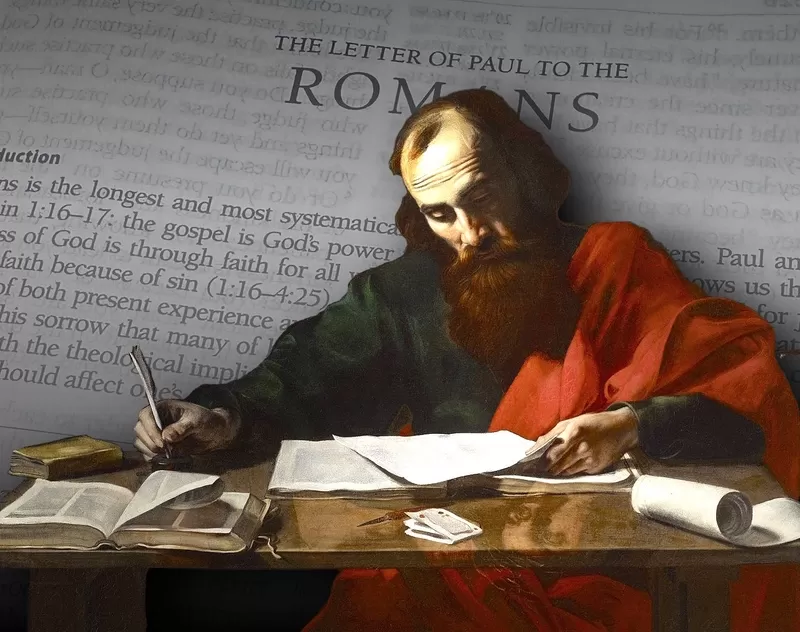
The group of people criticised in Romans 1:18-32 is said to have known the truth about God and to have known God but also to have departed from that knowledge by worshipping and serving the creature rather the creator. Jason Staples has argued that this can be said only of Israel, not of the gentiles because only Israel has known God.
I want to have another look at this conundrum, because it occurs to me that there may be a very straightforward way to explain how this may be said of the Greeks. I will suggest that Paul was aware of Greek philosophical traditions that intuited, from reflection on the nature of things, the existence of a supreme and perhaps sole deity, but he bemoaned the fact that this enlightened view was swamped by the dominant religious culture of idol-worship.
I’ll begin with Luke’s account of Paul’s time in Athens because I think this sheds a good amount of light on the matter, whatever its historical value.
As even the Greek poets and philosophers knew
Paul is waiting for Silas and Timothy in Athens. Luke tells us that his spirit is provoked within him by the idolatry of the Athenians, but he also engages with Epicurean and Stoic philosophers in the market place (Acts 17:18). Epicureans were materialists, and Paul would have had little time for them; but Stoics believed in the Logos as a unifying divine principle and could be loosely classified as monotheists. The devout Greeks drawn to the synagogues (17:17) were likely to have had their own interest in monotheism.
(I need to do more work on this, obviously.)
Addressing the men of Athens in the Areopagus, Paul says that they already worship an “unknown” God who “made the world and everything in it” (Acts 17:23-24). The obscure shrine that he came across symbolises for him the suppressed knowledge of the truth that the living God “does not live in temples made by man, nor is he served by human hands, as though he needed anything” (17:24-25).
He also declares that God determined the boundaries of the nations and desired them to “seek God, and perhaps feel their way towards him and find him” (17:27). The Greeks are one of these nations; there are others (Rom. 1:13). In fact, this God is not difficult to find:
for ‘In him we live and move and have our being’; as even some of your own poets have said, ‘For we are indeed his offspring.’ (17:28)
This suggests that Paul attributed to the Greeks some intuition of the truth about a divinity which cannot be reduced to carved images but which undergirds and sustains the whole of creation. This is obviously not the covenantally determined, relational knowledge of God as YHWH possessed by Israel. But it correlates rather well with what he says in Romans 1:20 about the “unseen things” of God, his “eternal power and deity,” perceptible in creation.
We do not know if Paul was familiar with the whole of Aratus’ poem Phainomena, but the line “we are also his offspring” (cf. Acts 17:28) betokens a knowledge of Zeus, Father of humanity, drawn from reflection on the natural order. He is worshipped first and last because he has put signs in the constellations to determine agricultural cycles.
From Zeus let us begin; him do we mortals never leave unnamed; full of Zeus are all the streets and all the market-places of men; full is the sea and the havens thereof; always we all have need of Zeus. For we are also his offspring; and he in his kindness unto men gives favourable signs and awakens the people to work, reminding them of livelihood. He tells what time the soil is best for the labour of the ox and for the mattock, and what time the seasons are favourable both for the planting of trees and for casting all manner of seeds. For himself it was who set the signs in heaven, and marked out the constellations, and for the year devised what stars chiefly should give to men right signs of the seasons, to the end that all things might grow unfailingly. Wherefore him do men ever worship first and last. Hail, O Father, mighty marvel, mighty blessing unto men. Hail to thee and to the Elder Race! Hail, ye Muses, right kindly, every one! But for me, too, in answer to my prayer direct all my lay, even as is meet, to tell the stars.
That statement is not entirely incompatible with the biblical idea of the one God who made and provides for all mankind:
those who dwell at the ends of the earth are in awe at your signs. You make the going out of the morning and the evening to shout for joy. You visit the earth and water it; you greatly enrich it; the river of God is full of water; you provide their grain, for so you have prepared it. (Ps. 65:8-9)
There are also older philosophical traditions going back to Xenophanes:
God is one, supreme among gods and men, and not like mortals in body or in mind. (Fr. 1)
But without effort he sets in motion all things by mind and thought. (Fr. 3)
Xenophanes first taught the unity of these things…, but he did not make anything clear, nor did he seem to get at the nature of either of these things, but looking up into the broad heavens he said: The unity is god. (Aristotle, Metaphysics 1.5.986b12)
Aristotle appears to be saying that Xenophanes, “gazing intently (apoblepas) at the whole heaven, said that the One is God”—in contrast to the plurality of the “elements of the natural world” (1.5.986b10). Xenophanes had learned from the oneness of the “whole heaven” above the truth that God is one, whereas created things exist in diversity.
That is more or less Paul’s point: even the Greeks knew from contemplation of the natural order that there is a fundamental difference between the oneness of God and the multiplicity of forms in which created objects existed.
So if the Greeks knew this, why did they come to think that “the divine being is like gold or silver or stone, an image formed by the art and imagination of man” (17:29)? There’s the conundrum!
In any case, this state of affairs will not last much longer. God has run out of patience, he commands people across the Greek-Roman world to repent, because he has fixed a day when he will judge the oikoumenē by a man whom he has raised from the dead for that purpose (17:29-31)—in other words, the Greeks face the wrath of God.
So let’s now turn to Paul’s argument in Romans 1:18-25. Can we map this against the argument of Luke’s Paul in Athens?
Some contextual considerations
The gospel, Paul says, is the “power of God for salvation for everyone (panti) believing, to the Jew first and to the Greek” (Rom. 1:16*). Here we have an “all”—albeit in the singular—that is directly qualified as “Jew” and “Greek.” There’s no reason to look beyond these ethnic categories.
Why does Paul put it this way when he is writing to believers in Rome?
The reason, I think, is that he has been confined to the eastern, Hellenistic part of the Mediterranean and is now writing from Corinth. He has been immersed in the world of the Greeks throughout his mission work—indeed, for most of his life—and only now is venturing westwards. He is writing to Rome but he is writing from Greece.
Generally speaking, it would appear that both the letters and Acts testify to a Paul—a Jewish Roman citizen—who is far more troubled by Greek idolatry and polytheism than by Roman imperial power.
The quotation of Habakkuk 2:4 in Romans 1:17 presupposes the prophet’s contention that YHWH will judge unrighteous Israel first, then the ruthless Chaldeans. Paul speaks of Jew and Greek living by faith because he shares the historical particularity and contingency of the prophet’s outlook. The Chaldeans, of course, were common-or-garden pagans, not the lost tribes of the northern kingdom.
Salvation for the Jew and the Greek, therefore, is necessary for the simple reason that both the Jew and the Greek face the wrath of God
If Paul specifically has the Greek in mind from 1:16 onwards, it may be that “also among you, as also among the rest of the nations (en tois loipois ethnois)” (1:13*) has reference to nations other than the Greeks. He intends to proclaim the good news of Jesus’ future rule over the nations (15:12) not only to the Greeks, as he has been doing, but also in Rome and to barbarians within the sweep of his mission from Jerusalem, by way of Illyricum, to Spain (15:19-24). But right now he’s particularly worked up about the Greeks and their degenerate pagan culture because he is in Corinth.
He still has the Jew and the Greek in mind in chapter two. At first glance, the language is universal: “He will render to each one according to his works…. Affliction and anguish upon every soul of man working evil… glory and honour and peace for everyone who does good” (Rom 2:6, 9, 10). But it is inclusive only insofar as it includes both Jew and Greek (2:9-10). Not Jew and gentile, not Jew and any other human person, not Jew and Israelite.
I have also argued—and had the argument published—that Paul returns to the theme of judgment on Greek religious error later when he speaks of the liberation of the “created thing” (ktisis) from its bondage to the futility of idol worship (Rom. 8:19-21).
Professing to be wise, they became foolish
Now what happens at verse 18? Does Paul now redefine what he means by “the Greek” as most interpreters seem to think, so that the term somehow stands for all humanity—or perhaps the Israelite?
First, it is said that the righteous must live by faith because (gar) “the wrath of God is revealed from heaven against all impiety and unrighteousness of people possessing the truth in unrighteousness” (1:18*). The wrath of God, as for Habakkuk, is a future, real world, politically realised act of divine judgment on these two people groups. In what sense it is already revealed will become apparent in a moment.
Then we note that his argument is not that the wrath of God is revealed against all people but against “all impiety and unrighteousness” of those people who happen to possess the truth in unrighteousness. The forms that this impiety and unrighteousness take are catalogued in detail in 1:21-32.
So who are these people who are defined—and delimited—by the fact that they possess the truth in unrighteousness?
Jason Staples thinks that Paul must mean Israel, and I have given my reasons for disagreeing. Romans 1:18-32 stands as a condemnation of Greek religious practice and ethics, even if there is a patchy subtext of Israel’s apostasies. I take it that when Paul mentions the Greek and then presents what looks like a classic piece of Jewish polemic against characteristically Greek practices, he means what he says.
The argument, then, is that the Greeks have some knowledge specifically of the invisibility and transcendence of the divine: “the unseen things of him from the creation of the world, being understood by the things made, are perceived clearly, both his everlasting power and deity” (1:20*). They possess this truth but in “all impiety and unrighteousness.”
The philosophers professed to be wise (cf. 1 Cor. 1:22: “Greeks seek wisdom”), but the people as a whole were shown to be foolish because they “exchanged the glory of the imperishable God into the likeness of an image of a perishable person and of birds and four-footed animals and reptiles” (Rom. 1:23).
To the first century diaspora Jew, the impiety and unrighteousness of the Greeks were materially and socially obvious: the worship of images of created things, perverse and defiling forms of sexual activity, for which the Greeks were renowned, and social disorder, to which they had been given over by God.
It was the unrestrained and undisciplined—we may say lawless—nature of these self-indulgent behaviours that constituted the concrete evidence that the living God had abandoned them as a society and sooner or later would judge them.
The Jews, by contrast, had Torah and were, therefore, in principle subject to rather tight restraints and disciplines—only, as we learn in chapters two and three, that arrangement had also broken down.
This explains everything
Paul believed that YHWH would sooner or later judge the foolish religious culture of the Greeks, but he could not do so without first holding his own people accountable (Rom. 3:6, 19). So wrath and salvation for the Jew must precede wrath and salvation for the Greek. That is the “eschatology” of Romans, and it explains everything.
The reason for wrath against the Greek is given in Romans 1:18-25. Paul knows that the Greeks, like all nations, have not been left by God without some intuition of the true nature of divinity (cf. Acts 17:26-28). In the case of the Greeks, this has been given fitful expression by the philosophers, but the civilisation at some point chose not to pursue this insight and feel its way towards God but exchanged the glory of the unseen and transcendent creator for the images of the creature.
Recent comments