The essay challenges the use of biblical “sojourner” texts to justify an unqualified pro-migration stance. While Scripture commands justice and humane treatment for sojourners, it presents a complex, conservative model: sojourning was usually temporary, migrants held subordinate status, and Israel’s hospitality served a larger narrative of divinely mandated land possession and identity preservation. Migrants were protected but not fully assimilated, and foreign influence was often seen as a threat. The author argues that modern churches oversimplify this context, ignore limits and consequences of migration, and fail to account for vast differences between ancient Israel and contemporary societies.
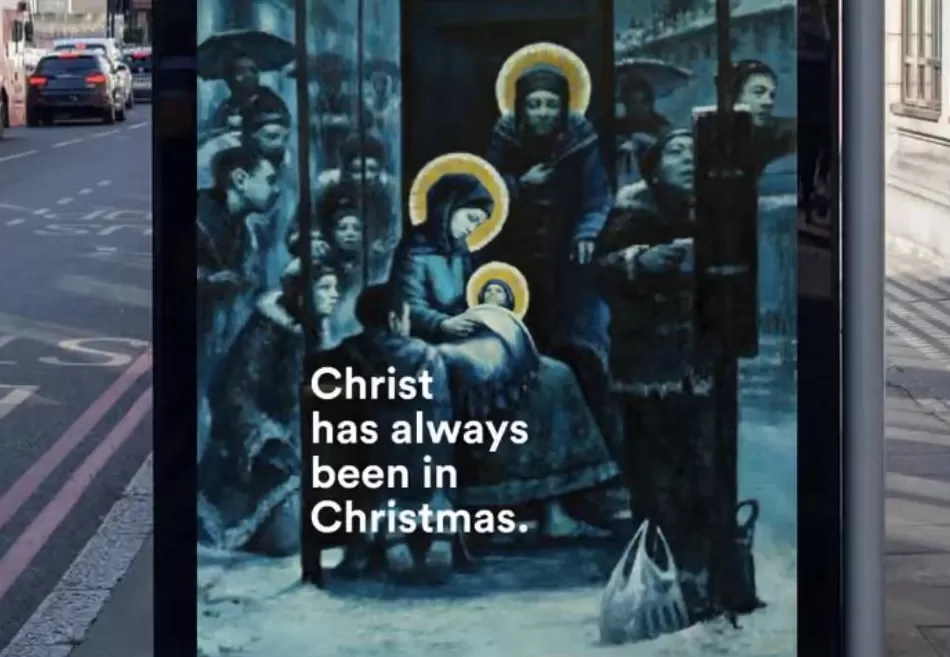
In part one, we looked at the argument that the Christmas stories, the career of Jesus more generally, and the mission of his followers support the view that the church and the societies in which it bears witness are obligated to welcome and include the refugee and migrant. Here we will consider the one large biblical concept to which appeal is made in support of the inclusive agenda—the hospitality extended to the “sojourner” in ancient Israel.
My overall argument is that the church has got itself boxed in to one way of viewing the problem, and that scripture is both less interested and more complicated. Part 1 dealt with the less interested, part 2 deals with the more complicated.
In a transcribed conversation with Jim Wallis of Sojourners, “theologian and immigrant advocate” Karen González says:
The story of the Bible isn’t just a story of moving from being lost to being saved, but its one of being a foreigner and moving toward being part of the family of God to belonging. And that’s a trajectory we can see throughout the scriptures from the very beginning when we meet Abraham — God is asking him to migrate, and we see he and Sarah’s vulnerability in Egypt. Over and over again the scripture restates some 83 times… that we’re to treat the immigrant as ourselves, we’re to love the immigrant as ourselves, we’re to do justice for the immigrant. And there’s judgment. There’s a whole book of the Bible, Obadiah. And it’s judgment for those who did not treat the refugee and immigrant well, for those who did not do justice for the immigrant.
Translating the Hebrew word ger “immigrant” rather than the dated “sojourner” may not be a bad idea, but I’ll stick with sojourner. The question is whether González has given us the whole picture. I don’t think she has. I’m not an Old Testament scholar, but really this is just an exercise in putting the “sojourner” texts back in context.
The status of the sojourner in the Old Testament
1. The patriarchs are often held up as archetypal migrants and sojourners. That’s right. But the stories of migration in Genesis presuppose the eventual possession of the land by the descendants of Abraham. So if these stories are going to be used in support of the embrace of migrants, they should not be lifted out of the larger narrative that will culminate in the violent conquest of Canaan and eradication or expulsion of its peoples. The patriarchs are theologically privileged migrants. That has to be factored into the moral argument.
2. Sojourning is rarely understood as a permanent arrangement. The patriarchs lived for a period as sojourners in Canaan (1 Chron. 16:19; Ps. 105:12, 23), then the families travelled to Egypt to escape famine, not intending to stay there indefinitely (Gen. 12:10; 47:3; Exod. 6:4). Abraham “sojourned many days in the land of the Philistines” (Gen. 21:34). A “stranger” may “sojourn” among the Israelites or a person may live “for a generation” among them—in other words, long term (Num. 9:14; 15:14). Elimelech sojourned temporarily in Moab because there was famine in Israel (Ruth 1:1). Elijah sojourned with a widow in Zarephath (1 Kgs. 17:20). Elisha sent a woman to sojourn in the land of the Philistines for seven years to escape famine (2 Kgs. 8:1-3). The exiles were sojourners in Babylon but hoped to return to Judea (Ezek. 20:38).
3. Sojourning is a word for a fairly normal social mobility within Israel (Judg. 17:7-9; 19:1, 16).
4. The prosperity of the Israelites and their growth in numbers as sojourners in Egypt proved a socially destabilising force, the cause of considerable resentment (Deut. 26:5-6). By the same token, the economic success of the sojourner in Israel would be a sign that YHWH has cursed his people:
The sojourner who is among you shall rise higher and higher above you, and you shall come down lower and lower. He shall lend to you, and you shall not lend to him. He shall be the head, and you shall be the tail. (Deut. 28:43-44)
5. Sojourners in Israel should receive the same justice as the native because the people of Israel were sojourners in Egypt (Exod. 22:21; 23:9; Lev. 19:33-34; 24:22). The Israelites were exhorted to “Love the sojourner… for you were sojourners in the land of Egypt” (Deut. 10:19). The sojourner as well as the native Israelite was permitted to flee to a city of refuge in the event of an accidental killing (Num. 35:15).
Here we have the heart of the argument that a “Christian” society should treat migrants justly and hospitably.
6. But sojourners were not equal to natives of the land unless the males were circumcised (Exod. 12:48-49); their status was similar to that of the “temporary resident” (toshav) or “hired worker” (Lev. 25:35; 39); they received charity along with widows and the fatherless, they had a similar social status (Deut. 14:29 ; 24:17, 19-21; 26:12; 27:19; Ps. 94:6; 146:9; Jer. 7:6; Ezek. 22:6, 29; Zech. 7:9; Mal. 3:5). The sojourner was, in practice, a second class citizen.
Third generation sojourners might enter the assembly of the Lord (Deut. 23:7-8). In the case of the post-exilic community, the “sojourners who reside among you and have had children among you” were to be allotted an inheritance in the land (Ezek. 47:22).
7. The sojourner was not expected to keep the whole Law but was required to observe certain religious restrictions. The sojourner who ate leavened bread during Passover would be cut off from the land (Exod. 12:19). He should observe the Sabbath (Exod. 20:10; Lev. 16:9; Deut. 5:14), should not eat blood (Lev. 17:12), should not commit any of the “abominations” listed in the Holiness Code (Lev. 18:26); he would be put to death for blaspheming the name of YHWH (Lev. 24:15; Num. 15:30). The sojourner was expected to “hear and learn to fear the LORD your God, and be careful to do all the words of this law”—perhaps all the words that were applicable to resident aliens (Deut. 31:12; Josh. 8:35).
8. Foreigners in the country were perceived as a threat to Israel’s religious integrity. The gods of the Canaanites were to be removed from the land; marriage with Canaanites was prohibited (Ex. 34:11-16); Solomon was censured for taking foreign wives, “who made offerings and sacrificed to their gods” (1 Kgs. 11:8). Ezra demanded that the returned exiles separate themselves from the people of the land and their “foreign wives” (Ezra 10:10-11).
The treatment of refugees
Following perhaps a military disaster in Moab, the Judeans are told to “grant justice; make your shade like night at the height of noon; shelter the outcasts; do not reveal the fugitive; let the outcasts of Moab sojourn among you; be a shelter to them from the destroyer”—but in the expectation that Moab would then be assimilated into the Davidic kingdom (Is. 16:3-5). This is one of the few examples of refugees, as opposed to migrants, coming to Israel.
And here’s where we may briefly consider the much neglected oracle of Obadiah against Edom, mentioned by González. At the heart of the book is the complaint that Edom stood by and watched when Jerusalem was sacked by foreigners, and failed to offer sanctuary for fleeing Judeans (Obad. 10-14). Therefore, Edom will suffer the same fate on a day of the Lord (15-18), but eventually the “exiles of this host of the people of Israel” will repossess the land and the kingdom will be extended to include Edom (19-21).
So Israel’s welcome of refugees from Moab and Edom’s lack of compassion towards the refugees from Judea have the same outcome—Israel’s occupation of the territory of its neighbours. González didn’t mention that. The story of Israel’s theologically privileged possession of the land remains determinative and should not be redacted from the moral argument.
Conclusions
The sojourner template is complex and perhaps not entirely coherent. Israel’s borders were not closed—no borders were. Non-Jewish resident aliens were tolerated and were treated fairly, humanely. But they were mostly not fully assimilated; they were assigned a subordinate status, along with widows, orphans, and hired labourers. They were not required to be circumcised and keep the whole Law, but they were subject to some quite stringent religious rules to ensure that they did not contaminate the land. Israel had been a migrant people, and the memory of it was to be preserved; but they migrated at God’s command, and the journey culminated in the occupation of the land.
Where the sanctity of the land is not at issue, as here in the UK, such restrictions and marginalisation would presumably not apply. But then we have a situation in which the covenant people—the church—is not in a position to dictate social policy and is bound to defer to the interests of the host culture.
We don’t get the impression that foreigners entered Israel in large numbers—with the exception of foreign wives, Moabites fleeing whatever disaster had befallen them, and invading armies. It seems likely that most sojourners did not settle permanently. The detrimental effects of mass migration is marginally acknowledged. Immigrant social and economic success is a curse, not a blessing.
If anything, then, the sojourner paradigm is a conservative one: migration created the nation and should not be allowed to change its divinely instituted identity and vocation.
So is it right for churches to hold up Israel’s obligations towards the sojourner as a biblically grounded argument for supporting migration? Can it not be turned on its head to protect “native” communities from the erosion of traditional values?
Should we not take into account the immense social, political, legal, and demographic differences between ancient Israel and modern, democratic, post-Christian nations?
Is there no upper limit on the numbers of refugees and asylum seekers that can be—or must be—accommodated? Should we not be concerned about the impoverishment of the societies from which people are coming? Does our moral obligation to those who arrive override any obligation to those left behind?
And if migration is likely to increase dramatically in the coming decades as a consequence of climate change, should we not already be developing a theological response that locates the immediate demands for compassion and neighbourliness within a narrative of global crisis and disorder?
After all, compassion didn’t do the flood generation any good. As far as the story goes, no one successfully migrated away from the catastrophe.
Thank you, Andrew.
I wonder whether one could justifiably amplify your point 5 to see an element of “maintenance of orthopraxis through historical memory”. The recollection of Israel’s bondage in Egypt and YHWH’s rescue of the people and constitution of them as a unique people loyal to YHWH seems to be important in the OT. For example, it’s cited as the justification for Sabbath observance in one of the enumerations of the ten covenant terms. Perhaps something similar is going on in the commands to not mistreat people within the Land whose status resembles that of the ancestors of the Israelites during the time in Egypt.
If that’s right, then this command is rooted not a universal ethical principle, but in something that is specific to the situation of post-Exodus Israelites in the Land.
(This is not to assert that mistreatment of migrants and displaced persons is permissible, but simply to consider the possibility that these texts are not strongest basis for advocacy of humane treatment of migrants in our time)
@Samuel Conner:
Yes, that’s my point. The moral demand is bound up with covenant and the story of Israel. We don’t receive it as a universal principle but as historical contingency. So we need to ask whether there is a “biblical” logic that permits transposing between moral registers—from the contingent to the universa. Arguably, the priestly function of the church, as heir to calling of Israel, permitted that, but that priestly function in the West is now contested, and migration is becoming a much more complex phenomenon. So I think the church’s witness in this respect needs to be rethought.
Dear Andrew,
Another stimulating detailed interpretation, which I will gladly include in my coming Christmas blog post. In keeping with your thinking, Andrew, I had already put on my historical-narrative glasses and incorporated it into the European/geopolitical question “What can we learn from Russia’s war against Ukraine?” Further exegetical ammunition for a contemporary apocalyptic (epoch-changing) response from the Church.
Thank you. Stay thorough…
@Helge:
Thank you, Helge. So what do we learn from Russia’s imperial or counter-imperial aggression against Ukraine?
Happy Christmas!
@Helge:
We celebrate the festival of hope in a time marked by uncertainty, conflict and profound change (metacrisis…). Our world order, as we knew it, has been shaken since imperial Russia invaded Ukraine. (P.S. Russia never lost its imperial logic – and this has been the case since at least the Tsarist era!). Thus, ancient principles (the powerful can simply take whatever they want) challenge “our” hard-won “Westphalian peace order” (every state has its territory and may not be invaded or annexed), which was invented as a solution to the Thirty Years’ War, and the question of how we can live together in peace is more relevant than ever.
The festival, with its attached longings, reminds us that hope and renewal can arise even in dark times. The birth of the Jewish king, whom we know as Jesus of Nazareth, did not take place in a world of peace, but in the midst of injustice, oppression and imperial violence. Nothing new in over 5000 years of human imperial (patriarchiacal) history.
What is new? It is that his role was not that of a divine being in human form, but that of a leader called upon for his time, who as the “Son of God” was responsible for justice and the protection of the community. But under the influence of imperial occupation, this could only be organised as “civil disobedience” (non-violent resistance). Later, under the Christian form of government since Emperor Constantine, everything changed again.
1. The festival as a counterpoint to the logic of power
Then as now, we see how power politics, violence and the law of the strongest seem to have the last word. But the story of Jesus counters this:
The Jewish king does not come as the “usual” ruler in a palace, but as a seemingly powerless instigator of non-violent resistance, as a human being among human beings, as a Jew among Jews in solidarity with the (as yet) weak, whom he leads to their true strength: you can move yourselves and something else!
Peace does not begin with weapons, but with the commitment to justice, then the protection of borders, including with weapons (yes), and above all your willingness to take responsibility for the common good.
2. Responsibility in the post-theocratic age
The challenges of our time – wars, climate crisis, social divisions – require us to rethink responsibility. In 1648, after 30 years of religious war, the Peace of Westphalia established a new world order in Münster/Osnabrück 50km from here, in which religious power and political order were separated. Our task in 2026 and further is to stand up for justice and protection for all living beings as citizens and as part of a global community. And that requires resilience.
- Going through crises together, standing up for one another and maintaining confidence creates resilience.
- Resilience leads to places of solidarity, comfort and practical help – in our communities, neighbourhoods and families.
The festival inspires us to do this.
3. The Prophet of the Most High as a guide
Jesus as the Son of Man (the term comes from the apocalyptic prophet Daniel) appeared as the Messiah in the sense of Jewish expectations, representing the hope for a just order inspired and implemented by Yahweh. His message was directed against the everyday violence experienced at the time and against the oppression of the Roman Empire – and implicitly also against patriarchy. Here, powerful (men) exploit female and male beings for their own purposes – abusing their superiority, which they also underpinned with religion.
His message also applies to our “patriarchs” (in the form of Putin, Trump, Merz and many others).
- Do not look away when injustice occurs. Speak out loud!
- Turn traumatised (war) victims back into capable, self-confident people!
- Establish life-affirming communities that shine through dialogue and acceptance!
- Promote forgiveness and reconciliation where wounds are still deep. Even enemies can be transformed back into fellow human beings.
In short: peace has never been a state, but is always a process. It requires sustained courage, patience and the willingness not to give up, even in hopeless situations. Confidence, in other words. Just fly.
4. Hope and tolerance of ambiguity
This celebration teaches us today that hope is not the absence of problems, but the strength to face them with creativity. In a world that will remain contradictory and confusing, we need tolerance of ambiguity – the ability to endure tension and still remain capable of action. Anchor that.
Since Daniel, this Son of Man has stood for the vision of a just world order that overcomes the empire of violence – not through military power, but first through courageous civil resistance, then through the struggle for justice as a practice of resistance and solidarity, solidarity, solidarity…
5. Outlook and invitation
Let us celebrate firm confidence! Not despite, but precisely because of the challenges of the meta-crisis.
- I believe that the Church should create places of refuge and solidarity.
- Let us, as political subjects, stand up for justice where injustice prevails.
- Let us sow confidence in every relationship where resignation threatens in the face of our meta-crisis.
And: Support politically in Europe armament as necessary protection against the imperial oppressor Russia. Yes, I recognise the dangers of possible abuse of power (even by those democratically legitimised!) by the powerful. The USA could transform itself from the “good empire” (until now still the defender of justice) into the villain in the blink of an eye.
For one thing survives the test of time: the vision of the Son of Man is stronger than gloomy darkness. May a star in the night sky illuminate the heavens, as Greta Thunberg did for the youth of the world in 2018. Every phase needs its star. Let us wish for a sky full of stars.
Recent comments