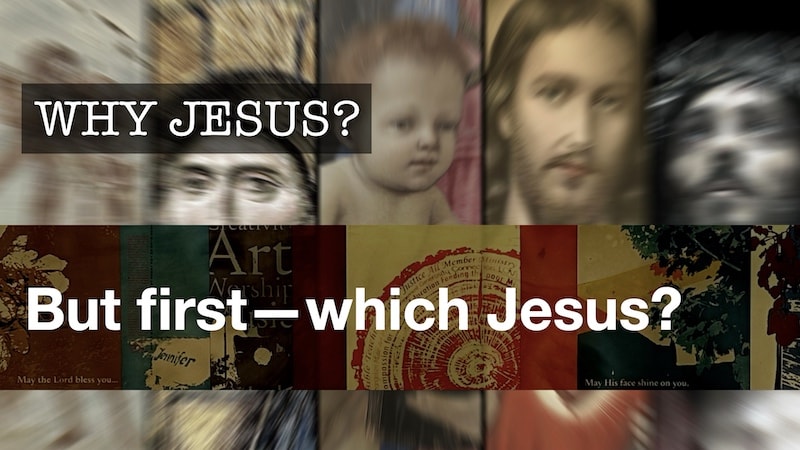
The little book Why Jesus? is part of the materials for the Alpha Course. In it, Nicky Gumbel writes:

Jesus is the only man who has ever chosen to be born, and he is one of the few who has chosen to die. He said that the entire reason for his coming was to die for us. He came ‘to give his life as a ransom for many’ (Mark 10:45).

To say that Jesus is “the only man who has ever chosen to be born” is faintly ridiculous even on high christological terms. The only possible New Testament support for it is the idea expressed in Philippians 2:6 that he did not grasp at a certain type of being equal to God or a god, my views on which can be found here.

3 comments | Read more...
Jesus tells his disciples that in his kingdom, in the ‘regeneration’ of the people of God, ‘when the Son of Man will sit on his glorious throne, you who have followed me will also sit on twelve thrones, judging the twelve tribes of Israel’ (Matt. 19:28; cf. Lk. 22:30). ‘Regeneration’ is … ()
A man comes to Jesus and asks what good thing he must do to inherit the life of the age to come (not ‘eternal life’ in the traditional sense). Jesus tells him that in order to enter life he must keep the commandments. The man has done this. What is still lacking? Jesus tells him that if he would be… ()
This verse has often been used to support a theology of spiritual warfare. In fact, Jesus is saying something quite straightforward but crucial for the continuation of the community of believers and the success of the message that they proclaimed. ( | 4 comments)
In 1998 Dr Andrew Overman discovered the ruins of a large Roman temple at Horbat Omrit. He believes that the temple was built by Herod in Caesarea Philippi to honour Augustus at the time when the emperor was coming to be worshipped as a living God. He suggests that the phrase ‘the son of living God… ()
The reference to this wicked generation locates the saying historically. I would suggest that Jesus is talking about the generation of Jews that would suffer the horrors of the war against Rome. He casts out demons from Israel, but he warns that these homeless spirits will return with a vengeance… ()
This verse comes in the context of Jesus’ instructions to the twelve before sending them out to proclaim the imminence of the reign of God (10:7). In particular it presupposes the warning that they will face persecution from the Jews as they go through the towns of Israel (10:23). There is no… ( | 1 comment)
The allusion to Hos. 6:6 LXX (‘I desire mercy and not sacrifice’) brings into view the wider context of Hosea’s prophecy. The people of Israel will take their sacrificial animals to the temple, but they will not find the Lord there (Hos. 5:6). He has withdrawn from them until they acknowledge… ()