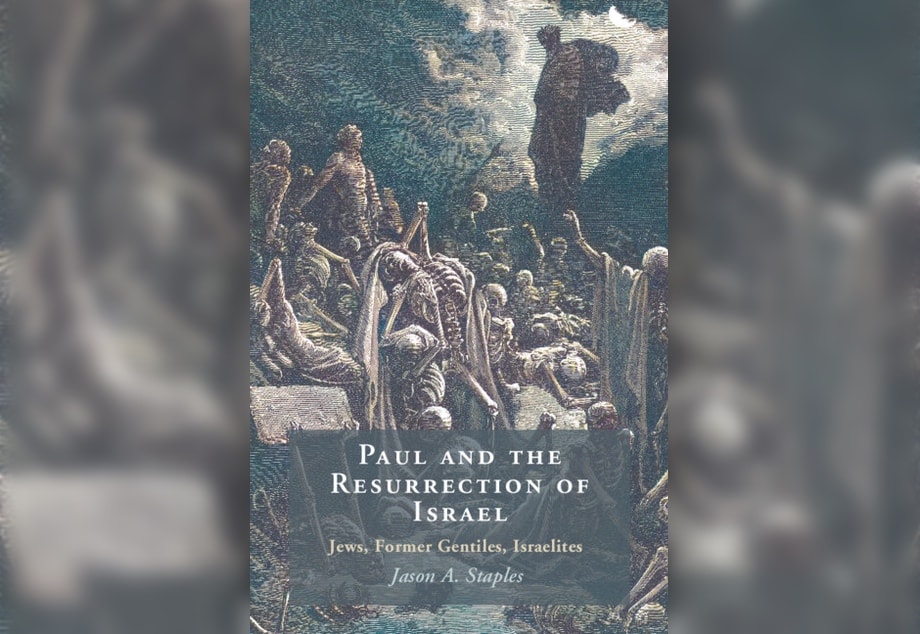
This is a rather technical examination of Jason Staples’ argument in Paul and the Resurrection of Israel: Jews, Former Gentiles, Israelites that when Paul speaks of Israel as “vessels of wrath,” he does not mean that the people are are the objects of God’s wrath; rather they are the instruments of God’s redemptive purposes. My view has been that Paul is saying that part of Israel really has become liable to destruction—much as Jesus foresaw destruction coming upon Jerusalem and the temple. But perhaps I’ve got it wrong.
Peter asks a question that gets right to the heart of my attempt to follow the historical narrative of scripture through to our own time. This is exactly the sort of conundrum that a consistently developed narrative-historical method throws up—and, I think, solves:I don’t mean any disrespect, and… ( | 13 comments)
This is the best theological reflection on coronavirus that I have read so far. It’s a Jesuit Review essay by Tomáš Halík, who is a Catholic priest and a professor of sociology at Charles University, Prague. It offers something of the prophetic perspective that is missing from much of the bland and… ( | 2 comments)
In a Seven Minute Seminary video on the will of God and natural disasters Ben Witherington, who is a very good biblical scholar, argues emphatically that COVID-19 is not an “act of God”.One of the main tasks of Jesus’ earthly ministry, he says, was to get rid of disease, decay, and death so it is “… ( | 24 comments)
My wife thinks this is rather heavy reading for Easter, so be warned….The doctrine of “penal substitutionary atonement”—the idea that God punished Jesus on Good Friday in our place—divides Christians: some find it theologically profound, others find it morally repugnant. My argument has been—… ()
A popular text for people who would like to think that in the end all people will be saved is the assertion in Colossians 1:19-20 that through Christ God was pleased to “reconcile to himself all things, whether on earth or in heaven, making peace by the blood of his cross.” Steve Chalke, for… ( | 1 comment)
Enough of Steve Chalke’s book, let’s get back to coronavirus. How do we talk about it theologically? Or, as Baptist theologian and ethicist Roger Olson asks, “Where is God in this pandemic?”Coronavirus is not one of the four horsemen of the Apocalypse—that was a very different future, from a very… ( | 2 comments)
Enough of the pandemic, let’s get back to Steve Chalke’s book The Lost Message of Paul. Chalke is a somewhat post-evangelical leader in the UK with excellent credentials. In this book he is using the “new perspectives” on Paul that have emerged in New Testament scholarship in recent… ( | 2 comments)
Recent comments