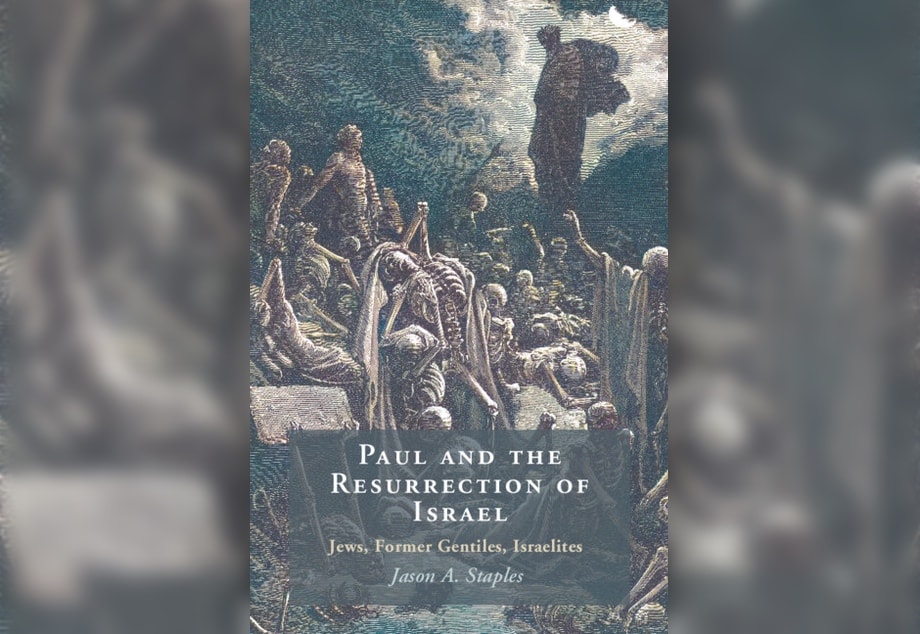
This is a rather technical examination of Jason Staples’ argument in Paul and the Resurrection of Israel: Jews, Former Gentiles, Israelites that when Paul speaks of Israel as “vessels of wrath,” he does not mean that the people are are the objects of God’s wrath; rather they are the instruments of God’s redemptive purposes. My view has been that Paul is saying that part of Israel really has become liable to destruction—much as Jesus foresaw destruction coming upon Jerusalem and the temple. But perhaps I’ve got it wrong.
In his encomium in praise of the exalted Christ in Philippians 2:6-11, Paul says that “in the name of Jesus every knee should bow… and every tongue acknowledge (exomologēsētai) that Jesus Christ is Lord” (Phil. 2:10-11*). Interpreters of the Early High Christology school often point… ()
I have dealt with this question a few times, most recently in “How Paul can proclaim one Lord Jesus Christ and not compromise Jewish monotheism,” and in a chapter in In the Form of a God: The Pre-existence of the Exalted Christ in Paul. But it has come up again: ( | 2 comments)
There’s something odd about Mary’s Magnificat.
Why does it occur at this point in the narrative, at the moment of her arrival at the house of Zechariah and Elizabeth, rather than after the annunciation?
Why is it based so obviously on the story of Hannah’s barrenness and the… ()
This is how we traditionally debunk the Christmas traditions to get at what the story was really all about: there was no star the night Jesus was born; we do not know how many wise men there were; Joseph and Mary were not turned away from an inn; Jesus was not born in a stable (are we… ()
Paul asked me what I thought of his essay “The Biggest Fallacies About Religion and Politics” on Daily Kos. Paul, I think it’s a great essay, well worth reading. I agree with the general thesis that “Christianity” (for want of a better word) is always “political” (for want of a better word). But… ( | 2 comments)
I ended my last post agreeing in principle with Ian Paul that preachers need to take the historical dynamics of the biblical narrative seriously, but disagreeing over the scope of that contention. It is not history only insofar as it sets up the conditions for the existence and mission of the… ( | 7 comments)
Following on from the piece on Tucker Ferda’s attempt to disconnect the coming of the Son of Man from the war against Rome, I happened to come across Ian Paul’s post this week about the second coming (“or something else?”) in Luke 21. He covers a fair bit of ground, but I want to focus on his… ( | 3 comments)
Recent comments