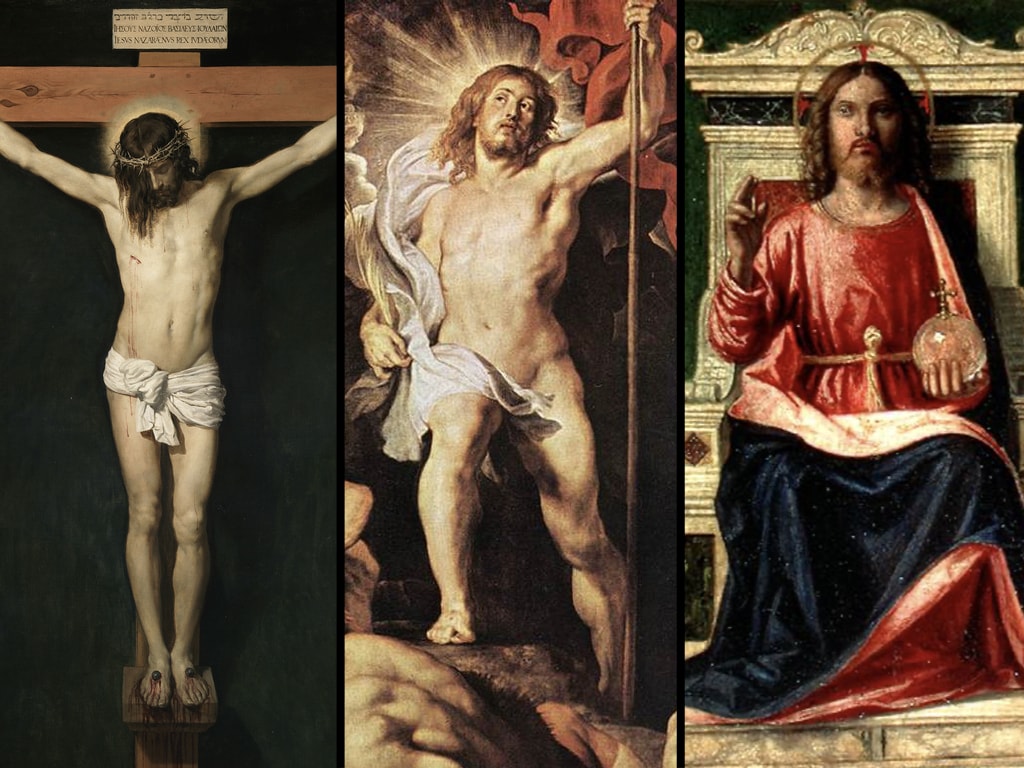
David has provided a very nice commentary on my previous post about the resurrection of Jesus on the third day. He has made it clear that he gets the main contention about the historical framing: “Too often we read the New Testament as if it dropped out of the sky rather than emerging from a real story, rooted in Israel and moving outward into the world.” But he pushes back at a number of points. He insists that the resurrection of Jesus in the New Testament is treated not merely as a moment in Jewish history but as an event of universal human significance. I have highlighted his main concerns and responded.
People who read this blog regularly will know that I am generally rather sceptical about claims that the writers of the Synoptic Gospels—Matthew, Mark and Luke—intended to present Jesus as God. See, for example, “Jesus as Lord in Mark” or “Simon Gathercole’s argument about pre-existence and divine… ( | 9 comments)
I have been involved with Christian Associates in one capacity or another—as a pastor, inept church-planter, teacher—for the last twenty years or so. I love the people, I love the organization, I love its vision for starting imaginative new communities of faith in a difficult secular environment,… ()
Following on from the previous post on how to sing about the wrath of God, here are some simple diagrams to explain the hermeneutics involved.
1. There is a tension between two understandings of the cross. The rigorous conservative/Reformed folk want to sing about the wrath of God being satisfied… ( | 19 comments)
I started writing this on Sunday morning before going off to church. It’s a reflection on a piece by Roger Olson about the difficulties many Christians have in using the language of divine wrath. He had come across a revised version of the song “In Christ Alone”, by Getty and Townend, in which the… ( | 9 comments)
Two men go to the temple to pray, one a Pharisee, the other a tax collector. The Pharisee thanks God that he is “not like other men, extortioners, unjust, adulterers, or even like this tax collector”. He fasts twice a week, he tithes his income. The wretched tax collector, on the other hand, says… ( | 5 comments)
A narrative-historical hermeneutic has to respect the distinctions and boundaries—even the cracks and disjunctions—that emerge in the telling of the story. If we allow ourselves to read later developments back into earlier passages, we muddy the waters and risk getting the whole story, to whatever… ( | 14 comments)
I have read both Weiss’ Jesus’ Proclamation of the Kingdom of God and Schweitzer’s The Mystery of the Kingdom of God recently. Both excellent books—up to a point, which I’ll come to—and well worth reading. The significance of their work for the modern understanding of… ()
Recent comments