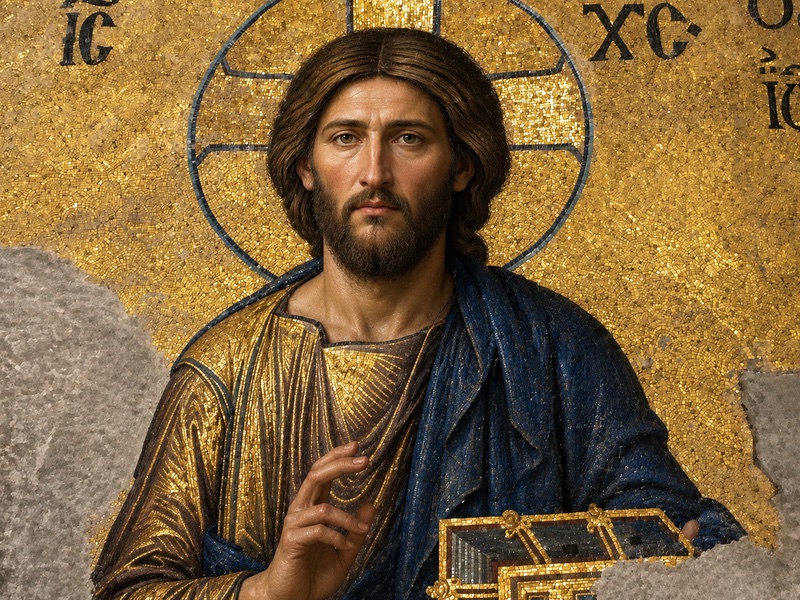
In a Substack post, Brian Zahnd looks at four key theological “entities” and warns of the “theological mischief” that happens when the “critical distinction” between them is not properly respected. The Church, the Bible, and the religion of Christianity are all good and important things, but not as good and important as Jesus. “The moment we try to nudge the Church or the Bible or Christianity toward equality with Christ we are headed down a theological path that leads to confusion and real-life trouble.”

My objection to this sort of analysis is two-fold. First, it relies on a flawed understanding of the categories if they are meant to be fundamentally biblical and not the product of later theological rationalisation. Secondly, it is an outdated analysis of “Christianity”: it deals with problems of the past, not of the future.

Read more...
Why did the Jewish authorities hand Jesus over to Rome for crucifixion? It cannot have been because he was judged to have been a false prophet, a deceiver of the people, opposed to Torah, opposed to the temple, or even a messianic pretender. On the last point, Brant Pitre quotes the Spanish… ()
In some recent comments on a post about the salvation of “all Israel” Alfred encouraged me to look at the argument of Jason Staples that the “fulness of the nations” (Rom. 11:25) is a reference to the northern kingdom of Israel or Ephraim, and that the salvation of “all Israel” must consist in the… ( | 7 comments)
I have been working through Brant Pitre’s rather too methodical and, in my view, tendentious (I know, the pot calling the kettle black) Jesus and Divine Christology, in which he makes a case for reading divine identity into certain of the words and deeds of Jesus. ()
One of the supposed “riddles” discussed in the previous post was Jesus’ saying “No one is good except God alone.” In a comment, Gerard Jay makes the point that Matthew shifts the emphasis from the questionable goodness of Jesus to the unquestionable goodness of the Law—from the person to the action. ( | 1 comment)
It is Brant Pitre’s argument in Jesus and Divine Christology that the intrinsic divinity of Jesus is revealed in the Gospels either through actions and events or through certain cryptic sayings. His divinity is a secret, a hidden reality, that may sometimes be glimpsed breaking through… ( | 3 comments)
The third “epiphany miracle,” after the two sea miracles, is the transfiguration or “metamorphoses” (metemorphēthē) of Jesus in the presence of Peter, James, and John, on the mountain. ()
The second “epiphany miracle” discussed by Brant Pitre in his book Jesus and Divine Christology is Jesus walking on the water (Matt. 14:22-33; Mk. 6:45-52; Jn. 6:16-21). ( | 3 comments)