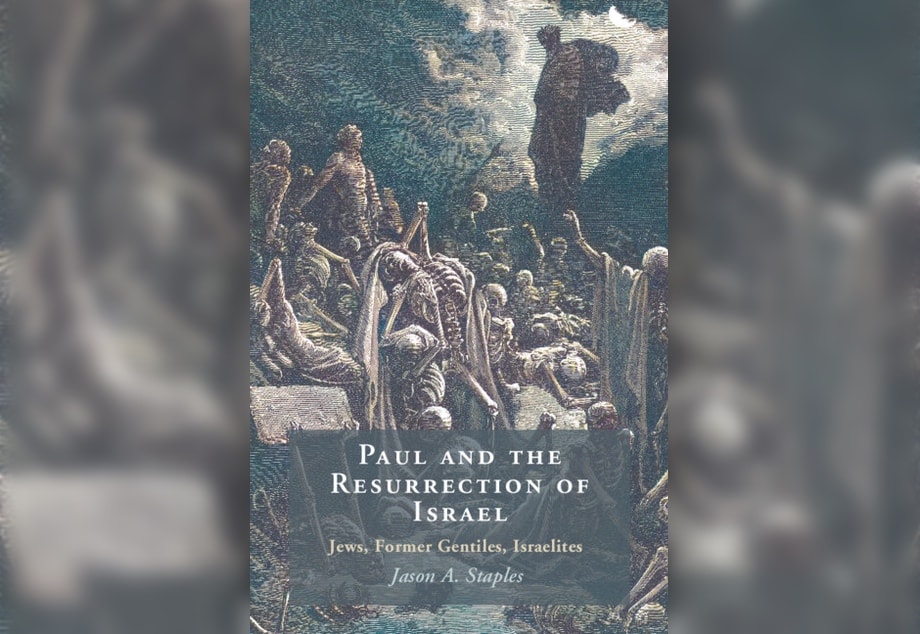
This is a rather technical examination of Jason Staples’ argument in Paul and the Resurrection of Israel: Jews, Former Gentiles, Israelites that when Paul speaks of Israel as “vessels of wrath,” he does not mean that the people are are the objects of God’s wrath; rather they are the instruments of God’s redemptive purposes. My view has been that Paul is saying that part of Israel really has become liable to destruction—much as Jesus foresaw destruction coming upon Jerusalem and the temple. But perhaps I’ve got it wrong.
Paul is in Athens, waiting for Silas and Timothy to join him. His spirit is troubled by the profusion of idols in the city, and he gets into lively disputes about the phenomenon with Jews and God-fearing gentiles in the synagogue on the Sabbath and for the rest of the week with philosophers and… ()
The idea of the “eschatological pilgrimage of the Gentiles” to a rebuilt temple and restored Zion is well attested in Isaiah especially but is found in other Old Testament and Hellenistic-Jewish writings. Here are three examples, but we could add Isaiah 56:6-7; 66:18-20; Zech. 14:16; Mic. 4:1-… ( | 2 comments)
When Paul says, “if you call yourself a Jew” (Rom. 2:17), the traditional understanding has been that this is addressed to a Jew whom he is about to charge with hypocrisy: “You call yourself a Jew but you do this, that, and the other! Shame on you!”
It is sometimes argued, however, in… ()
I had a great chat with Sam Tideman recently, following up on a number of posts addressing questions raised in a debate between James White and Dale Tuggy asking “Is Jesus Yahweh?” A previous conversation with Sam addressed “The Preexistence of Christ and Narrative Historical Theology.” I would… ( | 1 comment)
I had a go at explaining the place of the quotation from Psalm 102 as an apparent address to Christ as YHWH in a recent post on the “Is Jesus Yahweh?” debate between James White and Dale Tuggy, but I’m not sure I got it quite right. So I’m going to try again, at least in outline—I won’t repeat… ( | 5 comments)
Matthew Poole was a seventeenth century English Presbyterian minister. Towards the end of his life he started work on a commentary on the Bible called Annotations upon the Holy Bible. Wherein The Sacred Text is Inserted, and various Readings Annex’d, together with the Parallel Scriptures, the… ()
I am writing this in answer to some questions sent to me about the reading of the New Testament presented on this blog and in my books. The specific point at issue is my contention that we now understand the New Testament best if we map most of the stuff of New Testament eschatology—the weird… ()
Recent comments