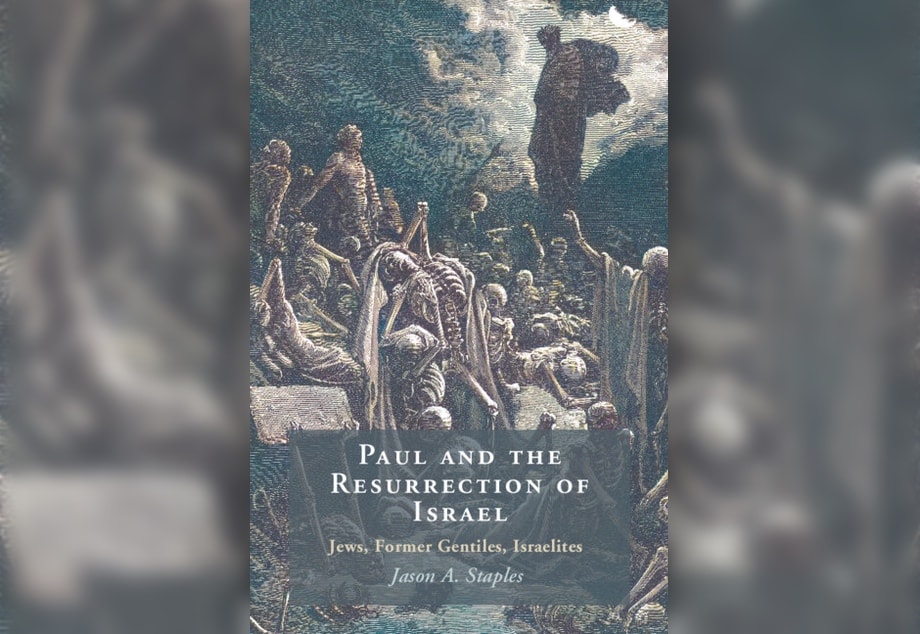
This is a rather technical examination of Jason Staples’ argument in Paul and the Resurrection of Israel: Jews, Former Gentiles, Israelites that when Paul speaks of Israel as “vessels of wrath,” he does not mean that the people are are the objects of God’s wrath; rather they are the instruments of God’s redemptive purposes. My view has been that Paul is saying that part of Israel really has become liable to destruction—much as Jesus foresaw destruction coming upon Jerusalem and the temple. But perhaps I’ve got it wrong.
The Bible tells the story of the building and rebuilding of the people of God. I think that the church today is having to rebuild again, and I have been looking for a simple image or metaphor that captures the process and the basic components. This tower of five wooden blocks is about as… ()
In his new book The New Anabaptists: Practices for Emerging Communities (2024), Stuart Murray says that the Anabaptist vision is “profoundly and resolutely Christocentric” to a degree not found in other traditions. Evangelicals, for example, make much of the birth and death of Jesus but… ( | 8 comments)
Jesus says in John 8:58: “Before Abraham was, I am.” Raymond Brown says that ‘No clearer implication of divinity is found in the Gospel tradition.’ This has been much debated, and I’m not here especially interested in the immediate christological meaning. It’s the background to the statement that “… ( | 4 comments)
In their “manifesto for theological interpretation,” Craig Bartholomew and Heath Thomas assert the priority of theological interpretation over historical-critical interpretation. History must be understood theologically as the arena in which the painful and hopeful redemptive narrative of the Bible… ()
In the previous post on the parable of the good Samaritan, I noted that “robbers” (lēistai) is likely to have had political overtones and suggested that, particularly given the remarkable parallel with 2 Chronicles 28:8-15, the parable could be read as an indictment of the miserable state… ()
I came across this intriguing perspective on Jesus’ parable of the good Samaritan in an article by Amy-Jill Levine in the Biblical Archaeology Review (2012). She dismisses a number of what she regards as misinterpretations of the parable of the Good Samaritan and comes to this conclusion: ()
I wrote most of this on a flight back from Doha on Christmas Eve. My wife has been at COP 28 in Dubai and at hydrogen conferences in Oman and Qatar—so plenty of opportunities to reflect on climate change from a very different angle. ()
Recent comments