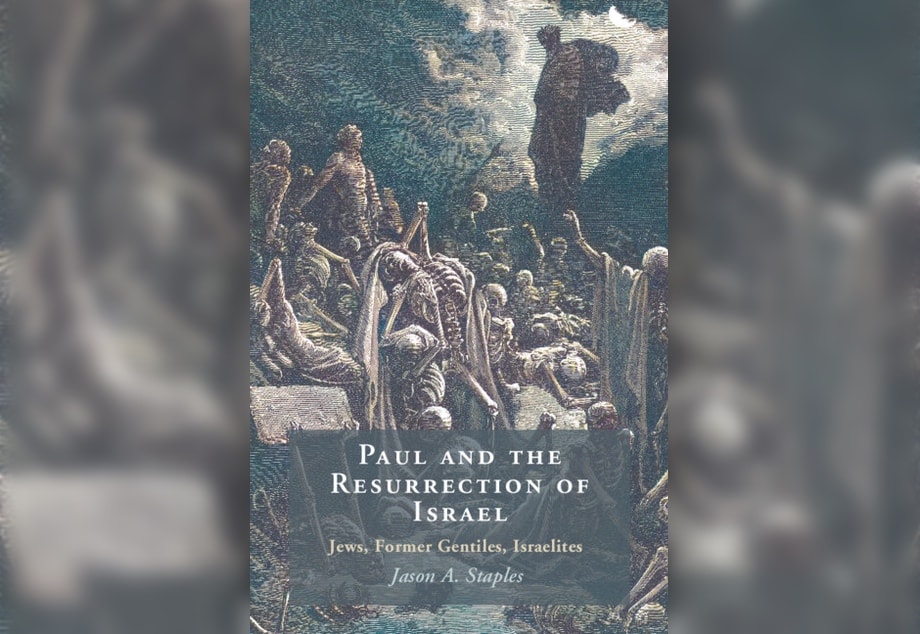
This is a rather technical examination of Jason Staples’ argument in Paul and the Resurrection of Israel: Jews, Former Gentiles, Israelites that when Paul speaks of Israel as “vessels of wrath,” he does not mean that the people are are the objects of God’s wrath; rather they are the instruments of God’s redemptive purposes. My view has been that Paul is saying that part of Israel really has become liable to destruction—much as Jesus foresaw destruction coming upon Jerusalem and the temple. But perhaps I’ve got it wrong.
If you’re looking for a primer on missional theology, John Franke’s Missional Theology: An Introduction is not a bad option. It’s clearly presented and to the point, with just five chapters on “Missional God,” “Missional Church,” “Missional Theology,” “Missional Multiplicity,” and “… ()
John Franke’s Missional Theology: An Introduction starts with the idea associated with Karl Barth and the missiologist Karl Hartenstein that the biblical God is in his very nature a missional God. Mission is not primarily what the church does; it is what God does, expressed most fully in… ()
I am trying to give serious thought these days to how the church goes about its “mission” (for want of a better word). The methodology is usually pragmatic: the church as it currently is, in its various institutional forms, faces challenges of numerical decline or social irrelevance, and asks what… ( | 2 comments)
I have two “passions”—as far as my work goes. The first is the narrative-historical thing. I think we understand the New Testament best when we read it essentially as a prophetic-apocalyptic narrative about the concrete historical experience of the Jesus movement in the first… ( | 7 comments)
I am very interested in the “eschatology” of Jesus and his followers—how they predicted future events—not only because it is the key to understanding the New Testament but also because it teaches us how to think theologically about the crises of our own age. ( | 2 comments)
I got to hear several good online presentations at the SBL Annual Meeting last week, including a provocative panel discussion on “Doing History and Doing Theology in the Study of Paul,” which demonstrated that the more serious fault line now is between an old guard that thinks that the debate about… ( | 1 comment)
Helge Seekamp recently drew attention to a paper by Jem Bendell, Professor of Sustainability Leadership at the University of Cumbria, entitled “Deep Adaptation: A Map for Navigating Climate Tragedy.” He suggests that Bendell gives us a “secular agenda for an apocalyptic time.” I think that the idea… ( | 8 comments)
Recent comments