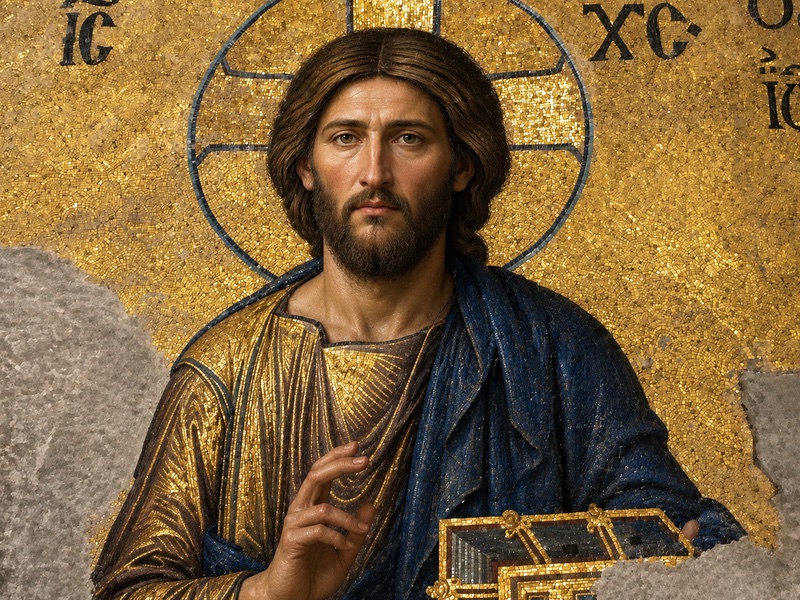
In a Substack post, Brian Zahnd looks at four key theological “entities” and warns of the “theological mischief” that happens when the “critical distinction” between them is not properly respected. The Church, the Bible, and the religion of Christianity are all good and important things, but not as good and important as Jesus. “The moment we try to nudge the Church or the Bible or Christianity toward equality with Christ we are headed down a theological path that leads to confusion and real-life trouble.”

My objection to this sort of analysis is two-fold. First, it relies on a flawed understanding of the categories if they are meant to be fundamentally biblical and not the product of later theological rationalisation. Secondly, it is an outdated analysis of “Christianity”: it deals with problems of the past, not of the future.

Read more...
Elliot has raised some pertinent questions about the continuing relevance of some basic Christian beliefs, given a narrative-historical understanding of the New Testament. They deserve a more substantial answer than I can provide right now, but here’s an outline of how I think we may manage… ()
A. J. Derxsen appears to be a rather conservative, Reformed American blogger, so I’m a bit surprised he bothered to read and comment on my post “Who is Daniel’s son of man?” But he did, and I appreciate it, and here’s an attempt to address the counter-assertions made in his brief critique. It’… ( | 14 comments)
It’s a while since I’ve posted anything here. Been a bit too busy. So I thought I’d post this response to Elliot’s recent comment—just to keep the site ticking over. ( | 13 comments)
I did something like this a few years back—now updated (what are we to make of the Quiet Revival, etc.?) and better focused. It will be a six week series of online sessions on what I would basically describe here as a narrative-historical missional theology. In other words, how does the church in… ()
The question of Israel and the land—and the extent of the land—is very much on our minds these days. A while back, Ian Paul posed the question: “Does the State of Israel have a divine right to the land?” It’s a measured piece, and it got me wondering—not for the first time—how this issue might look… ()
The “West” is a complex civilisational phenomenon. It is pagan Europe converted to Christianity, divested of Eastern Orthodoxy, intellectually reinvigorated by the Renaissance, violently split between Protestantism and Catholicism, expanded by Colonisation, empowered and enriched by the Industrial… ( | 6 comments)
When do we talk about divine judgment? Not often. But the theme cuts right through the heartlands of the New Testament like a punishing Roman road (not that Roman road), from Mary’s Magnificat to the final judgment of all the dead in Revelation 20. ( | 3 comments)