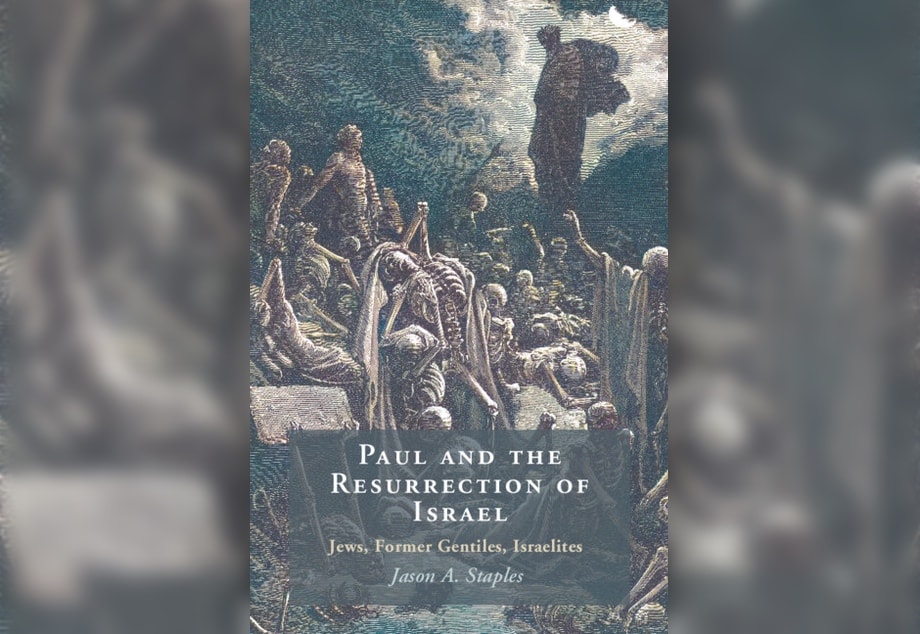
This is a rather technical examination of Jason Staples’ argument in Paul and the Resurrection of Israel: Jews, Former Gentiles, Israelites that when Paul speaks of Israel as “vessels of wrath,” he does not mean that the people are are the objects of God’s wrath; rather they are the instruments of God’s redemptive purposes. My view has been that Paul is saying that part of Israel really has become liable to destruction—much as Jesus foresaw destruction coming upon Jerusalem and the temple. But perhaps I’ve got it wrong.
Does Paul identify Israel’s Messiah with God in Romans 9:5? I’ve examined this passage a couple of times (see links below) and have been more or less of the opinion that the grammar says perhaps, but the development of thought says no.
Since we’ve been looking at Brian Simmons’ The Passion… ( | 1 comment)
I continue with my thankless defence of Brian Simmons’ The Passion Translation against the battalion of “highly respected scholars” that Mike Winger has “hired” to wage war against it. Why do I do it? I don’t know. Partly because in an internecine theological spat like this there is… ()
Mike Winger has orchestrated a comprehensive assault on Brian Simmons and The Passion Translation. He is certainly not the only person to criticise the book, but he seems to have a bigger bee buzzing around in his bonnet than most. He has lined up some serious scholars to pass judgment on… ( | 2 comments)
I hadn’t heard of The Passion Translation until a friend got in touch wondering whether we should be reading it. It’s a contemporary “translation” of the New Testament, along with the Psalms, Proverbs, and Song of Songs, produced more or less single handedly by Brian Simmons. It’s… ( | 7 comments)
Here’s another podcast in the “mission in post-Christian Europe” category. It’s an interview with Paul and Jordan Prins and Sheila Wittenberg about their Urban Monastics project. They have some really good things to say about cross-cultural mission in Western Europe, their reasons for starting an “… ()
Comparisons between Moses and Jesus usually focus on the contrast between Law and grace, not on the persons. The Sermon on the Mount is Jesus’ radical revision of the Law given on Sinai. John says that the Law was through Moses, “grace and truth came through Jesus Christ” (Jn. 1:17). Jews who… ( | 2 comments)
The narrative-historical method reduces the significance of Jesus, which creates an obvious problem for traditionalists. Perhaps “reduces” is asking for trouble. Let’s say that it refocuses our understanding of the biblical figure of Jesus, though the sharper perception comes at… ( | 8 comments)
Recent comments