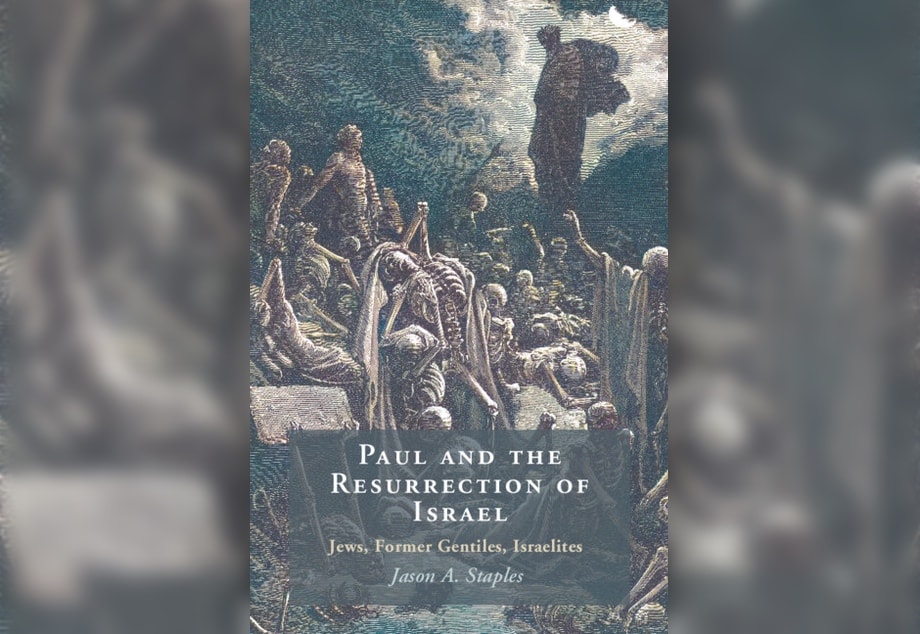
This is a rather technical examination of Jason Staples’ argument in Paul and the Resurrection of Israel: Jews, Former Gentiles, Israelites that when Paul speaks of Israel as “vessels of wrath,” he does not mean that the people are are the objects of God’s wrath; rather they are the instruments of God’s redemptive purposes. My view has been that Paul is saying that part of Israel really has become liable to destruction—much as Jesus foresaw destruction coming upon Jerusalem and the temple. But perhaps I’ve got it wrong.
At the end of the book of Revelation John sees the “holy city, (new) Jerusalem” descending out of heaven from God twice, seemingly after the final judgment (Rev. 21:2, 9). Why? Are these different events? The same event depicted twice?
I have argued before that the sequence of visions in chapters… ( | 2 comments)
I “attended” an online workshop yesterday hosted by the Centre for the Study of the Bible at Oriel College, Oxford. The theme was “Apocalyptic thinking.” We were treated to some excellent presentations from a good range of scholars, including such luminaries in the apocalyptic firmament as Loren… ()
I’ve got to know Rob Bavington through his connection with Communitas. He has been something of an accidental church-planter, first in Sweden for some years, now in Bradford. We talk about what he’s learned, what he’s learning, and some of the less obvious cross-cultural… ( | 2 comments)
I want to look at a couple of related questions about Romans, from a couple of unrelated sources. First, Jo is not convinced that the string or catena of Old Testament quotations in Romans 3:10-18 is directed exclusively against the Jews, as I maintain in The Future of the People of… ( | 6 comments)
The witness of scripture is not primarily to the personal relevance of God but to the political relevance of God. It has to do with the rule or kingdom of God in the world. Witness operates at large scale national-civilisational levels of narrative meaning sandwiched between… ( | 2 comments)
Biblical faith is almost always forward-looking. It is as much about what may or may not happen in the future as it is about the knowledge and experience of the God of Israel in the here and now. It is, therefore, almost always either fearful or hopeful.
Abraham hoped that he would become the… ( | 1 comment)
John Morehead had this to say about my “Is there only one way to heaven?” post, and I want to explore some thoughts in response to it:
…as you developed this piece, for me it lost theological momentum when you got to the section on how the early parts of the post connect to the question of Jesus… ( | 1 comment)
Recent comments