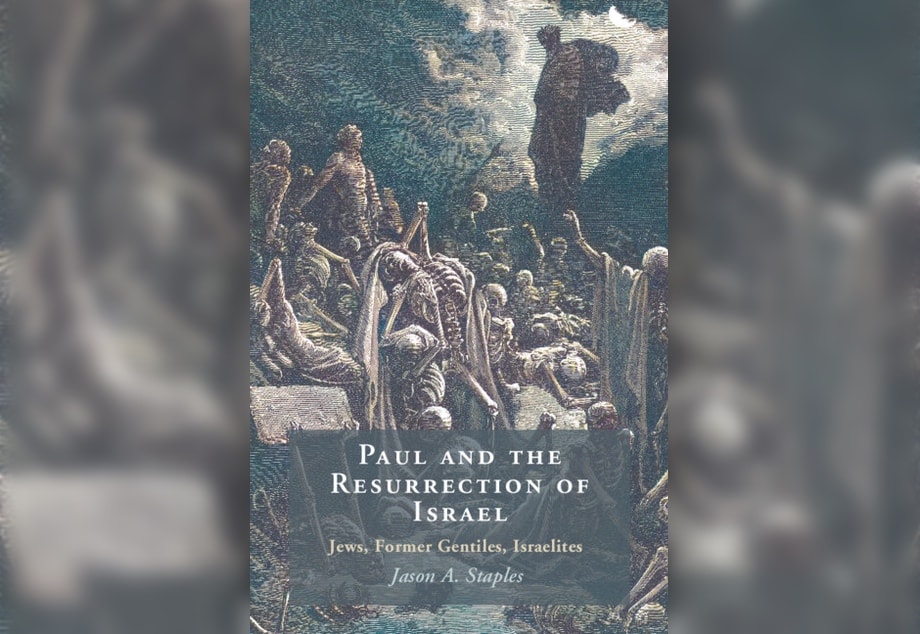
This is a rather technical examination of Jason Staples’ argument in Paul and the Resurrection of Israel: Jews, Former Gentiles, Israelites that when Paul speaks of Israel as “vessels of wrath,” he does not mean that the people are are the objects of God’s wrath; rather they are the instruments of God’s redemptive purposes. My view has been that Paul is saying that part of Israel really has become liable to destruction—much as Jesus foresaw destruction coming upon Jerusalem and the temple. But perhaps I’ve got it wrong.
My argument about the other encomium, in Colossians 1:15-20, is that it makes Christ Jesus the beginning of a new political-religious order, in which government in heaven and government on earth have been reconciled.
Hitherto the rule of God and rule over the nations of the… ( | 4 comments)
Crispin Fletcher-Louis has written a monster book—nearly a thousand pages—about the Christ encomium in Philippians 2:6-11: The Divine Heartset: Paul’s Philippians Christ Hymn, Metaphysical Affections, and Civic Virtues (Wipf & Stock, 2023). About 20% is available on Google Books. We… ( | 4 comments)
A couple of weeks back, I gave a short presentation at the SBL Global Virtual Meeting setting out the central argument about the opening lines of the Philippians Christ encomium from my book In the Form of a God: The Pre-existence of the Exalted Christ in Paul. This video is an improved… ()
In his book Messianic High Christology: New Testament Variants of Second Temple Judaism (2021), Ruben Bühner sets out to demonstrate that a high christology is compatible with Jewish messianism. The title says it all. The title may turn out to be a contradiction in terms. ( | 19 comments)
In traditional Reformed interpretation, Romans 12:1-15:7 is regarded simply as a piece of Christian parenesis—that is, practical and ethical instruction or exhortation to be followed in all times, in all places. The letter tends to get sectioned thematically: justification by faith in… ()
I don’t want to make this an issue about trinitarianism; it is to my mind simply a matter of literary-historical perspective. Seriously. But what was the author of the Johannine letters—let’s call him John—getting at when he warned that “many deceivers went out into the world, those… ( | 4 comments)
At the beginning of Euripides’ play Bacchae, the god Dionysus—the god of “wine-making, orchards and fruit, vegetation, fertility, festivity, insanity, ritual madness, religious ecstasy, and theatre,” according to Wikipedia—enters and delivers a monologue. He identifies himself as “son of… ()
Recent comments