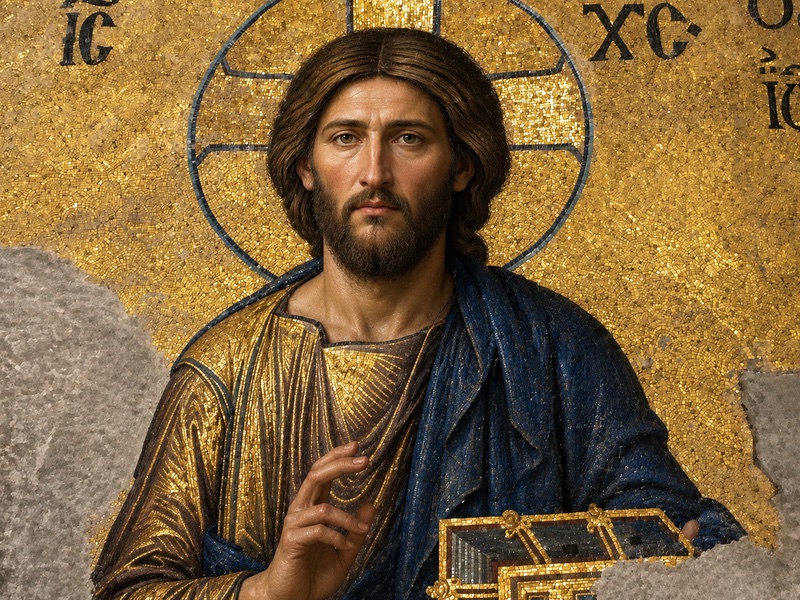
In a Substack post, Brian Zahnd looks at four key theological “entities” and warns of the “theological mischief” that happens when the “critical distinction” between them is not properly respected. The Church, the Bible, and the religion of Christianity are all good and important things, but not as good and important as Jesus. “The moment we try to nudge the Church or the Bible or Christianity toward equality with Christ we are headed down a theological path that leads to confusion and real-life trouble.”

My objection to this sort of analysis is two-fold. First, it relies on a flawed understanding of the categories if they are meant to be fundamentally biblical and not the product of later theological rationalisation. Secondly, it is an outdated analysis of “Christianity”: it deals with problems of the past, not of the future.

Read more...
There’s something odd about Mary’s Magnificat. Why does it occur at this point in the narrative, at the moment of her arrival at the house of Zechariah and Elizabeth, rather than after the annunciation? Why is it based so obviously on the story of Hannah’s barrenness and the… ()
This is how we traditionally debunk the Christmas traditions to get at what the story was really all about: there was no star the night Jesus was born; we do not know how many wise men there were; Joseph and Mary were not turned away from an inn; Jesus was not born in a stable (are we… ()
Paul asked me what I thought of his essay “The Biggest Fallacies About Religion and Politics” on Daily Kos. Paul, I think it’s a great essay, well worth reading. I agree with the general thesis that “Christianity” (for want of a better word) is always “political” (for want of a better word). But… ( | 2 comments)
I ended my last post agreeing in principle with Ian Paul that preachers need to take the historical dynamics of the biblical narrative seriously, but disagreeing over the scope of that contention. It is not history only insofar as it sets up the conditions for the existence and mission of the… ( | 7 comments)
Following on from the piece on Tucker Ferda’s attempt to disconnect the coming of the Son of Man from the war against Rome, I happened to come across Ian Paul’s post this week about the second coming (“or something else?”) in Luke 21. He covers a fair bit of ground, but I want to focus on his… ( | 3 comments)
I made some general comments on the relation of the coming of the Son of Man motif to historical events in my previous post on Tucker Ferda’s book Jesus and His Promised Second Coming: Jewish Eschatology and Christian Origins. I really don’t think he’s right to disconnect the disorder in… ( | 1 comment)
In an excellent interview on the Protestant Libertarian Podcast about his book Jesus and His Promised Second Coming: Jewish Eschatology and Christian Origins (2024), Tucker Ferda uses the expression “process eschatology” to register the fact that in Jewish apocalyptic writings the “end” is… ( | 6 comments)