Postconservative evangelicalism and beyond

I thought I had found a nice new label for myself: a ‘postconservative evangelical’. Roger Olson defines the term in Reformed and Always Reforming: The Postconservative Approach to Evangelical Theology and makes reference to it in a post on NT Wright and the New Perspective. Wright admits to being a postconservative evangelical in his book Justification.

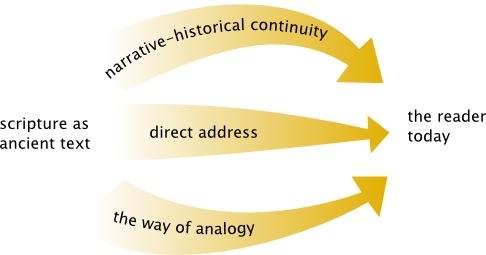
But on further reflection, though not having read Olson’s book, I’m not sure about any ‘reformed and always reforming’ part of the definition. Wright may profess to remain loyal to the Reformation, and if that is simply a matter of not ‘smuggling “merit” back into the doctrine of salvation’, as Olson’s post rather suggests, then I have no great quarrel with it. But it seems to me that the New Perspective has the potential to subvert Reformation theologies in much more fundamental ways than this definition implies—that the narrative-historical approach cuts across the dominant paradigms of modern theology at ninety degrees, leaving the whole intellectual framework seriously weakened.

Read time: 2 minutes

Salvation comes a close second

In a chapter in The Deliverance of God exploring the ‘yawning gap between Justification theory’s description of Judaism and the actual nature of of surrounding Judaism’ (124) Douglas Campbell makes the point that by no means all forms of Judaism were preoccupied with matters of soteriology. So the assumption made by Justification theory that Judaism was fundamentally a system that promoted salvation through works and therefore needed to be corrected by a theory of justification by faith is flawed.

Read time: 4 minutes

Resurrection, rapture and relevance

Daniel Levy has posed a couple of questions regarding the thesis of The Coming of the Son of Man. Part of my argument in the book is that much of the language of resurrection refers not to a final and general resurrection of the dead but specifically to the resurrection of the martyrs who suffer as a result of their witness to Greek-Roman paganism. This is, properly speaking, an extension of Jesus’ resurrection. He is the firstborn from the dead, who suffered for the sake of the future of the people of God and was vindicated—according to the symbolism of Daniel’s Son of man. The churches were called quite specifically to be conformed to this archetype, to the extent that they would share both in his sufferings and in his glorification or vindication. Daniel’s questions have to do with whether this reconstruction can really be accounted for historically…

Read time: 8 minutes

Prophecy and predetermination

Phil Johnson posted a very brief statement about divine foreknowledge on the Pyromaniacs blog today to the effect that Arminians must ‘deny God’s foreknowledge, thereby nullifying God’s omniscience’. The assumption is basically that if God is omniscient, he must also know the future, which means that the outcome of all things is predetermined, to deny which amounts to blasphemy. It was meant to provoke.

The argument has the shape of a formal logic that must leave anyone who dares to think otherwise skewered. But whatever philosophical validity it may have, in a very important sense it misrepresents the nature of biblical prophecy. What follows is a reworking of some observations I offered in this regard, which so far have been entirely ignored, though I realize that may be because they were not very coherent.

Read time: 3 minutes

Douglas Campbell’s insufficiently apocalyptic reading of justification in Paul

Having worked through the first part of Douglas Campbell’s The Deliverance of God I think at least one broad provisional judgment can be made with regard to his general approach. What Campbell has done so far is set out in a very thorough and rigorous fashion what he understands by Justification theory, its multi-layered and extensively ramified shortcomings, and an alternative and clearly preferred theory of salvation drawn principally, or at least representatively, from Romans 4-5. It’s an impressive and, on its own terms, extremely cogent analysis; but it is also a deeply bifurcated analysis, and I really wonder whether it is going to help us make sense of the language of justification in Paul or its relation to other elements in his thought.

Read time: 9 minutes

When we say church

I saw a link to this short, simple and sweet video from The Well in Brussels on Rob Fairbanks' blog. I know all those beautiful people. Wes and I were there a few weeks back talking about shalom. They are a wonderfully honest and adventurous and compassionate community.

Read time: 1 minute