Against Wright and Bird: among other things, why the wolf dwelling with the lamb is not new creation

In chapter three of Jesus and the Powers, N. T. Wright and Michael Bird explain how they understand the “powers” of the book’s title. They are “what we would call ‘earthly’ or ‘political’ rulers and what we might call any ‘non-human’ or ‘supernatural’ quasi-personal ‘forces’ that stand behind the ‘earthly’ rulers” (51).

They focus, appropriately, on the “great poem” about Christ in Colossians 1:15-20, because it makes reference to the “powers”—“visible and invisible, whether thrones or dominions or rulers or authorities”—and leads to the final defeat of the “rulers and authorities” through the cross (2:14-15).

Read time: 10 minutes
N. T. Wright and Michael Bird on the church between Jesus and Caesar

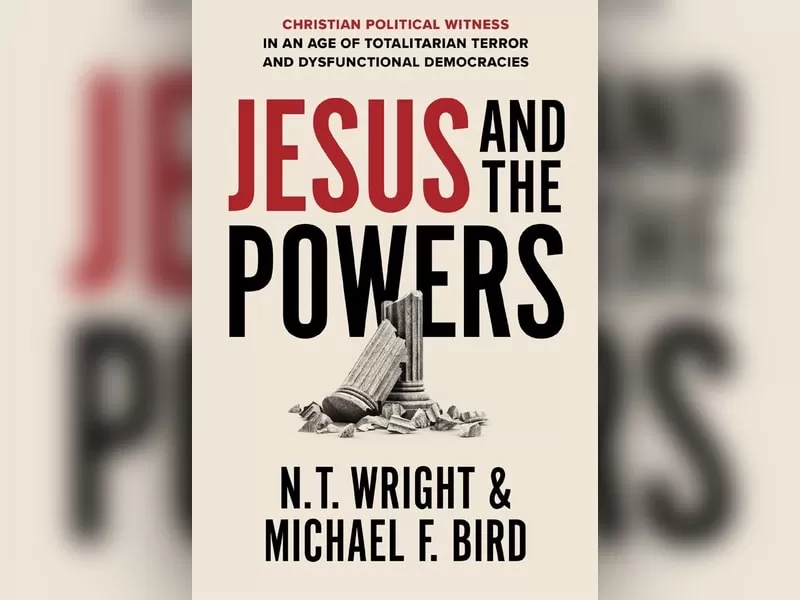
At the end of chapter one of their book Jesus and the Powers: Christian Political Witness in an Age of Totalitarian Terror and Dysfunctional Democracies, Wright and Bird make—or one or the other of them makes—the important point that the end of one story is also the beginning of another one (24). So the end of the story of the resistance of the early church to empire was the beginning of the story of the church residing in the empire “as a privileged guest.”

Read time: 9 minutes

N. T. Wright and Michael Bird on kingdom, empire, and the God of history. Hurrah!

I think that N. T. Wright and Michael Bird may slowly be coming round to seeing things my way, even if they’re not aware of the fact. In the first chapter of their co-authored book, Jesus and the Powers: Christian Political Witness in an Age of Totalitarian Terror and Dysfunctional Democracies, they make a case for understanding the kingdom of God theme in the New Testament as a function of the contest between Christianity and pagan Rome. Let’s begin with a quick summary of their argument about the kingdom of Jesus in the shadow of empire and then consider some of its strengths and weaknesses.

Read time: 11 minutes

The Evangelical Alliance UK commentary on Paul’s discussion of same-sex relationships in Romans 1:26-27

I had reason to look at the UK Evangelical Alliance’s latest report on same-sex relationships this week: Relationships Matter: Affirmations Commentary. It was published last year and updates previous reports (1998, 2012) following the legalisation of same-sex marriage in 2013. It is essentially a defence of what it calls the “classic evangelical” position on same-sex relationships.

Read time: 12 minutes

Paul and Philo (within Judaism) within paganism

It looks like the next phase in the study of Paul, after the New Perspective on Paul and Paul within Judaism, will be Paul (within Judaism) within paganism. See, for example, Paul Within Paganism: Restoring the Mediterranean Context to the Apostle, edited by Chantziantoniou, Fredriksen, and Young (2025), which presents “a florilegium of essays tracing the various ways in which Paul’s Jewish religious program is native to the ancient Mediterranean” (xi). The British New Testament Society conference this year will have a session on the book and related themes, to which I will be contributing.

Read time: 8 minutes

Further reflections on the resurrection of Jesus

David has provided a very nice commentary on my previous post about the resurrection of Jesus on the third day. He has made it clear that he gets the main contention about the historical framing: “Too often we read the New Testament as if it dropped out of the sky rather than emerging from a real story, rooted in Israel and moving outward into the world.” But he pushes back at a number of points. He insists that the resurrection of Jesus in the New Testament is treated not merely as a moment in Jewish history but as an event of universal human significance. I have highlighted his main concerns and responded.

Read time: 7 minutes

He was raised on the third day in accordance with the Scriptures

If we think that the resurrection of Jesus is the climactic event in the testimony of the early church, constituting the triumph of life over death for all humanity, we are missing the point.

At the beginning of an extensive discussion of resurrection, Paul recapitulates the “gospel” which he had proclaimed in Corinth:

Read time: 7 minutes