How do we measure the effectiveness of the missional church? Part 1

I work with an international mission organisation called Communitas. We have a small presence in the UK, and if anyone wants to know more about us, please get in touch. This is the personal background for the question that I want to address in a couple of posts: how do we measure the effectiveness of what we do?

There are some obvious metrics for what is basically a “church-planting” organisation. How many “churches” are we planting? How many people are joining those churches? How many of those people are actually new to the faith?

Read time: 9 minutes

Jesus and Jonah at sea: what the disciples learned

The relevance of Psalm 107:28-29 for understanding Jesus’ imperious rebuke of the wind and waves is often noted: some went down to the sea in ships; the Lord “commanded and raised the stormy wind, which lifted up the waves of the sea”; they were terrified and cried out to the Lord, and he “made the storm be still, and the waves of the sea were hushed” (cf. Ps. 65:7). Simon Gathercole remarks that “Jesus makes the strange transition from a Jonah-like figure who sleeps while the rest of the sailors are in peril… to a divine figure who calms the storm.” But for Mark, at least, it appears that the Jonah story is not merely a springboard for christological reflection; it is central to the meaning of the passage.

Read time: 6 minutes

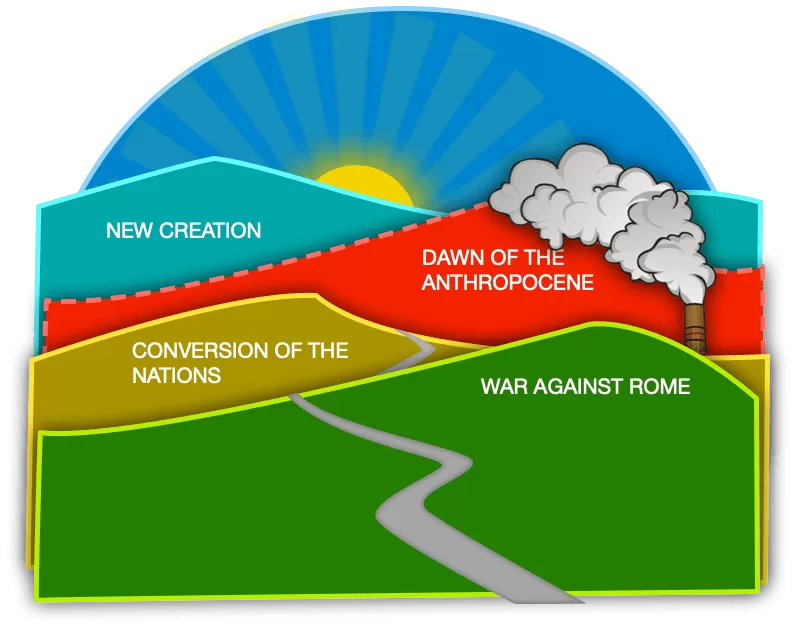
The ends of the ages: church in the Anthropocene

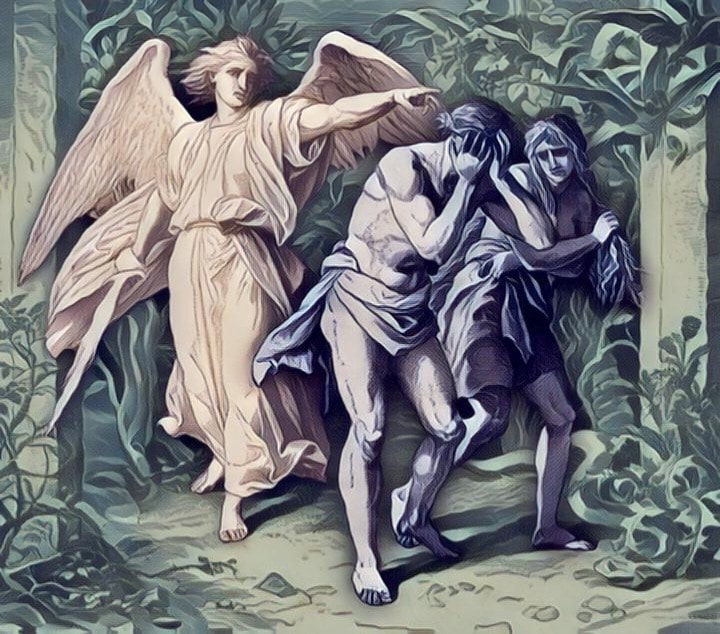
Speaking at Davos last year, David Attenborough said, “The Holocene has ended. The Garden of Eden is no more.” He makes the point again in the compelling new Netflix documentary A Life on Our Planet.

The juxtaposition of terms from two very different fields of discourse is intriguing. Can we do anything with it?

Read time: 9 minutes

What was Paul thinking when he wrote “Christ… the one being over all, God, blessed for the ages” (Rom. 9:5)?

Does Paul say that Christ is God in Romans 9:5? He speaks with candour about his anxiety regarding the future of Israel. He could wish himself “anathema from the Messiah” for the sake of his own race according to the flesh, of whom are “the glory and the covenants and the giving of the Law and the worship and the promises, of whom the fathers,” and “from whom is the Messiah according to the flesh…” (Rom. 9:1-5). Then we have the problematic words “the one being over all God blessed (ho ōn epi pantōn theos eulogētos) for the ages, amen.” The question is whether this is a relative clause further describing the Messiah or a new sentence referring only to God, who is blessed forever. There are some other minor permutations.

Read time: 5 minutes

The shortfall in Christ’s sufferings: mystical union, messianic woes, the hardships of evangelism, or none of the above?

On The Gospel Coalition site Phil Thompson asks what Paul means when he says, “Now I rejoice in my sufferings for your sake, and in my flesh I am filling up what is lacking in Christ’s afflictions for the sake of his body, that is, the church” (Col. 1:24). How could anything be lacking in Christ’s afflictions? And how could Paul think that he was a fit person to make up the deficit?

Read time: 4 minutes

What happened to the promised land? It became the promised empire

Andrew Bunt provides a quick and lucid overview of the argument of Oren Martin’s book Bound for the Promised Land: The land promise in God’s redemptive plan (2015). I have not read the book. Martin thinks—assuming that Bunt has understood him correctly—that the land of Canaan was always intended to be “a type of the ultimate fulfilment of the land promise in the new creation.”

Evangelicals have tended to offer spiritualising solutions to the salvation-historical problem of the land: physical land in the Old Testament, spiritual “land”—traditionally heaven, more recently new creation—in the New Testament. Martin seeks to avoid this disjunction by suggesting that from the start the “land” was only ever a provisional representation in history of “something greater that will recapture God’s original design for creation.”

Read time: 7 minutes

Woke Church, heaven, and a slight problem with the great multi-ethnic multitude

I have been reading Eric Mason’s book Woke Church: An Urgent Call for Christians in America to Confront Racism and Injustice. It’s not the book I was expecting it to be. It’s an honest, heartfelt attempt, written from within the black community, to connect modern imperatives of racial justice with a more or less traditional exposition of the gospel. I have no problem with that, and in many ways the doing is far more important than the talking about it. Get on with it.

Read time: 8 minutes