In the beginning was the Word, etc.

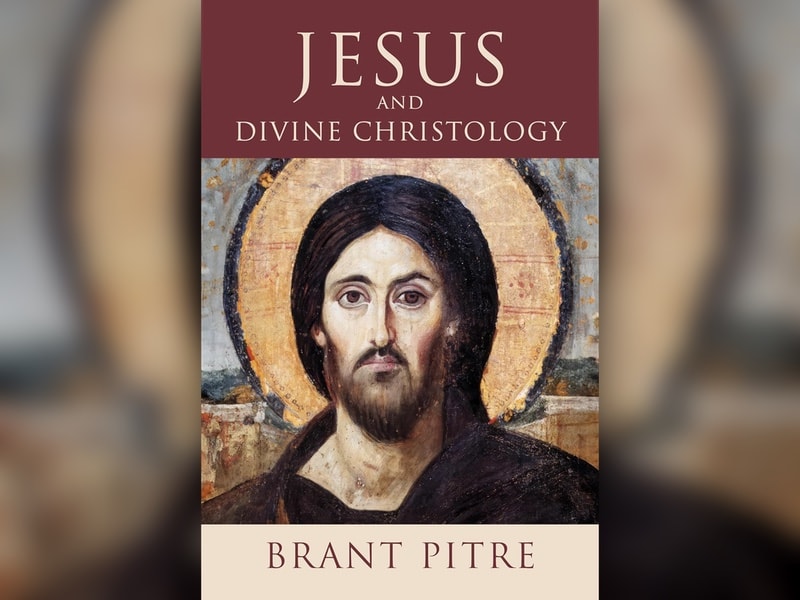
Since John’s christology has been under discussion recently (see “Why did the Jews accuse Jesus of making himself equal to God?” and “Before Abraham was, I am”), and since I will be preaching on the Word which became flesh as the first in an Advent series this Sunday, I’ve scraped together some thoughts on the opening paragraph of John’s Gospel.

Read time: 6 minutes

Before Abraham was, I am

My assumption has always been that we have a “higher” christology in the Gospel of John than we do in the Synoptic Gospels, but I’m beginning to have my doubts. I argued last week that when Jesus is accused by the Jews of making himself equal to God or making himself God (Jn. 5:17-18; 10:33), his response, in effect, is, “No, I am the Son of Man, authorised by God to speak and act on his behalf”, which is more or less the claim made about him in the Synoptic Gospels. But what about the saying “Before Abraham was, I am” in John 8:58? Isn’t that a barely disguised assertion of divine identity?

Read time: 11 minutes

Why did the Jews accuse Jesus of making himself equal to God?

I think we have to allow that John’s Gospel differs from the Synoptic Gospels in this fundamental respect: it is not an attempt to remember the historical Jesus; it is an attempt to restate the significance of the historical Jesus from a later theological vantage point, shaped in particular by a bitter controversy with the Jews.

Read time: 8 minutes

Does the narrative-historical method distort New Testament christology?

My response to deon’s two lengthy and thoughtful comments (see the last piece on Jesus as Alpha and Omega) on how the narrative-historical approach potentially distorts crucial elements of New Testament christology has grown rather long, so I have posted it separately. But it remains a response to comments on another post and may not make too much sense in isolation. It was also done in a bit of a hurry, so it may not make much sense at all. I’ve slightly edited deon’s text.

Read time: 8 minutes

Jesus as Alpha and Omega, first and last, beginning and end

Towards the end of the book of Revelation John hears somebody say: “Behold, I am coming soon, bringing my recompense with me, to repay each one for what he has done. I am the Alpha and the Omega, the first and the last, the beginning and the end” (Rev. 22:12–13). This is presumably Jesus speaking (cf. 22:16); and since God says nearly the same thing about himself in Revelation 21:6, it is inferred that John means to establish some sort of identity between Jesus and God. Richard Bauckham, for example, has said: “As a way of stating unambiguously that Jesus Christ belongs to the fullness of the eternal God, this surpasses anything in the NT” (R. Bauckham, The Theology of the Book of Revelation, 1993, 56-57).

Read time: 7 minutes

What happens on the “day of Christ”? Less than you might think

The New Testament narrative at every point is directed towards future events, from John the Baptist’s announcement that the bad trees of Israel would be cut down and burned in the fire to John the Seer’s vision of a new heaven and a new earth. I say “events”—plural—because I don’t think the standard modern eschatological assumption that we are still waiting for a single “end” makes sense historically. I argue instead for a three horizons model that fits the evident historical contours of the New Testament without sacrificing the conviction that God will have the final word.

Read time: 10 minutes

More on the new Jerusalem in the midst of the nations

In Revelation 21:22-26 John describes a situation in which the new Jerusalem is surrounded by the nations, which walk by its light, and the kings of these nations bring their “glory and honour” into the city. Despite the fact that the gates of the city will always be open, nothing unclean, nor any detestable or false person, will enter into the city.

Read time: 8 minutes