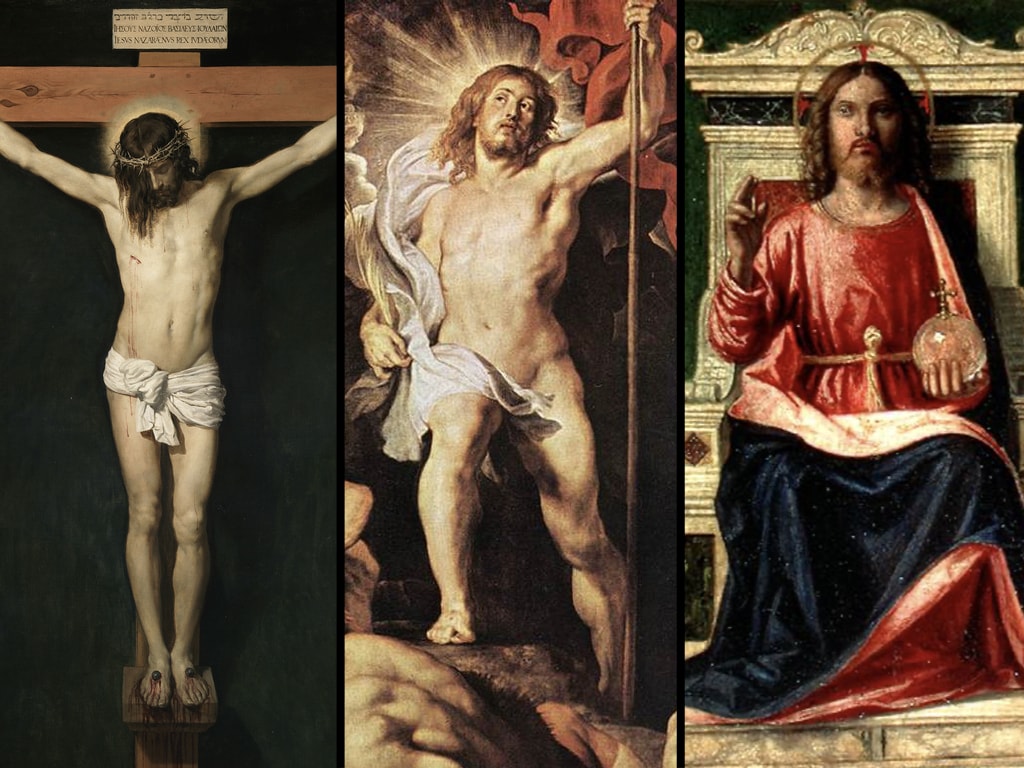
David has provided a very nice commentary on my previous post about the resurrection of Jesus on the third day. He has made it clear that he gets the main contention about the historical framing: “Too often we read the New Testament as if it dropped out of the sky rather than emerging from a real story, rooted in Israel and moving outward into the world.” But he pushes back at a number of points. He insists that the resurrection of Jesus in the New Testament is treated not merely as a moment in Jewish history but as an event of universal human significance. I have highlighted his main concerns and responded.
A major part of my general argument is that the modern church thinks of the New Testament as theology (or beliefs) set in a historical context and thinks that the historical context is of much less importance than the theology. My contention is that the New Testament gives us the opposite… ( | 16 comments)
The General Synod of the Church of England voted this week to pension off the devil, as The Telegraph puts it. The baptism service will no longer include a promise by parents and godparents to “renounce the devil and all his works” or in the language of a more modern version, “reject the devil and… ( | 2 comments)
There has been some good discussion of the account of the expulsion of Satan from heaven in Revelation 12:7-12 attached to yesterday’s post about Luke 10:18. If only for my own benefit, I want to try to explain what I think is happening theologically in this passage.
In Jewish… ( | 1 comment)
Having turned down applications from a number of people who were not up to the task (Lk. 9:57-62), Jesus appoints seventy-two messengers and sends them throughout Israel. The saying about the harvest being plentiful and the need for workers belongs in this historical setting (Lk. 10:2); it… ( | 5 comments)
I’m trying very hard to like Greg Gilbert’s book Who is Jesus?, really I am, but he is a classic example of someone caught between two paradigms. On the one hand, he wants to take on board new perspectives arising out of biblical studies. On the other, he doesn’t want to let go of core… ( | 17 comments)
I have never understood why the prophecy about the prince of Tyre in Ezekiel 28:1-19 and the taunt against the king of Babylon in Isaiah 14:3-23 have traditionally been interpreted as having reference to Satan. I have just come across the argument again in Greg Gilbert’s book Who is Jesus?… ( | 40 comments)
In response to this tweet by John Piper, Scot McKnight has posted a collection of Jewish texts from the second temple period which he thinks demonstrate a spectrum of views, from annihilationism (the destruction of the wicked at or after death) through “earthly judgment” to the dreaded eternal… ( | 8 comments)
Recent comments