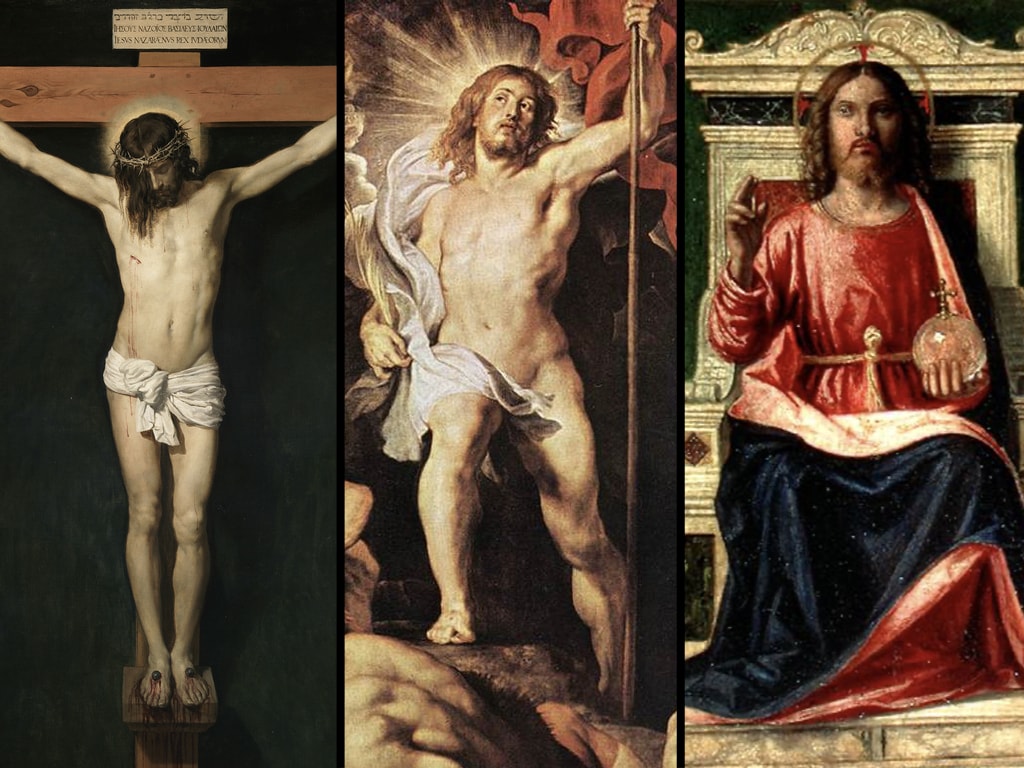
David has provided a very nice commentary on my previous post about the resurrection of Jesus on the third day. He has made it clear that he gets the main contention about the historical framing: “Too often we read the New Testament as if it dropped out of the sky rather than emerging from a real story, rooted in Israel and moving outward into the world.” But he pushes back at a number of points. He insists that the resurrection of Jesus in the New Testament is treated not merely as a moment in Jewish history but as an event of universal human significance. I have highlighted his main concerns and responded.
One of the main intellectual tasks facing the church in the aftermath of modernity has been to reconnect theology and history. Historical criticism, with help from scientific method generally, generated such distrust of the biblical narrative that it was safer for theologians to do their… ( | 5 comments)
In the previous post I argued that in the New Testament the propositional content of the “gospel” is not that Jesus died for anyone’s sins but that Jesus, having been wrongfully executed, has been raised from the dead in vindication and seated at the right hand of God to exercise the delegated… ( | 11 comments)
Here’s another response that I saw on Facebook to my post “What should we expect apostles to do today?” This time the focus is not on the kingdom but on the “gospel”:
There is no gospel but the one that reconciles a man with his creator. Everything else must be built upon this or it is built… ( | 5 comments)
I came across a comment by someone on Facebook in response to my post about what an apostle does. He suggests, first, that I must come from a typical large church (he couldn’t be further from the truth), that is “not engaging in the Kingdom” (I’ll get on to this), and then… ( | 19 comments)
In my view, the missional-incarnational movement needs to engage constructively with the sort of narrative-historical reading of the New Testament that is emerging from biblical studies. And vice versa. I think that both mission and New Testament studies would be served by the dialogue. For example… ()
As you will be aware if you are not a complete stranger to this blog, I strongly hold to the view that a narrative-historical hermeneutic, informed by good work being done in New Testament Studies, gives us a much better understanding of the New Testament than the theologically driven methods of… ( | 20 comments)
The church is always, everywhere a sign of new creation. I would venture to say that it is not in any respect the real thing—nothing has fundamentally changed, there is no mystical “regeneration”, we remain fallen humans through and through, dependent on grace. But when we talk… ( | 2 comments)
Recent comments