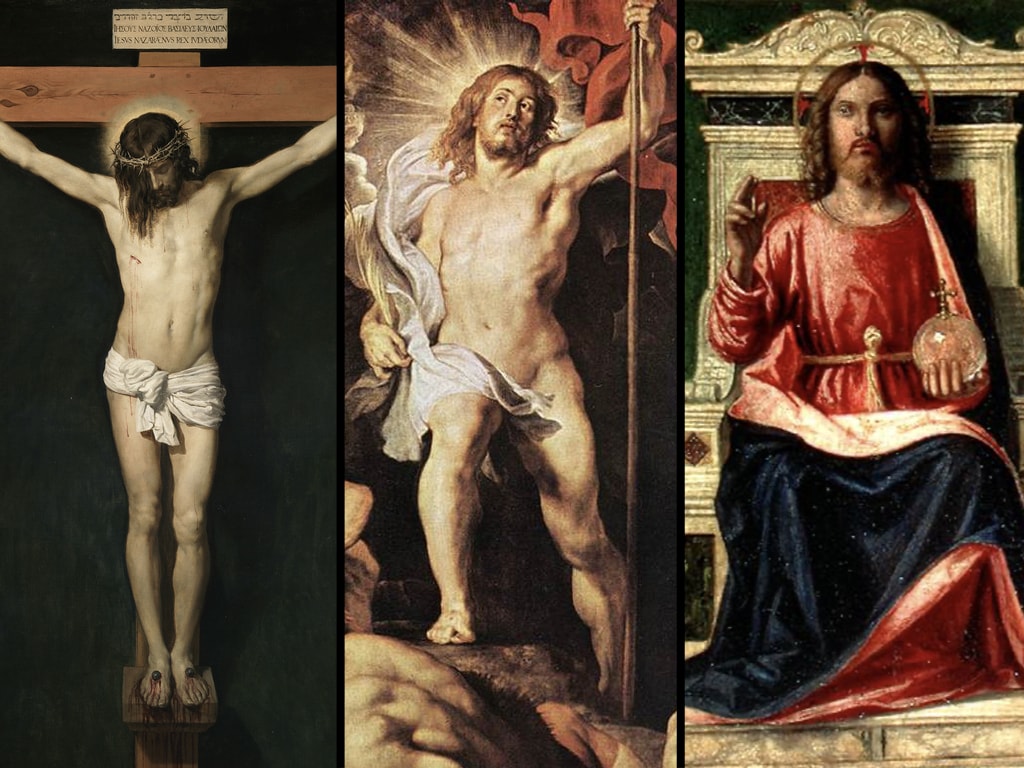
David has provided a very nice commentary on my previous post about the resurrection of Jesus on the third day. He has made it clear that he gets the main contention about the historical framing: “Too often we read the New Testament as if it dropped out of the sky rather than emerging from a real story, rooted in Israel and moving outward into the world.” But he pushes back at a number of points. He insists that the resurrection of Jesus in the New Testament is treated not merely as a moment in Jewish history but as an event of universal human significance. I have highlighted his main concerns and responded.
Bart Ehrman thinks that Jesus became God—not in reality, of course, but in the minds of the early Christians. Against Ehrman, Simon Gathercole argues in [amazon:978-0310519591:inline], much as Michael Bird did earlier, that the Synoptic Gospels “see Jesus as having pre-existed and as… ( | 17 comments)
The sermon on the mount is addressed to first century Jews in Israel. The Beatitudes define that small community of first century Jews in Israel through which and for the sake of which YHWH would restore his people at a time of severe political-religious crisis. It is a community of the helpless,… ( | 6 comments)
I am very appreciative of Michael Bird’s work, partly because he understands the importance of developing a credible theological mindset on the basis of a New Perspective reading of the New Testament, partly because he quoted my sinking ship parable from [amazon:978-1620324592:inline] in his [… ( | 11 comments)
Mike Mercer—Chaplain Mike—wrote a nice piece a couple of years back on the Internet Monk site putting forward the view that Matthew’s Gospel is “a Torah, a catechism, an instruction manual for the church”. He wonders whether this perspective brings into question my contention that Jesus was a… ( | 2 comments)
Another place where gender and eschatology intersect is Jesus’ answer to the Sadducees’ question about the woman whose misfortune it is to be serially married to seven brothers: “In the resurrection, therefore, whose wife will the woman be? For the seven had her as wife”. In Luke’s… ()
Following a vigorous and invigorating discussion of Trinity, subordination and headship at a small theological forum last week, I sat down this morning to have a look at Ephesians 5:22-33 again. It occurs to me that I have never really considered the possibility of assimilating the gender issue… ( | 4 comments)
Why do we assume that in his sermon on the mount Jesus addresses the whole church throughout the ages? Much of the teaching has to do with what it means to fulfil the Law of Moses, which Jesus categorically says he has not come to abolish—at least, not until heaven and earth pass away (5:17). The… ( | 15 comments)
Recent comments