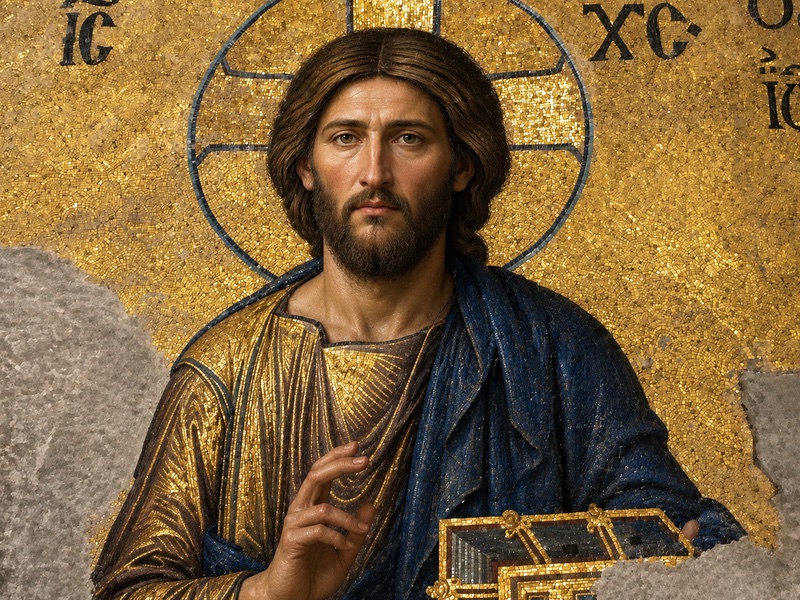
In a Substack post, Brian Zahnd looks at four key theological “entities” and warns of the “theological mischief” that happens when the “critical distinction” between them is not properly respected. The Church, the Bible, and the religion of Christianity are all good and important things, but not as good and important as Jesus. “The moment we try to nudge the Church or the Bible or Christianity toward equality with Christ we are headed down a theological path that leads to confusion and real-life trouble.”

My objection to this sort of analysis is two-fold. First, it relies on a flawed understanding of the categories if they are meant to be fundamentally biblical and not the product of later theological rationalisation. Secondly, it is an outdated analysis of “Christianity”: it deals with problems of the past, not of the future.

Read more...
Just for the sake of completeness, here is one final visual representation of the two-part significance of Easter. It’s now getting a bit overloaded, I know—two storylines, four landing points, and an unexpected back-reference to the flood; but I don’t want to give the impression that history has… ()
This is a brief addendum to the earlier post this week about the two meanings of Easter. A bit of an exchange on Facebook suggested to me that modern theologies of Easter are a striking inversion of what we find in the New Testament. I have tried to represent this graphically. ()
We think of Easter week as one story: entry into Jerusalem on Palm Sunday, Last Supper, arrest and trial, crucifixion, and resurrection. Liturgical performance, with a convenient hiatus between Palm Sunday and the long East weekend, reinforces the point. But I will suggest here that it is actually… ()
The current issue of the Catholic Biblical Quarterly includes my article “When the Fullness of the Time Came: Apocalyptic and Narrative Context in Galatians.” It’s only available to subscribers for the time being—and, of course, in libraries—but here’s the abstract and a brief overview of… ( | 2 comments)
I was almost persuaded the other night, sitting outside a pub in Glasgow with some Communitas friends, that the story about Jesus inviting himself into the house of Zacchaeus has been widely misunderstood. The suggestion was that Zacchaeus was all along a righteous tax collector, who… ()
Thanks to James McGrath, I’ve been fretting a bit more over the “fishers of people” saying in Mark 1:17 and Matthew 4:19. In his commentary, Hagner decides in the end that it “refers in a general way to the work of the new disciples, who are now to be concerned with drawing men and women into the… ( | 4 comments)
I was asked whether there is any connection between the condemnation of lust in Matthew 5:27-30 and what is said about marriage in Jeremiah 16. I suggested in the last post that the sayings in the Sermon on the Mount about being thrown into Gehenna are Jesus’ reworking of the prophet’s denunciation… ( | 2 comments)