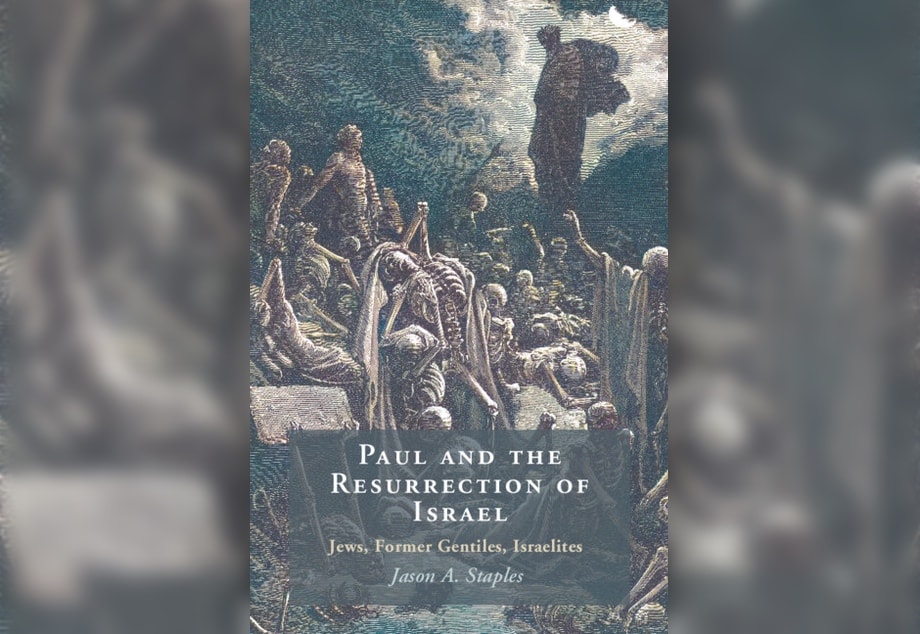
This is a rather technical examination of Jason Staples’ argument in Paul and the Resurrection of Israel: Jews, Former Gentiles, Israelites that when Paul speaks of Israel as “vessels of wrath,” he does not mean that the people are are the objects of God’s wrath; rather they are the instruments of God’s redemptive purposes. My view has been that Paul is saying that part of Israel really has become liable to destruction—much as Jesus foresaw destruction coming upon Jerusalem and the temple. But perhaps I’ve got it wrong.
I follow the output of the Gospel Coalition site on the look out for material that I can use to illustrate the differences between, in this case, conservative theological readings of the New Testament and a narrative-historical reading. I do the same, naturally, for liberal-progressive thinkers,… ( | 1 comment)
There’s an odd little story about a man called Jabez lodged in the middle of the twenty-three verses that make up the list of the descendants of Judah in 1 Chronicles 4. It was made very famous twenty years ago by Bruce Wilkinson’s best-selling book The Prayer of Jabez, which exposed a… ()
What happens when Adam and Eve disobey God and eat the fruit from the tree of the knowledge of good and evil? What are the consequences of their sin? How does it change things? The common assumption is that the “fall” is a catastrophic ontological event that corrupts not only humanity but the whole… ( | 5 comments)
Shortly after the death of Jesus, two from the band of his disciples are met by the risen Christ on the road to Emmaus (Lk. 24:13-35). He asks them what they are talking about, and, a little surprised by the ignorance of the fellow, they update him on what has just transpired in Jerusalem. It would… ( | 18 comments)
One of the reasons why we routinely miss the point of Peter’s explanation of what happened on the day of Pentecost is, I think, that the canonical arrangement of books encourages us to read Acts as the beginning of something new rather than as a direct continuation of what went before. The New… ( | 3 comments)
Jamie Davies makes J. ( | 2 comments)
In the second chapter of The Apocalyptic Paul: Retrospect and Prospect, Jamie Davies introduces what is effectively a “school” of modern interpreters who have built on J. Louis Martyn’s account of Paul’s apocalyptic thought: Martinus de Boer, Leander Keck, Alexandra Brown, Beverly Gaventa… ( | 1 comment)
Recent comments