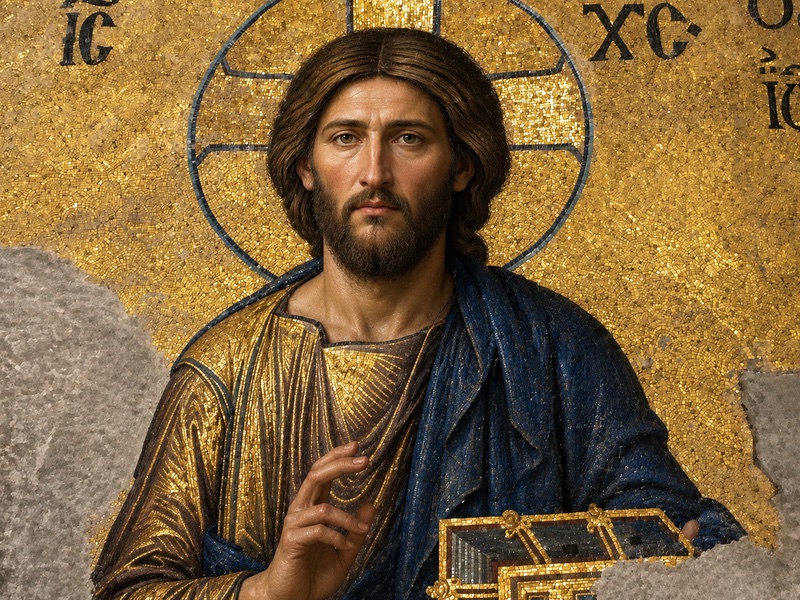
In a Substack post, Brian Zahnd looks at four key theological “entities” and warns of the “theological mischief” that happens when the “critical distinction” between them is not properly respected. The Church, the Bible, and the religion of Christianity are all good and important things, but not as good and important as Jesus. “The moment we try to nudge the Church or the Bible or Christianity toward equality with Christ we are headed down a theological path that leads to confusion and real-life trouble.”

My objection to this sort of analysis is two-fold. First, it relies on a flawed understanding of the categories if they are meant to be fundamentally biblical and not the product of later theological rationalisation. Secondly, it is an outdated analysis of “Christianity”: it deals with problems of the past, not of the future.

Read more...
What happens when Adam and Eve disobey God and eat the fruit from the tree of the knowledge of good and evil? What are the consequences of their sin? How does it change things? The common assumption is that the “fall” is a catastrophic ontological event that corrupts not only humanity but the whole… ( | 5 comments)
Shortly after the death of Jesus, two from the band of his disciples are met by the risen Christ on the road to Emmaus (Lk. 24:13-35). He asks them what they are talking about, and, a little surprised by the ignorance of the fellow, they update him on what has just transpired in Jerusalem. It would… ( | 18 comments)
One of the reasons why we routinely miss the point of Peter’s explanation of what happened on the day of Pentecost is, I think, that the canonical arrangement of books encourages us to read Acts as the beginning of something new rather than as a direct continuation of what went before. The New… ( | 3 comments)
Jamie Davies makes J. ( | 2 comments)
In the second chapter of The Apocalyptic Paul: Retrospect and Prospect, Jamie Davies introduces what is effectively a “school” of modern interpreters who have built on J. Louis Martyn’s account of Paul’s apocalyptic thought: Martinus de Boer, Leander Keck, Alexandra Brown, Beverly Gaventa… ( | 1 comment)
Jamie Davies’ book The Apocalyptic Paul: Retrospect and Prospect comes in two parts: a look back down the long road that has led to attempts to assimilate the “apocalyptic Paul” into systematic theologies, and a look forward to see where that road might take us next. I’m not sure how far I… ()
I asked in the previous post about blaming Bathsheba, “If it was a rape, why isn’t it presented as a rape?” James McGrath asks to the contrary, if we call Amnon’s assault of Tamar “rape,” why do we not apply the same category to David’s sexual encounter with Bathsheba? “Where in the story is… ( | 3 comments)