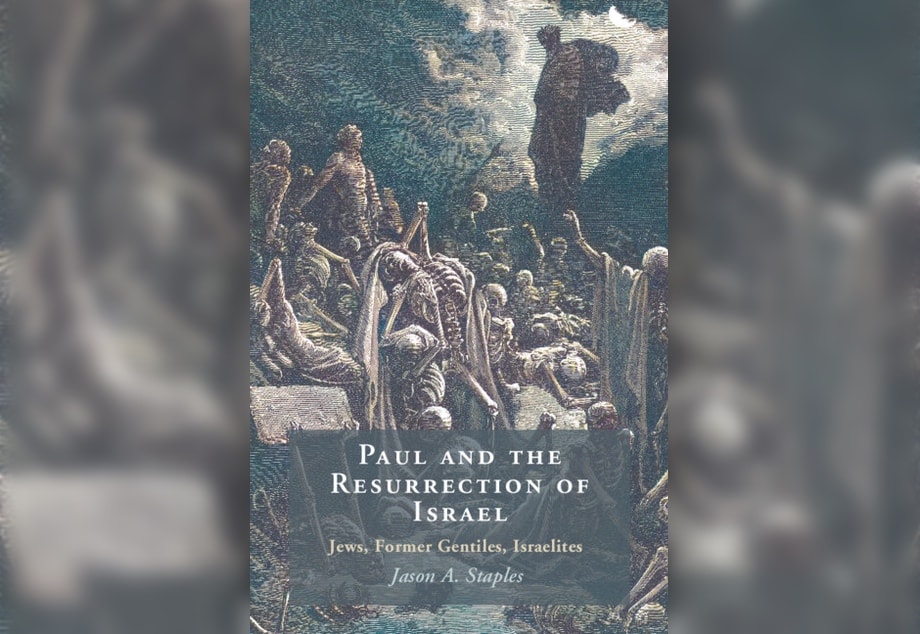
This is a rather technical examination of Jason Staples’ argument in Paul and the Resurrection of Israel: Jews, Former Gentiles, Israelites that when Paul speaks of Israel as “vessels of wrath,” he does not mean that the people are are the objects of God’s wrath; rather they are the instruments of God’s redemptive purposes. My view has been that Paul is saying that part of Israel really has become liable to destruction—much as Jesus foresaw destruction coming upon Jerusalem and the temple. But perhaps I’ve got it wrong.
Jesus did not tell moral fables. He was not a purveyor of uplifting Christian allegories that transcend time and space. He was a prophet in the mould of Isaiah or Ezekiel, telling disturbing, and sometimes deliberately disorienting, stories about the imminent impact of the kingdom of God on first… ()
I rather overlooked the relevance of Jesus’ parable about an unforgiving slave in Matthew 18:23-35 for the recent debate about whether he interpreted the foreseen destruction of Jerusalem as God’s deliberate punishment of his people. ( | 3 comments)
Much of Jesus’ Galilean ministry centred on Capernaum, so it comes as something of a shock to hear him denounce the city in rather forthright terms while things still appear to be going well. Admittedly, a warning note is struck early on when the faith of the centurion is taken as an ominous sign… ( | 5 comments)
I have argued that a “day of the Lord” in biblical terms happens not at the end of history but in history. It is a day when the God of Israel steps in to “judge” or “put right” a bad situation—to punish impiety and injustice, to deliver his people from their enemies, to re-establish his… ( | 19 comments)
In the popular Christian mind any reference to the “day of the Lord” or the “day of judgment” is likely to be conceived in final terms, as a transcendent event at the end of history. So when Paul says to the men of Athens that God has “fixed a day on which he will judge the world” (Acts 17:31), it… ( | 18 comments)
Where is God in a Coronavirus World? is really a piece of old school—the old “school” of C.S. Lewis—apologetics reworked for the COVID-19 era. This slight and simple book “concentrates on the problem of natural evil,” John Lennox says. In a time of crisis we look for solace and hope. Where… ( | 2 comments)
My book End of Story? Same-Sex Relationships and the Narratives of Evangelical Mission (2019) grew out of many conversations in a missional context about the problems and opportunities created by the widespread legalisation of same-sex marriage. It seems to me that the issue provides… ( | 3 comments)
Recent comments