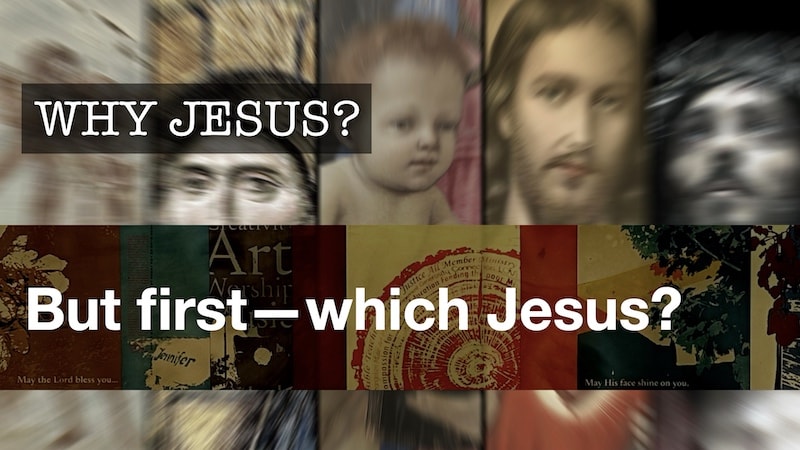
In a Substack post, Brian Zahnd looks at four key theological “entities” and warns of the “theological mischief” that happens when the “critical distinction” between them is not properly respected. The Church, the Bible, and the religion of Christianity are all good and important things, but not as good and important as Jesus. “The moment we try to nudge the Church or the Bible or Christianity toward equality with Christ we are headed down a theological path that leads to confusion and real-life trouble.”

My objection to this sort of analysis is two-fold. First, it relies on a flawed understanding of the categories if they are meant to be fundamentally biblical and not the product of later theological rationalisation. Secondly, it is an outdated analysis of “Christianity”: it deals with problems of the past, not of the future.

Read more...
Much of Jesus’ Galilean ministry centred on Capernaum, so it comes as something of a shock to hear him denounce the city in rather forthright terms while things still appear to be going well. Admittedly, a warning note is struck early on when the faith of the centurion is taken as an ominous sign… ( | 5 comments)
I have argued that a “day of the Lord” in biblical terms happens not at the end of history but in history. It is a day when the God of Israel steps in to “judge” or “put right” a bad situation—to punish impiety and injustice, to deliver his people from their enemies, to re-establish his… ( | 19 comments)
In the popular Christian mind any reference to the “day of the Lord” or the “day of judgment” is likely to be conceived in final terms, as a transcendent event at the end of history. So when Paul says to the men of Athens that God has “fixed a day on which he will judge the world” (Acts 17:31), it… ( | 18 comments)
Where is God in a Coronavirus World? is really a piece of old school—the old “school” of C.S. Lewis—apologetics reworked for the COVID-19 era. This slight and simple book “concentrates on the problem of natural evil,” John Lennox says. In a time of crisis we look for solace and hope. Where… ( | 2 comments)
My book End of Story? Same-Sex Relationships and the Narratives of Evangelical Mission (2019) grew out of many conversations in a missional context about the problems and opportunities created by the widespread legalisation of same-sex marriage. It seems to me that the issue provides… ( | 3 comments)
Jesus is teaching in the temple (Mk. 12:35-37). He poses a question: “How can the scribes say that the Christ is the son of David?” After all, David himself said in the Holy Spirit, ‘The Lord said to my Lord, “Sit at my right hand, until I put your enemies under your feet.”’ Jesus has taken Psalm… ()
The letter to the Hebrews is a Jewish-Christian text, perhaps an exclusively Jewish-Christian text. At its theological core is the argument that Jesus has become their heavenly high priest. But he is a high priest “after the order of Melchizedek,” which means that he is not only a priest, he is… ()