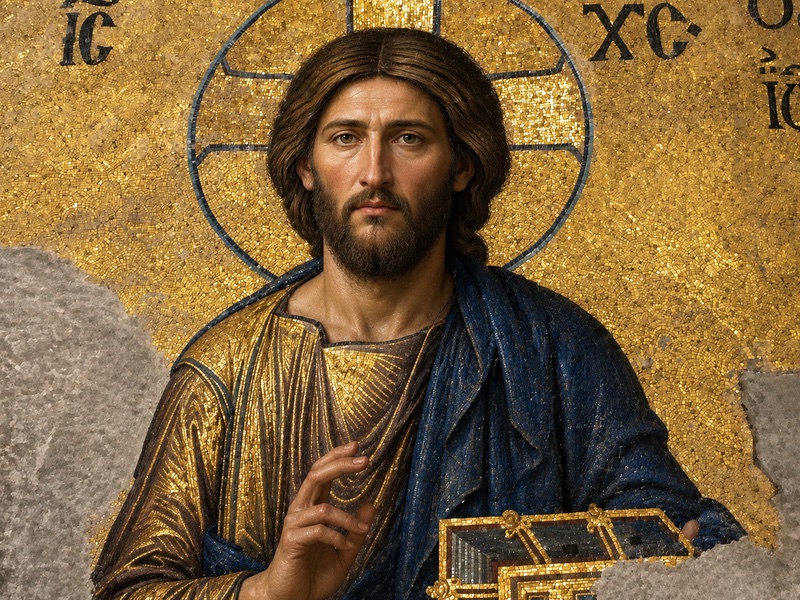
In a Substack post, Brian Zahnd looks at four key theological “entities” and warns of the “theological mischief” that happens when the “critical distinction” between them is not properly respected. The Church, the Bible, and the religion of Christianity are all good and important things, but not as good and important as Jesus. “The moment we try to nudge the Church or the Bible or Christianity toward equality with Christ we are headed down a theological path that leads to confusion and real-life trouble.”

My objection to this sort of analysis is two-fold. First, it relies on a flawed understanding of the categories if they are meant to be fundamentally biblical and not the product of later theological rationalisation. Secondly, it is an outdated analysis of “Christianity”: it deals with problems of the past, not of the future.

Read more...
A couple of weeks back, I gave a short presentation at the SBL Global Virtual Meeting setting out the central argument about the opening lines of the Philippians Christ encomium from my book In the Form of a God: The Pre-existence of the Exalted Christ in Paul. This video is an improved… ()
In his book Messianic High Christology: New Testament Variants of Second Temple Judaism (2021), Ruben Bühner sets out to demonstrate that a high christology is compatible with Jewish messianism. The title says it all. The title may turn out to be a contradiction in terms. ( | 21 comments)
In traditional Reformed interpretation, Romans 12:1-15:7 is regarded simply as a piece of Christian parenesis—that is, practical and ethical instruction or exhortation to be followed in all times, in all places. The letter tends to get sectioned thematically: justification by faith in… ()
I don’t want to make this an issue about trinitarianism; it is to my mind simply a matter of literary-historical perspective. Seriously. But what was the author of the Johannine letters—let’s call him John—getting at when he warned that “many deceivers went out into the world, those… ( | 4 comments)
At the beginning of Euripides’ play Bacchae, the god Dionysus—the god of “wine-making, orchards and fruit, vegetation, fertility, festivity, insanity, ritual madness, religious ecstasy, and theatre,” according to Wikipedia—enters and delivers a monologue. He identifies himself as “son of… ()
The New Testament gospel came in two parts—two proclamations distinct from each other with respect to content, audience, and geographical reach.The first proclamation was addressed to Israel. It was that the God of Israel would soon “judge” his unrighteous people and inaugurate a new order under… ( | 6 comments)
There is an argument that there is a third creation account in the Old Testament, in addition to the two creation accounts of Genesis 1-2, in which God as storm deity defeats the chaos monster of the sea in order for dry land to emerge. Dahood, notably, argued that translation of Psalm… ()