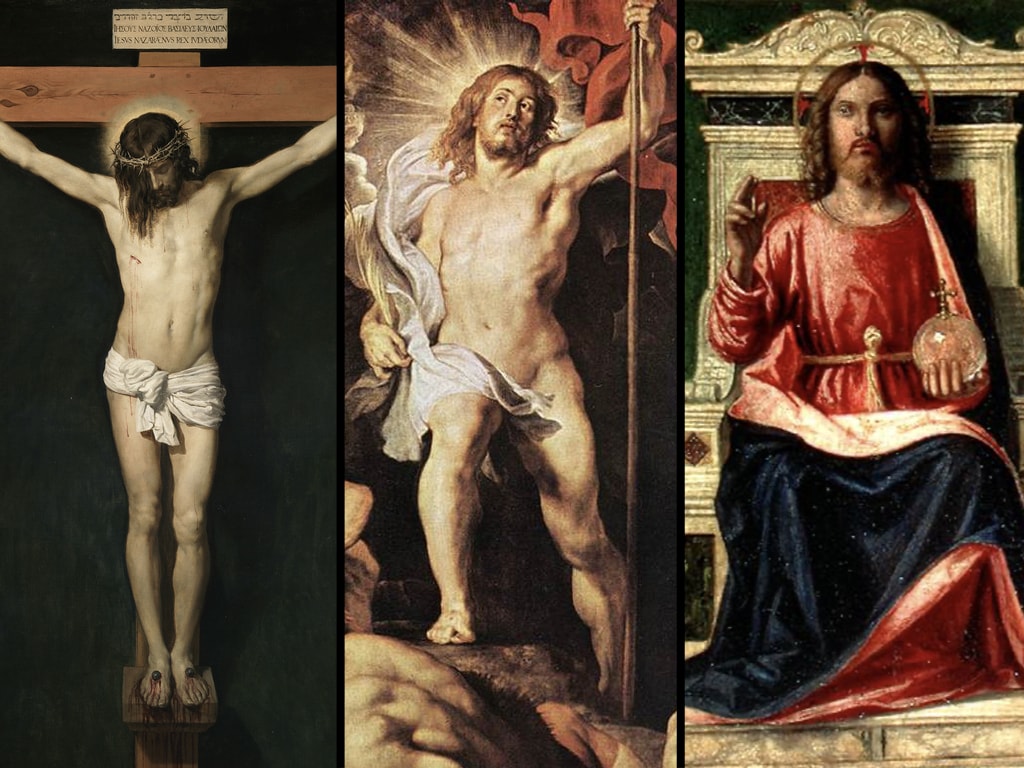
If we think that the resurrection of Jesus is the climactic event in the testimony of the early church, constituting the triumph of life over death for all humanity, we are missing the point.

At the beginning of an extensive discussion of resurrection, Paul recapitulates the “gospel” which he had proclaimed in Corinth:

Now I would remind you, brothers, of the gospel I preached to you, which you received, in which you stand, and by which you are being saved, if you hold fast to the word I preached to you—unless you believed in vain. For I delivered to you as of first importance what I also received: that Christ died for our sins in accordance with the Scriptures, that he was buried, that he was raised on the third day in accordance with the Scriptures…. (1 Cor. 15:1-4)

There are two principal ways in which the later Easter tradition has got this wrong, I think.

1 comment | Read more...
I wrote a piece recently offering my revision of Tom Wright’s five act play model of biblical authority. The aim was to take account both of the realistic character of biblical eschatology and of the historical experience of the church. This was my proposed narrative structure:Act 1 The… ( | 3 comments)
I have been reading an excellent little “visual guide” to the thought of Tom Wright by Marlin Watling. The book is called The Marriage of Heaven and Earth, it’s self-published, and is available as a paperback or on Kindle. Coincidentally, my copy of Wright’s The Day the Revolution… ( | 9 comments)
What did John the Baptist have in mind when he warned the Sadducees and Pharisees about the wrath to come (Matt. 3:7; Lk. 3:7)? Is there any scope for thinking that he is talking about more than—that his language exceeds or transcends—the disastrous events of AD 70? This is one of those posts that… ( | 15 comments)
Christianity is reckoned by most people, I imagine, to be at core a religion of salvation. The defining event is the cross, understood as an act of atonement or redemption, the means by which people are saved. If you are not a Christian you are “lost” or “perishing”. If you become a Christian, you… ( | 19 comments)
I asserted in the last post on the “firstfruits” that my reading of New Testament eschatology “is not preterism; it is a matter of taking the historical perspective of the early church seriously”. Peter thinks that taking the historical perspective of the early church seriously is exactly what… ( | 15 comments)
I was asked how I understood the reference to “firstfruits” in the New Testament. It’s a rather obscure topic perhaps, but a bit of word study won’t go amiss and may shed some light on the eschatological narrative.In case you’re not familiar with my idiosyncratic way of reading the New Testament,… ( | 2 comments)
I was recommended Tim Keller’s book Generous Justice: How God’s Grace Makes Us Just as preparatory reading for a sermon at Crossroads International Church in the Hague this coming weekend. It’s a compassionate, practical, carefully argued, and in some ways quite audacious exhortation to… ( | 14 comments)