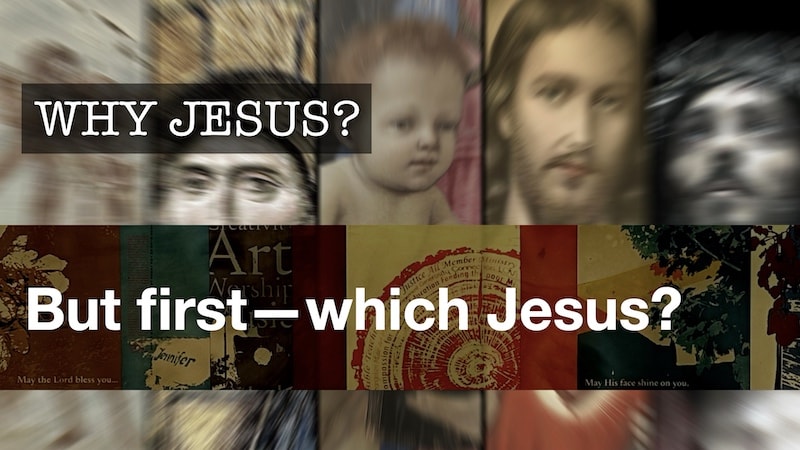
The little book Why Jesus? is part of the materials for the Alpha Course. In it, Nicky Gumbel writes:

Jesus is the only man who has ever chosen to be born, and he is one of the few who has chosen to die. He said that the entire reason for his coming was to die for us. He came ‘to give his life as a ransom for many’ (Mark 10:45).

To say that Jesus is “the only man who has ever chosen to be born” is faintly ridiculous even on high christological terms. The only possible New Testament support for it is the idea expressed in Philippians 2:6 that he did not grasp at a certain type of being equal to God or a god, my views on which can be found here.

3 comments | Read more...
Douglas Campbell has a curious and ambivalent excursus (89-94) appended to the section in The Deliverance of God in which he claims that Justification theory and the ‘alternative theory’ of salvation drawn from Romans 5-8 differ markedly in the place that they accord ‘coercive and violent… ()
I got my hands on Douglas Campbell’s The Deliverance of God only at a late stage of writing The Future of the People of God and could not make more than limited and very selective use of it. That may have been just as well—in any case, I have now picked it up again with the… ( | 2 comments)
Brian MacArevey picked up on a comment I made about the relationship between suffering and prosperity in my post on sonship and suffering in Romans and wondered out loud what I would make of a piece he had written about ‘eschatological blessing’ – and you really have to ask yourself: How did… ( | 22 comments)
Mike was preaching about sonship yesterday and the need for Christians to discover or claim for themselves the full blessings of having been adopted as sons. I have more sympathy for prosperity theology than is probably good for me, and I take quite seriously the argument that we are often a long… ()
This quotation from a book by J. Todd Billings called The Word of God for the People of God: an entryway to the theological interpretation of scripture rather effectively gets to the heart of the dilemma created by readings of the New Testament that insist on the historical… ()
Peter has reached the point of sheer exasperation in our discussion of the meaning of Jesus’ parable of the wise and foolish virgins, so it is time to stop, apologize, and perhaps try to understand why it can be so difficult to reach agreement over matters of biblical interpretation. ( | 5 comments)
The main challenge of New Testament theology at the moment, as the church struggles more or less self-consciously to come to terms with its modern exile, is to tell and retell the story of which Jesus is part – to tell it both critically and hopefully, in a way that brings out its complexity… ()