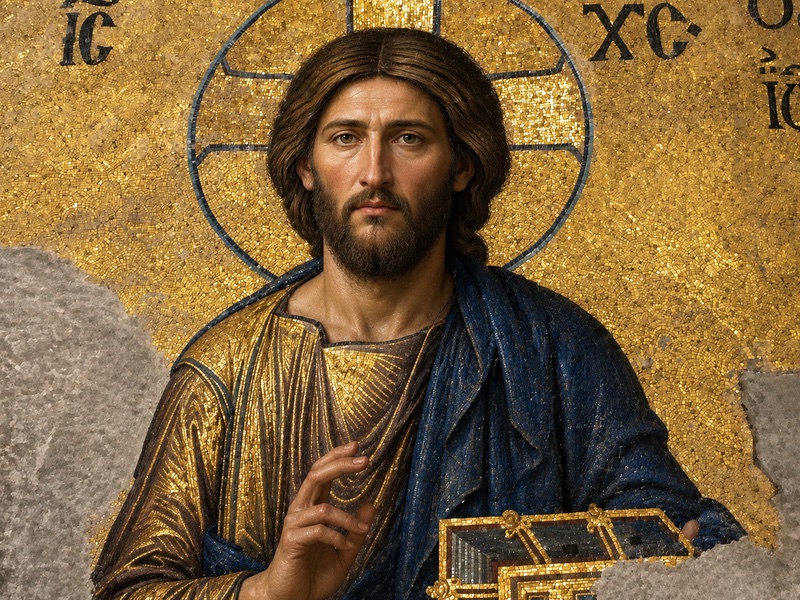
In a Substack post, Brian Zahnd looks at four key theological “entities” and warns of the “theological mischief” that happens when the “critical distinction” between them is not properly respected. The Church, the Bible, and the religion of Christianity are all good and important things, but not as good and important as Jesus. “The moment we try to nudge the Church or the Bible or Christianity toward equality with Christ we are headed down a theological path that leads to confusion and real-life trouble.”

My objection to this sort of analysis is two-fold. First, it relies on a flawed understanding of the categories if they are meant to be fundamentally biblical and not the product of later theological rationalisation. Secondly, it is an outdated analysis of “Christianity”: it deals with problems of the past, not of the future.

Read more...
The Christ encomium in Philippians 2:6-11 is usually divided into two parts: humbling in 2:6-8 and exaltation in 2:9-11. But here I want to suggest that once it has become apparent to onlooking Greeks that Christ Jesus, for all his god-like wisdom and powers, was human, no more remarkable than a… ()
The last time I wrote about Crispin Fletcher-Louis’ “monster book” The Divine Heartset: Paul’s Philippians Christ Hymn, Metaphysical Affections, and Civic Virtues I got a ticking off for not having read the whole book. I have since ordered the whole book—all 954 pages of it—but it… ( | 3 comments)
There are three main interpretive paradigms for understanding Paul’s writings available today within mainstream, predominantly Protestant, scholarship. The diagram below names the paradigms, briefly notes the defining characteristics, and mentions some of the major exponents. It also highlights the… ()
Here is the question. When Paul says, “for us one God the Father…, and one Lord Jesus Christ” (1 Cor. 8:6), are the terms “God… Lord” between them a reference to the shemaʿ: “Hear, Israel: the Lord our God, the Lord is one” (Deut. 8:6 LXX*)? It has become a stock argument of… ( | 7 comments)
The NIV is unusual in translating en morphēi theou hyparchōn in Philippians 2:6 as “being in very nature God,” but the translation nevertheless reflects a widespread and longstanding assumption that to be “in the form of God” means to share in his nature or essence or being. ( | 10 comments)
My argument about the other encomium, in Colossians 1:15-20, is that it makes Christ Jesus the beginning of a new political-religious order, in which government in heaven and government on earth have been reconciled. Hitherto the rule of God and rule over the nations of the… ( | 4 comments)
Crispin Fletcher-Louis has written a monster book—nearly a thousand pages—about the Christ encomium in Philippians 2:6-11: The Divine Heartset: Paul’s Philippians Christ Hymn, Metaphysical Affections, and Civic Virtues (Wipf & Stock, 2023). About 20% is available on Google Books. We… ( | 4 comments)