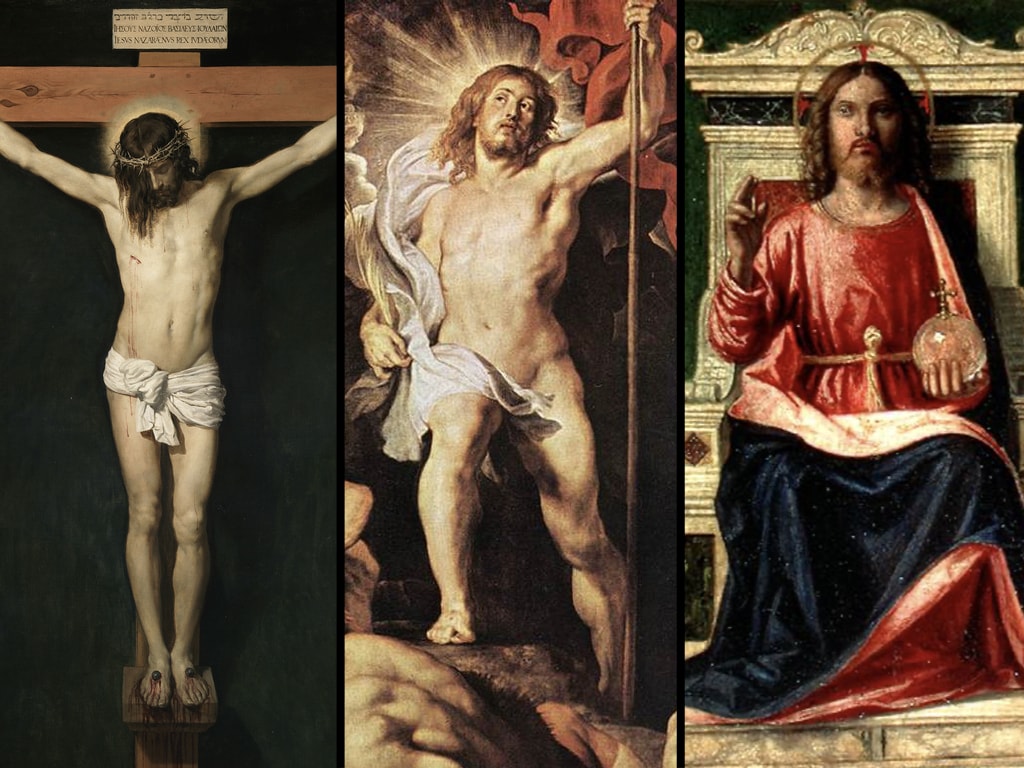
If we think that the resurrection of Jesus is the climactic event in the testimony of the early church, constituting the triumph of life over death for all humanity, we are missing the point.

At the beginning of an extensive discussion of resurrection, Paul recapitulates the “gospel” which he had proclaimed in Corinth:

Now I would remind you, brothers, of the gospel I preached to you, which you received, in which you stand, and by which you are being saved, if you hold fast to the word I preached to you—unless you believed in vain. For I delivered to you as of first importance what I also received: that Christ died for our sins in accordance with the Scriptures, that he was buried, that he was raised on the third day in accordance with the Scriptures…. (1 Cor. 15:1-4)

There are two principal ways in which the later Easter tradition has got this wrong, I think.

1 comment | Read more...
In the opening chapter (“Setting the Stage”) of Paul and His Recent Interpreters Tom Wright makes the basic point that our modern culture has separated religion from politics and public life and has confined Paul to the religious sphere. Both in the academy and in the church he is… ( | 2 comments)
Don Preston has been arguing at length in comments on an earlier post against the identification of “Babylon the great” with Rome (Rev. 14:6-11; 16:19; 17-18). One reason he gives for the view is that the great harlot, which is Babylon the great, is not to be identified with the beast on which she… ( | 19 comments)
I recently chanced upon this quotation from a book by Vernon White, Atonement and Incarnation, published in 1991:The universal claims of the Christian faith are not easy to sustain. It is sufficient merely to spend some time sitting at a roadside café in a busy, cosmopolitan city, watching… ()
Following my previous post on “The wrath of God and the death of Jesus” and some discussion that ensued, here is a reasonably concise 17 point summary of the narrative-historical perspective on the wrath of God—at least as I see it.  ( | 15 comments)
How do you feel when you read the terms “wrath of God” and “penal substitution”? Do you feel that something of profound and eternal theological importance has been stated, even if you’re not quite sure what it is? If so, you are probably on the reactionary Reformed side of the theological fence… ( | 24 comments)
David Sunday asks how Jesus can be called “Everlasting Father” in Isaiah 9:6:For to us a child is born, to us a son is given; and the government shall be upon his shoulder, and his name shall be called Wonderful Counselor, Mighty God, Everlasting Father, Prince of Peace.“How can Jesus the Messiah,… ( | 3 comments)
According to the tradition that has been passed down to us, Christmas is the time of year when we celebrate God coming to earth in lowly human form to save humankind from sin and death. The glory of the deity has been laid aside, the radiant godhead has been veiled in flesh, the creator of all… ( | 3 comments)