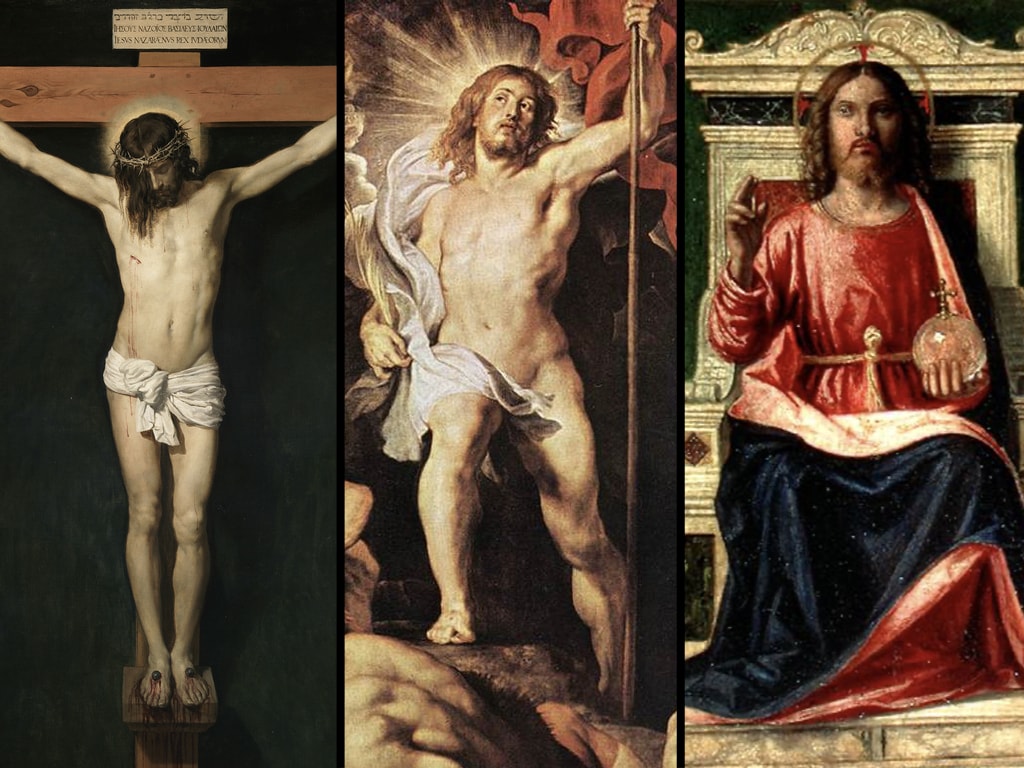
David has provided a very nice commentary on my previous post about the resurrection of Jesus on the third day. He has made it clear that he gets the main contention about the historical framing: “Too often we read the New Testament as if it dropped out of the sky rather than emerging from a real story, rooted in Israel and moving outward into the world.” But he pushes back at a number of points. He insists that the resurrection of Jesus in the New Testament is treated not merely as a moment in Jewish history but as an event of universal human significance. I have highlighted his main concerns and responded.
Robin Parry poses an interesting puzzle about the resurrection of the wicked. I’ve slightly restated it, but it goes roughly as follows:
At the end of the age there will be a resurrection of both the righteous and the unrighteous for judgment: sheep and goats, wheat and weeds, good-doers and… ()
The Gospel Coalition has been doing an intermittent series over the last year tagged “Deeper into Doctrine”. For people who prefer their theology in narrative form—and for post-moderns generally, if there are still any around—“doctrine” is a dirty word. But I don’t see any objection to formulating… ( | 3 comments)
Ben Witherington has been doing a thorough and informative series of posts on N.T. Wright’s new/forthcoming book Paul and His Recent Interpreters, starting here—in itself a good overview of recent Pauline scholarship. I haven’t been tracking with it too closely (I have been… ( | 13 comments)
Last week I went with my friend Steve Knight to see Hamlet at the Barbican. Hamlet is a tragedy. By the end of the play everyone of any dramatic importance is dead. The old king has had a “leperous distilment” poured in his ear. Polonius is stabbed in error behind the arras. Rosencrantz and… ( | 1 comment)
I heard Rikk Watts from Regent College, Vancouver, talk this week to a group of church leaders about what’s currently going on in theology. He began with some good reflections on the challenges facing anyone trying to keep track of developments across the ever-expanding—or ever more boggy—field of… ( | 5 comments)
What happens at the end? What sort of transformation does John have in mind when he says that earth and heaven “fled away” from the presence of God at the judgment of all the dead (Rev. 20:11)? Are we to suppose that the world-as-we-know-it must finally disappear—or perhaps be destroyed—to be… ( | 42 comments)
It is often argued that biblical prophecies may have two or more frames of reference. For example, Middleton allows that the language of cosmic dissolution in Jesus’ apocalyptic discourse (sun and moon darkened, stars falling from heaven) may refer to events leading up to the war against Rome and… ( | 5 comments)
Recent comments