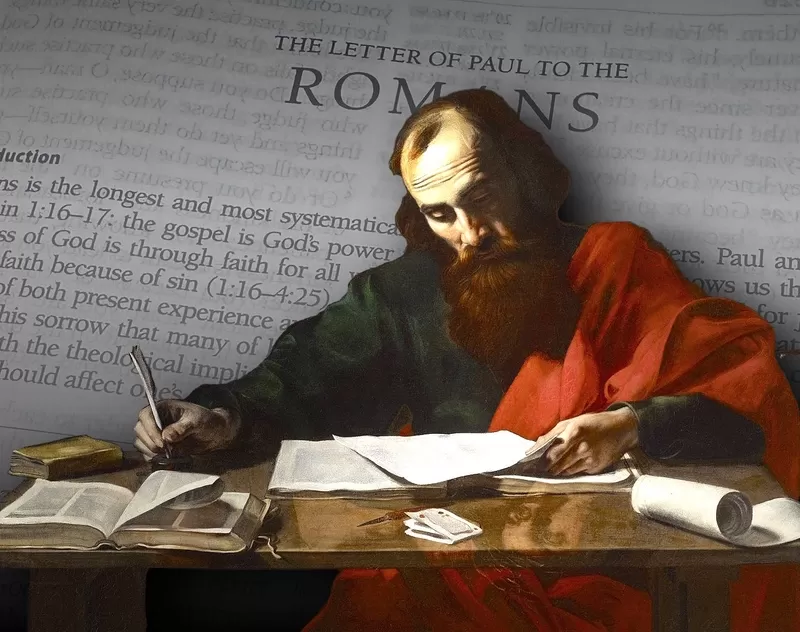
None is righteous, no, not one? Not so!

One obvious retort to the argument that Paul allows for the existence of unbelieving righteous Gentiles who will be justified on the basis of their good deeds on the day of God’s wrath is that he goes on to state emphatically, quoting the scriptures, that “None is righteous, no, not one” (Rom. 3:9). That gives us the basic premise of Reformed theology:

Read time: 9 minutes

John Barclay, Paul and the Gift, and those bothersome righteous Gentiles

I have finally got round to reading John Barclay’s highly esteemed Paul and the Gift, and he almost persuaded me to change my mind about the identity of the Gentiles who do not have the Law but do what the law requires (Rom. 2:14).

I have been going backwards and forwards over the last few days, and not for the first time, regarding the question of whether these are ordinary well-behaved Gentiles or Gentiles who have converted to belief in Jesus. These rough and ready comments on the relevant passages include my reasons for going forwards in the end rather than backwards.

Read time: 11 minutes

Paul’s letter to the Romans (1:19-2:29)

Romans 1:19-2:29

Why does good news need to be heard regarding the “power of God for salvation”? Why does God have to justify himself by ensuring that the righteous person lives because of faith or faithfulness?

The reason is that “the wrath of God is revealed from heaven against all impiety and unrighteousness of people who possess the truth in unrighteousness” (Rom. 1:18*).

Read time: 11 minutes

Paul’s letter to the Romans (1:1-18)

Romans 1:1-18

Paul, apostle of the Lord Jesus Christ (1:1-7)

Paul introduces himself to those in Rome who are “called to be saints” as a slave of Christ and an apostle, “set apart for the gospel of God.”

The “gospel” is the proclamation of good news, anticipated in the Jewish scriptures, concerning a pre-eminent royal figure: a Son who was of the seed of David, now “appointed (horisthentos) Son of God in power according to the Spirit of holiness from resurrection of the dead” (1:4*).

Read time: 6 minutes

What was the name which is above every name?

I take several chapters in my book In the Form of a God: The Pre-existence of the Exalted Christ in Paul to argue that in the first part of the Christ encomium in Philippians 2:6-11 the direction of travel is ontologically flat: not from heaven to earth but from celebrity to ignominy. I’m not saying that the church fathers were mistaken in their christological conclusions, only that this is not what the encomium is about.

Read time: 7 minutes