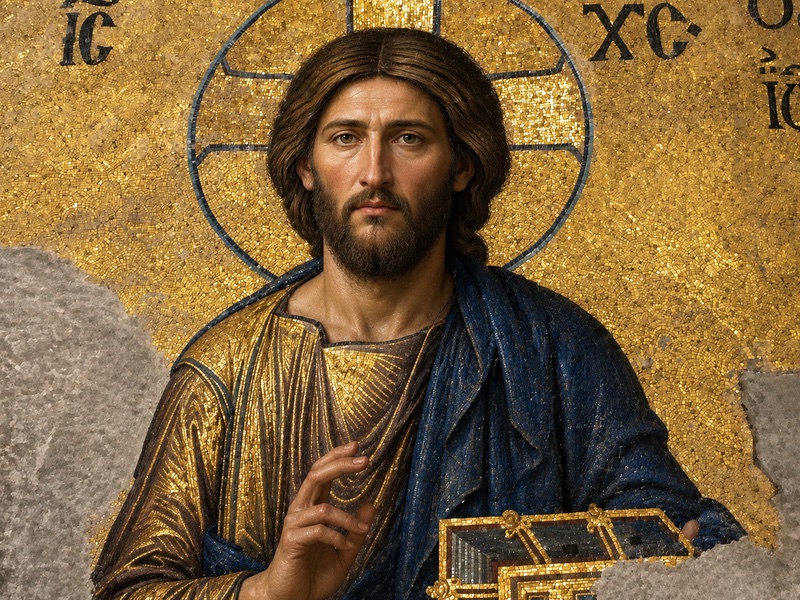
In a Substack post, Brian Zahnd looks at four key theological “entities” and warns of the “theological mischief” that happens when the “critical distinction” between them is not properly respected. The Church, the Bible, and the religion of Christianity are all good and important things, but not as good and important as Jesus. “The moment we try to nudge the Church or the Bible or Christianity toward equality with Christ we are headed down a theological path that leads to confusion and real-life trouble.”

My objection to this sort of analysis is two-fold. First, it relies on a flawed understanding of the categories if they are meant to be fundamentally biblical and not the product of later theological rationalisation. Secondly, it is an outdated analysis of “Christianity”: it deals with problems of the past, not of the future.

Read more...
I started out meaning to reply to a few questions sent to me about Mark 13: Isn’t it the case that Mark places the “final apocalypse” immediately after the destruction of the temple? Doesn’t this point to a failure of prophecy? Didn’t Jesus say that he would return within a generation? I thought it… ( | 6 comments)
Here we go again. In a response to my recent piece on James Tabor’s “failed failed apocalypse of the New Testament” argument, Edward Babinski, one of a number of vociferous ex-fundamentalist critics of conservative orthodoxies, has outlined an obscure but interesting argument regarding Jesus’… ( | 9 comments)
My recently developed narrative missiological model has three main parts to it. During periods of stasis the people of God is 1) new creation and 2) royal priesthood. During periods of crisis those functions tend to be reduced, and 3) a prophetic identity comes to the fore. ( | 2 comments)
Not to put too fine a point on it, the church in the West is facing an existential crisis. Most of the remedial effort has gone into doing things differently—trying new approaches, developing ways of operating that restore confidence, find favour, get attention, etc. Much good theological… ( | 6 comments)
The standard simplified evangelical understanding of New Testament eschatology is that Jesus will “come again in glory to judge the living and the dead,” the world will be brought to an end, all evil and death will be destroyed, and there will be a new heaven and new earth, “his kingdom will have… ( | 5 comments)
Jesus’ parable of the wedding feast in Matthew 22:1-14, like the two parables preceding it, is directed against the chief priests and elders of the people who questioned his authority to pronounce judgment on the temple (Matt. 21:23-27). The leaders of Israel are those who refuse to attend the… ()
The Hebrew word shalom features prominently in “missional church” discourse. John Franke says, for example, in his Missional Theology: An Introduction: “The restoration of peace or shalom, the all-embracing blessing of the God of Israel and Jesus Christ, may be the simplest, most… ()