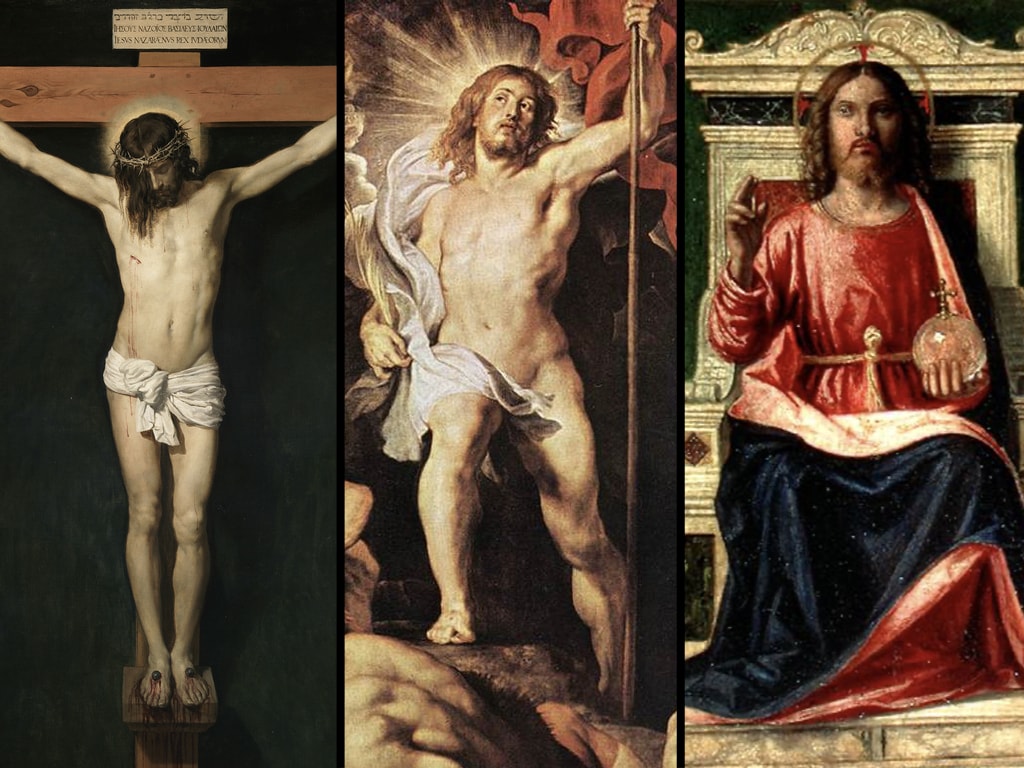
If we think that the resurrection of Jesus is the climactic event in the testimony of the early church, constituting the triumph of life over death for all humanity, we are missing the point.

At the beginning of an extensive discussion of resurrection, Paul recapitulates the “gospel” which he had proclaimed in Corinth:

Now I would remind you, brothers, of the gospel I preached to you, which you received, in which you stand, and by which you are being saved, if you hold fast to the word I preached to you—unless you believed in vain. For I delivered to you as of first importance what I also received: that Christ died for our sins in accordance with the Scriptures, that he was buried, that he was raised on the third day in accordance with the Scriptures…. (1 Cor. 15:1-4)

There are two principal ways in which the later Easter tradition has got this wrong, I think.

1 comment | Read more...
Samuel Adams argues—continuing my piecemeal critical review of his stimulating and exasperating book The Reality of God and Historical Method—that Wright’s historical method cannot deal adequately with the reality of God. Wright’s is not a thoroughgoing “methodological naturalism” because… ( | 7 comments)
Here’s another example of how a theological reading can drive a coach and horses through historical exegesis. At the heart of the “theological doctrine of the incarnation,” Adams writes, “is the union of the divine and human in Jesus the Messiah”. Keeping in mind Wright’s historical method and… ( | 6 comments)
The fault line between theology and history is pervasive, persistent and profound. Samuel Adams argues in The Reality of God and Historical Method: Apocalyptic Theology in Conversation with N.T. Wright for a theological hermeneutics at the heart of which is the “apocalyptic ( | 8 comments)
The explicit testimony concerning Jesus throughout Mark’s Gospel is that he is the beloved Son, empowered by the Spirit, who will serve the purposes of YHWH, who will suffer, who will be vindicated by his resurrection from the dead, and who will be seated at the right hand of YHWH, having… ( | 4 comments)
The cluttered mega-chart below (click for an enlarged version) combines yesterday’s schematic overview of Samuel Adams’ concise and lucid summary of Wright’s account of the relation between theology and history with my earlier attempt to show how the narrative-historical method goes back to the… ( | 1 comment)
In The Reality of God and Historical Method: Apocalyptic Theology in Conversation with N.T. Wright Samuel V. Adams offers an inversion of Wright’s solution to the division between theology and history. Whereas Wright addresses the question of God from the side of history, Adams wants… ( | 2 comments)
The last few weeks have been busy, and I’ve not had the time, or frankly the inclination, to blog. I haven’t posted a sermon before, and it’s perhaps a rather desperate measure, but I feel under some pressure to show that the narrative-historical approach can work in normal preaching-teaching… ( | 3 comments)